While he slept, an investigator asked whether our workshop security camera recorded audio. Ryan had installed it himself after tools went missing, but he’d given me access to the shared account; with my attorney’s guidance, I preserved Saturday’s footage and gave the investigator an original export.
The recording showed Oliver coughing beside the workbench, then telling Ryan he’d swallowed the shiny balls. Ryan took the container away, checked his phone, and told him not to say anything to me.
I thought that was the worst of it until the investigator returned with information from the regional Poison Control center. They had located a call Ryan made Saturday afternoon, shortly after the recording, and the counselor’s written notes documented an explicit warning about swallowing multiple magnets.
The final line read: “Father states he is taking child to emergency department immediately.”
Instead, Ryan had brought our son home and told me he was perfectly fine.
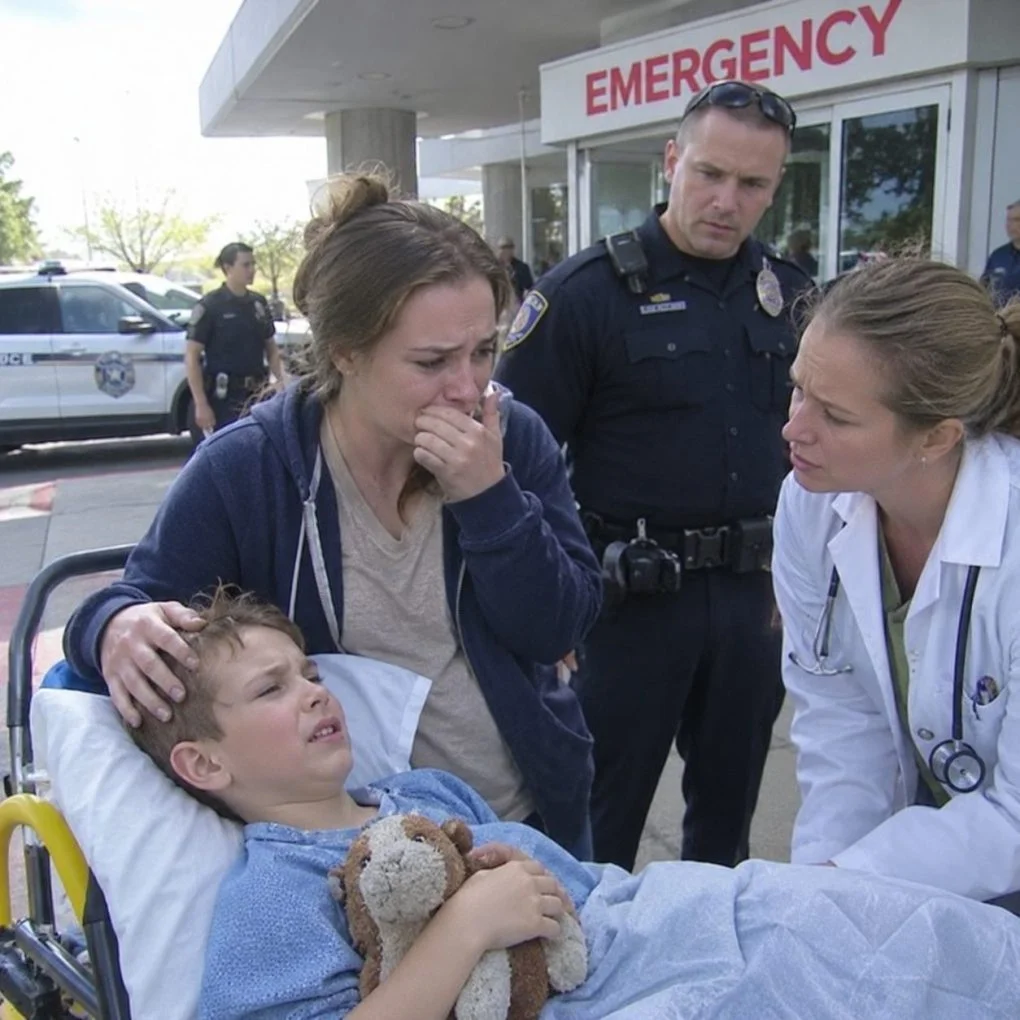
For five nights, I slept in a chair beside Oliver’s hospital bed, waking whenever he shifted beneath the blanket. The first time he asked for juice, I cried so unexpectedly that he looked frightened, and I had to wipe my face and tell him I was crying because he was getting better.
A child-protection worker helped us make a safety plan before discharge. I took Oliver to Megan’s house, retained an attorney, and asked the family court for temporary orders giving me sole responsibility for his medical decisions and requiring any visits with Ryan to be supervised while the investigation continued.
Ryan sent messages saying I was destroying our family over an accident. The accident was swallowing the magnets; what came afterward was a grown man hearing his son beg for help, receiving a clear warning, and deciding that admitting his mistake mattered more than obtaining treatment.
The investigation took months, not days. Medical records documented Oliver’s injuries, the workshop recording established when Ryan learned what had happened, and the Poison Control notes supported that he had been told to seek emergency care; the prosecutor filed a child-endangerment charge based on his knowing delay.
At first, Ryan insisted he’d believed the magnets would pass naturally. Then his attorney reviewed the recorded workshop footage and the call documentation, and Ryan entered a guilty plea under an agreement that included a suspended jail term, supervised probation, parenting education, and payment toward Oliver’s uninsured medical costs.
I attended the sentencing hearing with Megan. Ryan looked polished in a navy jacket, the same one he’d worn to Oliver’s first-grade concert, and for one painful moment I remembered him lifting our laughing toddler high above his head at the county fair.
When the prosecutor described the hours Oliver had spent in pain, Ryan’s lawyer asked the court to consider that his client had never meant to hurt his child. I stood to give my victim-impact statement, holding the folded drawing Oliver had made for me in the hospital, and spoke before I could lose my nerve.
“My son told his father the truth,” I said. “His father taught him that telling me would cost him his family, so a seven-year-old tried to bear something dangerous alone. That is what this did to him.”
I hadn’t come to watch Ryan suffer, but I needed him to hear what he’d made our child believe. He stared at the table as the judge imposed the agreed sentence and reminded him that keeping a child safe required action, not excuses.
The divorce was finalized later that year. The family court named me Oliver’s residential parent and legal custodian, continued supervised contact subject to his treatment team’s recommendations, and required that neither of us pressure Oliver about the case; the financial terms were settled without touching the small education account I’d opened for our son.
Recovery wasn’t a straight line. Oliver sometimes woke clutching his stomach even after the surgeon cleared him, and he worried aloud that I’d leave whenever he made a mistake; his counselor helped us practice saying, “I can tell Mom the truth, even when I’m scared.”
One Saturday, he came into the kitchen holding a broken model airplane, the wing hanging loose between his fingers. He looked up at me with the same anxious eyes I’d seen that night, then said, “I did it by accident.”
I took the airplane from him, found the glue, and pulled out a chair beside mine. “Thank you for telling me,” I said, and this time he believed me.



