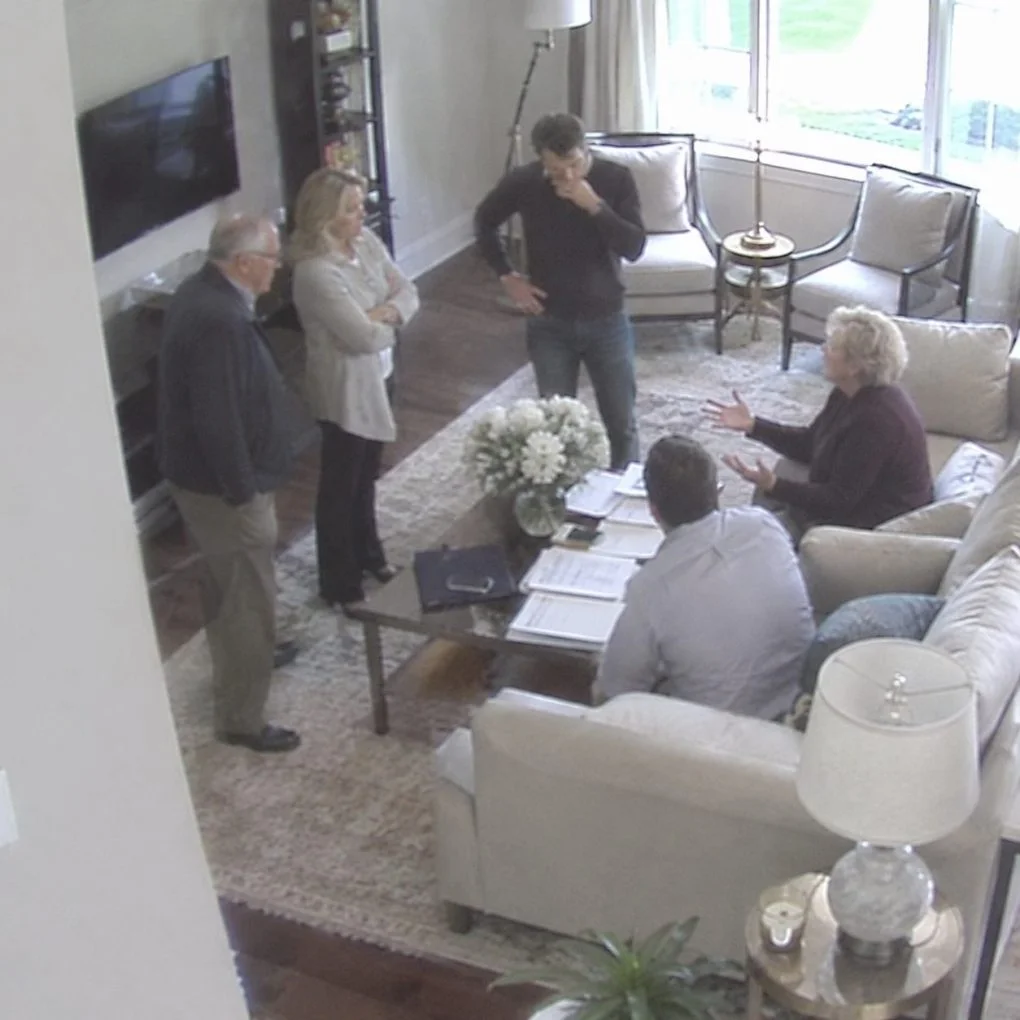
I forgot my passport and returned home early. Inside, my husband and his family were dividing everything I owned, believing I was already at the airport. I secretly recorded their conversation. Then his father said, “Caroline needs those signatures before tomorrow.” I had never heard that name. But my husband clearly had…
“SHE’LL HAVE NOTHING LEFT BY TOMORROW!” my mother-in-law laughed from the sofa I’d bought with my first promotion bonus. “The house, the savings—finally, our boy gets what he deserves.”
I stood barefoot behind my downstairs bathroom door, my phone recording in my shaking hand. My husband, Adam, had watched me climb into an airport shuttle ninety minutes earlier, kissed my forehead, and told me to enjoy my conference in Phoenix. When my flight was canceled, I returned home, only to hear voices through the half-open kitchen window.
“Her account has nearly two hundred thousand,” his father, Gerald, said. “I saw the statement you printed.”
“It’s in her name,” Adam replied. “That’s why Caroline prepared the authorization.”
Caroline. I had never heard him mention that name, and the way he said it—gently, almost protectively—hurt more than his mother’s laughter.
I’m Emily Carter, thirty-six, a nurse practitioner in Denver. I bought that brick house three years before marrying Adam, after working double shifts and spending my weekends caring for my mother through chemotherapy. When Mom died, I used part of her inheritance to clear the remaining mortgage; her handwritten recipe cards were still tucked above the stove.
On the day I got the keys, Mom had stood on the porch in her wool coat and said, “Promise me you’ll never let anyone make you feel like a guest here.” I remembered laughing and telling her that was impossible.
For six years I had believed Adam loved the home we shared. When he lost his job last winter, I paid the bills without complaint, and when Gerald needed help after heart surgery, I drove him to appointments because Adam said I was the daughter his parents never had.
Now their voices drifted down the hallway as though they were dividing furniture after an estate sale.
“Caroline gets the deed tomorrow,” my mother-in-law said. “Then we see whether the bank will accept the other papers.”
“Does Caroline know you’re moving her into the house right away?” Gerald asked.
Adam chuckled. “She’s been patient long enough. Once the paperwork goes through, I’ll tell Emily we’re separating. Caroline and I can finally stop hiding.”
My mouth filled with the sour taste of panic. I remembered Adam bringing me tea the night I cried over Mom’s old photographs, and wondered how long he’d been planning to give our bedroom to another woman.
A chair scraped. “What if Emily refuses?” Gerald asked.
Adam’s answer came without hesitation.
“She won’t get the chance. Caroline already notarized her signature.”
I stared at the gold wedding band on my finger.
I hadn’t signed anything.…Want to know what happens next? Read on here.
For several minutes I stayed behind that door listening to them discuss the property as though I were already gone. Then I waited until the front door closed, slipped upstairs, and sat on the edge of our bed, where Adam’s work shirts still hung beside mine.
I told my attorney, Maya Chen, about the recording, but she warned me not to share or rely on it before she checked the rules governing recordings made by someone who wasn’t part of the conversation. “We can obtain independent evidence,” she said. “First, make sure they cannot use your identity.”
We changed my financial passwords, secured my devices, and contacted the bank’s fraud department about a possible forged power of attorney. The bank confirmed that Adam was not an authorized signer on my savings account and flagged it for additional identity verification; whatever his family imagined, my money could not simply be handed over on his demand.
The house frightened me more. Maya confirmed through county records that the house was still mine, while I found a draft quitclaim deed in the printer tray in Adam’s study. It proposed transferring my home to a company called C. Vale Properties, and the title company named on the cover sheet confirmed that a document review meeting had been scheduled for the following morning.
The deed bore my supposed signature and a notarial acknowledgment. I knew the signature was false because the date printed beside it was the day I’d spent eleven hours seeing patients at the clinic, and my electronic schedule and badge entries could prove it.
Maya located Caroline Vale through the business filing. She was forty, a mobile notary, and the LLC had been formed only three weeks earlier; photographs on Adam’s old social media showed them together years before he met me.



