While Maya sent urgent objections to the county recording office and the title company listed in the paperwork, I gathered the account statements and messages that explained how Adam knew my finances. After my mother died, I’d let him scan paperwork for the estate attorney; I had trusted my husband with documents I couldn’t bear to read twice.
At six that evening he texted, “Landed okay? I miss you already.” I looked at the message and remembered our wedding morning, when he’d buttoned my mother’s pearl bracelet around my wrist because my hands wouldn’t stop trembling.
I typed, “Flight canceled. I’m home.” Three dots appeared, vanished, and returned before he wrote, “I’ll be late. Work thing.”
Maya called again. Caroline’s company had sent the deed to the title company, but the title officer had flagged the paperwork because I had never completed the required identity check. The packet also included a purported power of attorney giving Adam control over my savings, apparently intended for a later visit to my bank.
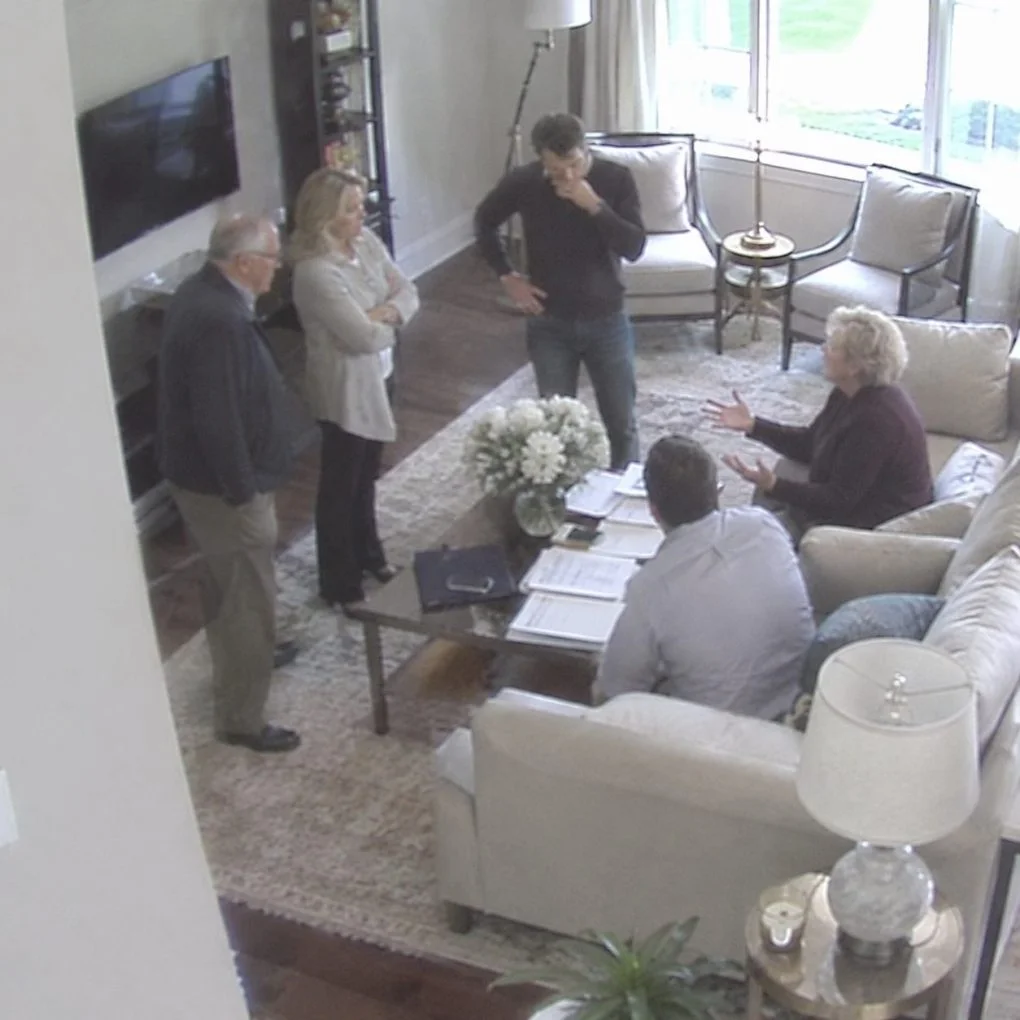
In the living room, I noticed a legal pad they had left beneath the coffee table, with my grandmother’s sideboard assigned to Gerald and the framed painting from Mom’s bedroom marked for Adam’s mother. I photographed it, then put it back exactly where I found it; I couldn’t bear the thought of them touching those things.
Then Maya forwarded an email the title officer had received from Adam. It instructed them not to call me because I was “recovering from a medical crisis and unable to discuss financial decisions.” Attached was a physician’s letter with my clinic’s logo.
I knew the letter was forged. The doctor named on it worked down the hall from me.
And at the bottom, under “Emergency contact,” Adam had listed Caroline as my sister.
The following morning, I walked into the title office beside Maya wearing the navy coat Adam had bought me for our anniversary. I had chosen it without thinking; halfway there, I discovered a grocery receipt in the pocket from the night we’d stayed up assembling the kitchen table together.
Adam, his parents, and Caroline were already seated around the conference table. My mother-in-law was smiling at a folder of documents until she looked up, saw me, and gripped her purse as though it might keep her from falling.
“Emily,” Adam said. “You’re supposed to be in Phoenix.”
“I was,” I replied. “Until my flight was canceled. I thought I’d come see the transfer everyone is so excited about.”
The title company’s fraud manager explained calmly that no insured transaction would proceed because the purported owner had disputed her signature and the supporting documents. Maya placed my work records, authenticated deed, and fraud reports on the table, then asked Caroline why she had notarized a signature I hadn’t made in her presence.
Caroline looked at Adam. “You said she agreed.”
“Then why did you sign the acknowledgment?” Maya asked.
Gerald moved to interrupt, but the manager reminded them that the meeting was being documented and that the title company would cooperate with any investigation. My mother-in-law leaned toward me and whispered, “Don’t disgrace this family in front of strangers.”
For years those words would have worked. I would have gathered the dishes, apologized for everyone’s discomfort, and tried to save a marriage in which I had apparently been the only person trying.
I pulled off my wedding ring and set it beside the forged deed. “You sat in my mother’s house and discussed taking the last thing she helped me build,” I said. “You don’t get to call my silence loyalty anymore.”
Adam stared at the ring. “I wasn’t actually going to empty your account.”
“You prepared a document to do it,” I said. “And you signed a letter saying I was medically incapable of making decisions. You were planning for me not to be able to say no.”
He tried to reach for my hand, and I stepped back. There was no dramatic arrest in that room; instead, the title officer closed the file, and Maya walked me outside while my mother-in-law’s voice rose behind the glass.
The investigations took months. My colleague confirmed in writing that she had never issued the medical letter or authorized Adam to use her name, and the clinic preserved its original records.
The bank rejected the attempted authorization, the deed never transferred, and Caroline surrendered her notary commission while a state inquiry into the false acknowledgment continued. Adam eventually pleaded guilty to an attempted forgery charge and received probation; the financial costs of responding to his scheme were addressed in our civil settlement. His parents faced no criminal charges, although their involvement was documented.



