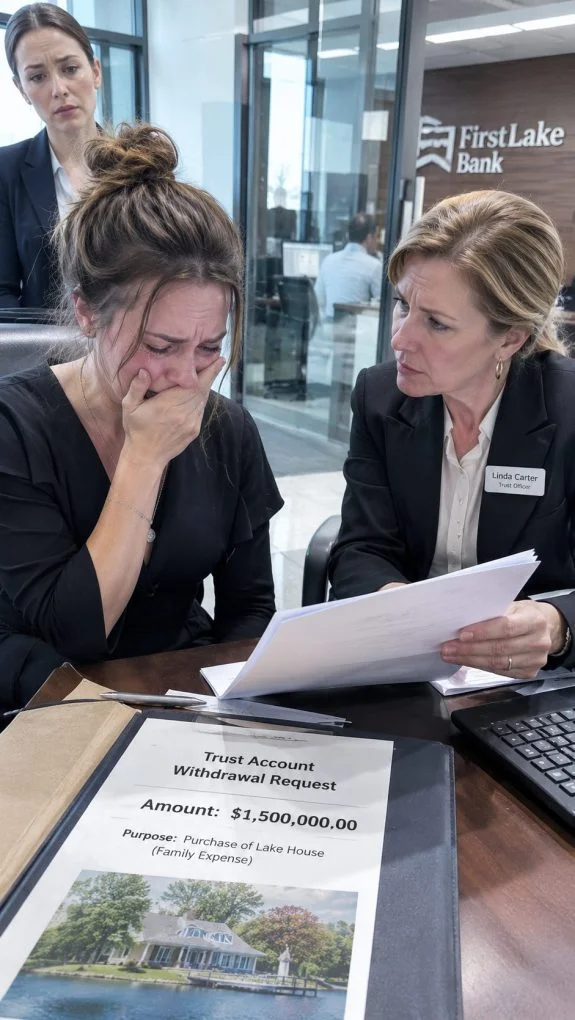
The remaining assets would be divided between me and a children’s hospital foundation that had helped care for him. The trust could no longer make expenditures for Owen’s personal benefit, and my family had no legal claim to its funds.
My parents had apparently assumed they could persuade me to approve a large withdrawal before the final distribution.
They’d never asked about the actual trust provisions.
That afternoon, I met attorney Daniel Mercer, who had helped Ruth establish the trust.
He reviewed the documents and recommended preserving every email, reporting the suspected forgery, and allowing the trustee’s compliance team to complete its investigation.
Then he asked whether my family had previously received financial assistance from me.
I stared at him.
For three years, I’d been paying $2,400 monthly toward my parents’ mortgage after Dad’s business closed. I’d also covered Brooke’s $1,100 apartment rent for eleven months when she separated from her husband.
They called it temporary help.
I’d called it family.
Daniel examined the transfers.
“Claire, none of these payments gives them any right to Owen’s trust. And you aren’t obligated to continue making voluntary gifts indefinitely.”
That evening, I called Mom.
“Did you copy my signature?”
She went quiet.
Then she answered.
“Your father thought you wouldn’t be emotionally capable of handling paperwork right now.”
I gripped the phone.
“So you decided to spend my dead son’s money for me?”
“Claire, please don’t say it like that.”
“How should I say it?”
Brooke’s voice came from somewhere behind her.
“Tell her we’re going to lose the house if she doesn’t cooperate!”
I felt something cold settle in my stomach.
They’d already signed a purchase contract.
And the real estate agent had been told the trust money was guaranteed.
Dad took the phone.
“Listen carefully, Claire. We’ve put down twenty-five thousand dollars of our own money. If you refuse to help, we could lose it.”
I closed my eyes.
“Then you shouldn’t have promised money that wasn’t yours.”
He began shouting.
“You owe this family! We supported you through everything!”
For a moment, all I could hear was Owen’s hospital monitor, the soft mechanical rhythm that had accompanied so many nights beside his bed.
Then I remembered Mom’s empty chair at his last birthday.
I opened my banking app and reviewed the recurring transfers.
I wasn’t going to let them take anything else from me.
But before I canceled a single payment, I found a message from Brooke that explained exactly why they’d chosen the day I visited Owen’s grave.
It had been sent to Dad that morning.
“Claire always stays at the cemetery for hours. Submit everything while she’s there. She won’t be checking her phone.”
I forwarded Brooke’s message to Daniel and Helen, then sat at my kitchen table until the sun disappeared behind the trees.
Across from me was Owen’s empty chair.
His dinosaur-shaped placemat was still there, with a small juice stain near the corner. I’d washed everything else after the funeral, but I couldn’t bring myself to put that placemat away.
The next morning, I canceled the voluntary payments to my parents and Brooke, giving them written notice that no further financial assistance would be provided.
Mom called eleven times before breakfast.
I didn’t answer.
Instead, I met with Daniel and signed a formal statement confirming that my signature had been used without permission. The trustee referred the documents for investigation, while the real estate attorney and seller were notified that the claimed trust funding wasn’t available.
The lake house purchase collapsed.
My parents lost the $25,000 deposit they’d committed under the purchase agreement, after the contract deadlines passed without proof of financing.
For the first time in years, their financial decisions had consequences they couldn’t transfer to me.
Two weeks later, Dad and Brooke appeared outside my house.
I opened the door but kept the screen locked.
Mom stood behind them, crying.
“Claire, please,” she whispered. “Your father doesn’t know how we’re going to pay the mortgage.”
I looked at her.
“Mom, when Owen was in the hospital for his last Christmas, do you remember what he asked for?”
She blinked.
“He wanted everyone together.”
“He wanted you to come decorate cookies with him.”
My voice shook.
“He kept asking when Grandma was coming. I told him you were busy.”
Mom pressed her hand against her mouth.
“You said you’d come the next morning,” I continued. “You never did.”
Brooke shifted impatiently.
“Claire, this isn’t about cookies. We’re talking about losing our home.”
I looked directly at her.
“That’s exactly the problem. Everything becomes important when it’s something you want.”
Dad stepped forward.
“We made a mistake. We thought you would understand.”
“You didn’t make a mistake, Dad. You submitted documents with my signature, promised money you couldn’t access, and planned the whole thing while I was visiting my son’s grave.”



