“You’re eighteen. You’re not my problem anymore,” Dad said before taking my $3,000 savings for my stepbrother. Nine days later, I was sleeping in my car and searching dumpsters for food. Then a lawyer found me. “Your grandfather left you everything,” he said. “But your family has been hiding something…”
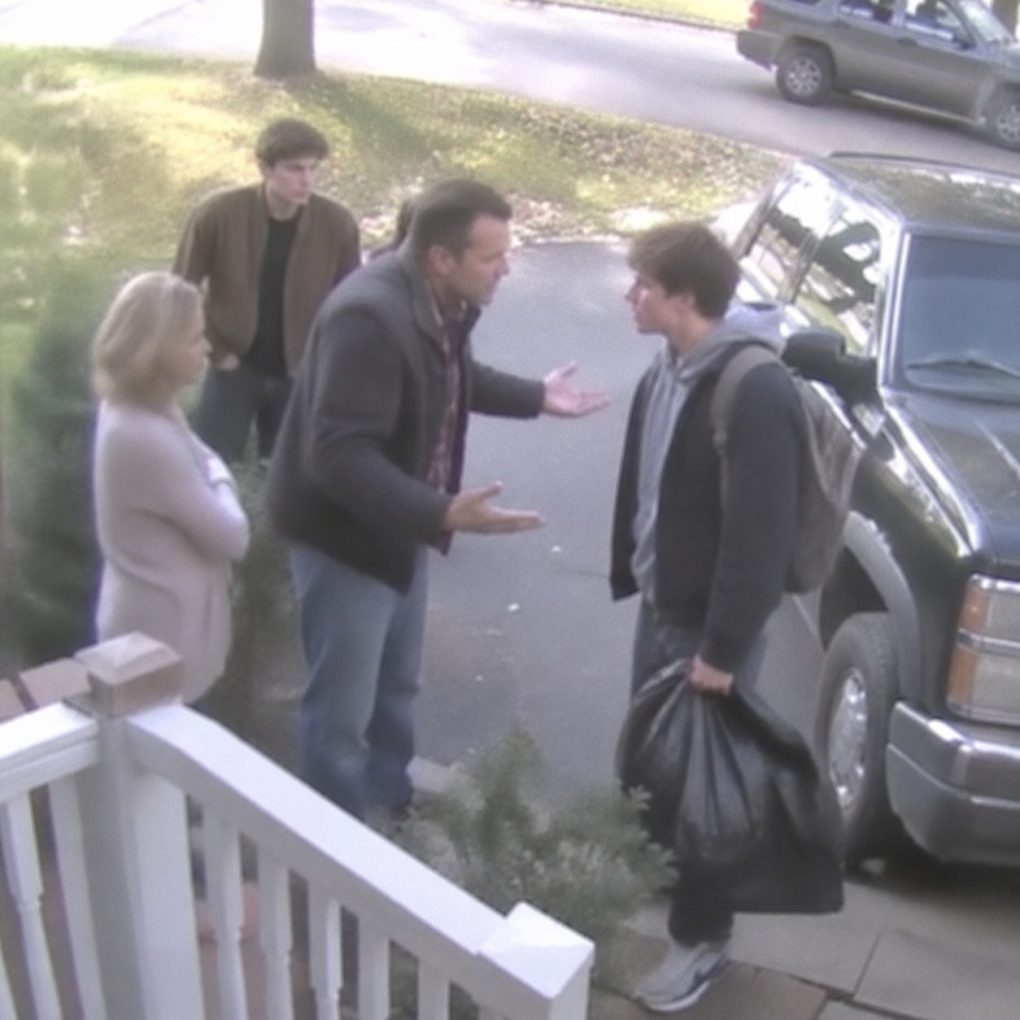
“Happy eighteenth birthday,” Dad said, dropping two black trash bags onto the porch. “You’re old enough to take care of yourself now.”
Behind him, my stepbrother Tyler stood in the hallway holding the keys to a used pickup truck. I recognized the envelope sticking out of Dad’s pocket: the one where I kept the deposit slips from my after-school job at a grocery store.
“Where’s my money?” I asked. “I saved three thousand dollars.”
“Your account was under my name too,” Dad replied. “Tyler needed a down payment. He’s actually going somewhere.”
I had skipped lunches to save that money. I’d worked through football games and school dances, smelling like floor cleaner when I got home, because I wanted a deposit on an apartment after graduation. Dad had opened the joint account when I was fourteen, and I hadn’t understood that he could empty it before I turned eighteen.
My stepmother, Denise, moved my coat off the hallway hook and pushed it toward me. “Don’t make this ugly, Nathan.”
The door shut while I was still holding one trash bag. There wasn’t even a birthday cake inside; the candles I’d seen on the kitchen counter were for Tyler’s celebration of his new truck.
Nine days later, I was behind a diner in Akron, Ohio, looking through a dumpster for food someone might have thrown away untouched. I had been sleeping in my old Honda with a heater that worked only when it felt like it. I still went to school, washing my face in the gym bathroom, but the cafeteria closed long before evening and my next paycheck was days away.
I found a wrapped dinner roll. Before I could open it, a man in a dark overcoat said my name.
“Nathan Brooks?”
I backed against the wall. He held up both hands, then offered me his coat instead of coming closer. “I’m Richard Hartwell. I was your grandfather James Brooks’s attorney. Your grocery-store manager told me where you sometimes parked.”
“My grandfather died when I was twelve.”
Richard’s expression changed. “Nathan, he died five weeks ago.”
He showed me a photograph taken the previous fall: Grandpa, thinner and grayer than I remembered, standing outside a repair shop with the same crooked smile. Then Richard explained that Grandpa had put his estate into a trust for me, with an independent trustee managing it until I was twenty-five.
“Your father knows about the trust,” Richard said. “For now, don’t tell him where you are or what I’ve found.”
“Why?”
Richard handed me one final page. It was a statement declining my inheritance, supposedly signed by me three days before my eighteenth birthday.
The signature wasn’t mine.…Discover what happens next here.
Richard took me inside the diner and ordered soup, a sandwich, and a piece of apple pie. I ate too quickly, then apologized when my hands started trembling; he quietly pushed his own glass of water toward me and let me finish before explaining anything else.
The document my father had sent was called a beneficiary disclaimer. It had no effect: I was still seventeen on the date written beside my forged signature, and no independent attorney had verified it. Richard had preserved the email and attachment rather than accepting Dad’s claim that I wanted nothing to do with my grandfather.
“Your father asked whether the trust could pay him instead,” Richard said. “I told him it couldn’t.”
I thought of the way Dad had said I was going nowhere, standing beside Tyler’s new truck. The cruelest part wasn’t that he’d taken my money; it was that he’d looked me in the eye while planning to take something I hadn’t known existed.
Richard explained the trust without promising me a suitcase of cash. It owned a small repair-shop building, two rental duplexes, and a house, along with savings set aside for maintenance and taxes. The properties needed upkeep, and their values weren’t the same thing as money I could spend; the trustee could pay reasonable housing, education, and living costs now, but the principal would remain protected until I turned twenty-five.
An approved temporary room was arranged through the trustee that afternoon. I took a shower and cried when hot water ran over my fingers, because it was the first time in nine nights I hadn’t needed to decide where I could sleep without being chased away.



