The next morning Richard showed me a box of letters Grandpa had kept copies of. Birthdays, report cards, a photograph of the bicycle he’d taught me to ride—ordinary things Dad had said Grandpa no longer cared about. Several envelopes had been returned marked REFUSED, with my father’s handwriting on the forwarding slips.
Grandpa’s last letter was dated a month before he died. I don’t know what Mark has told you, Nathan. I have never stopped wanting to know you. If you ever come looking, the porch light will be on.
I pressed the paper flat against my knee. When Mom died, I was seven, and Grandpa had been the only person who knew how to make my oatmeal without the lumps I hated. Dad told me five years later that Grandpa was dead; I had carried that lie like a second funeral.
Richard didn’t tell me to forgive anyone. He helped me get my pay records, an account statement showing Dad’s withdrawal, and copies of the trust documents, while I kept going to school and met with a counselor about what had happened.
Three weeks later, Dad discovered Richard had found me. His first message wasn’t an apology. We need to discuss what you owe this family. Your grandfather’s house has always been mine.
I showed Richard the message. He opened the trust’s property schedule and pointed to a familiar address, the little white house where I’d grown up, where my mother had once planted marigolds beneath the kitchen window.
The house was owned by the trust. Dad had been renting it from Grandpa, and he’d stopped paying eight months earlier. The trustee had already begun reviewing the arrears and the forged disclaimer.
Dad had thrown me out of a house that had never belonged to him—and now he was demanding that I help him keep it.
I didn’t go back to the house that week. I finished my classes, worked my grocery-store shifts, and learned to sleep without waking at every car door. The trustee paid for my room directly; nobody handed me millions.
Dad called sixteen times. When I finally answered with Richard beside me, he said Grandpa had promised him the house and that a son should never embarrass his father over paperwork.
“You took my savings and left me outside,” I said. “You knew I had nowhere to sleep.”
“You needed responsibility,” he snapped. “Now sign something so we can stay.”
Richard explained that I couldn’t give away trust property and that the trustee controlled the lease. Dad hung up.
Over the next two months, the trustee reviewed the lease and payment history, gave Dad written notice of the overdue rent, and offered a documented repayment arrangement. Dad refused and still paid nothing; after the required notices, the trustee filed for possession in court.
I attended the hearing because I wanted to understand what was happening to the home where Mom had measured my height on the pantry door. Dad sat beside Denise, wearing the same good jacket he’d worn to Tyler’s truck dealership, and told the judge he had raised me for eighteen years and deserved consideration. He even claimed I had offered to let him stay indefinitely. Richard provided the messages showing Dad had asked me to sign that very permission, and his lawyer stopped repeating the claim.
The trustee’s lawyer submitted the lease and ledger. The court addressed unpaid rent and possession, not whether Dad had been a good father; the resulting order required him to leave. The forged disclaimer was rejected, and an investigator later confirmed Dad had sent it; no criminal charges followed.
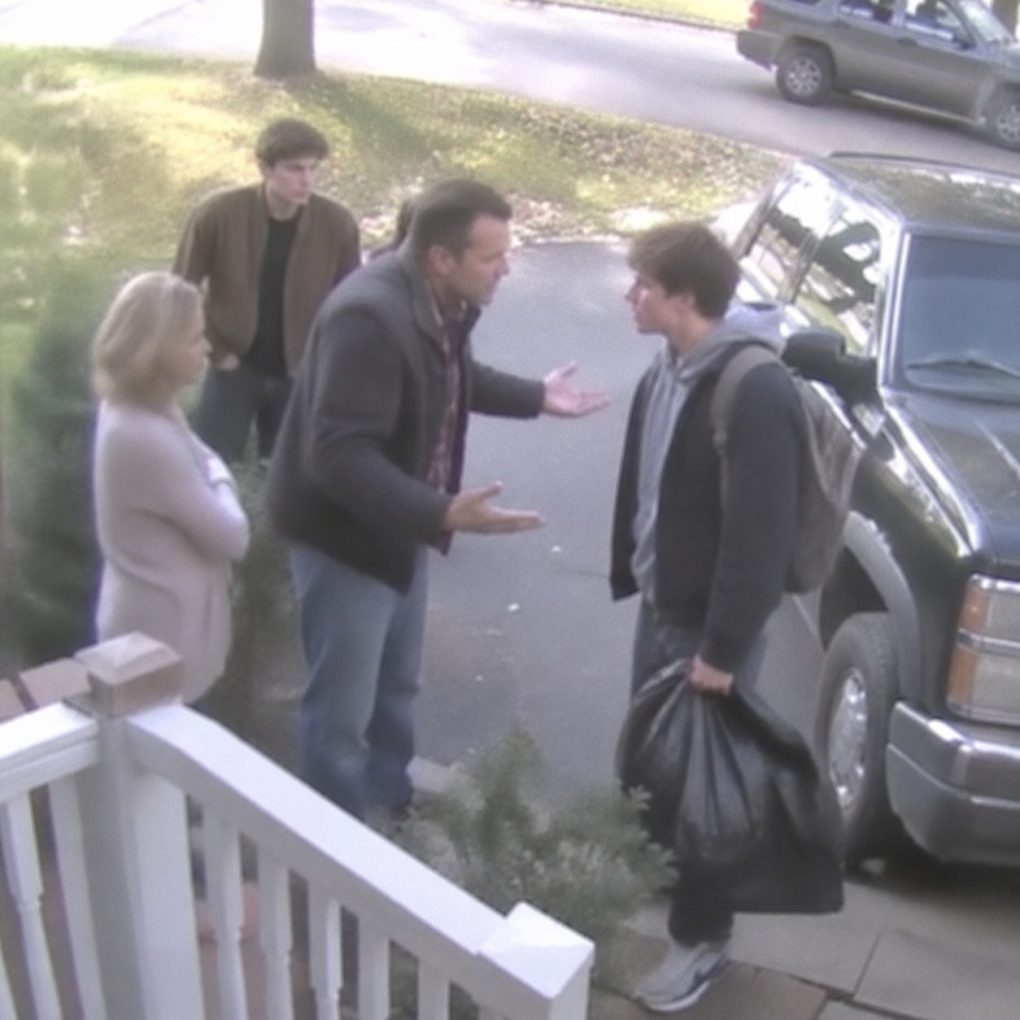
Outside the courtroom, Dad caught up to me near the stairs. “Are you happy now? Your own father has to move because you got lucky.”
I remembered the dumpster’s cold edge and Richard holding out his coat. For nine days I’d mistaken Dad’s silence for proof that I deserved to be abandoned.
“I didn’t take your home,” I said. “You stopped paying rent on somebody else’s. And when I needed a place to sleep, you told me that wasn’t your problem.”
He said nothing. I walked away.
Dad and Denise moved into a smaller rental after the court order. Tyler called once to tell me he hadn’t known the down payment came from my wages; he sold the truck later and sent me part of the money, and Dad repaid the balance after Richard made a documented demand. I accepted it without calling us reconciled.
I graduated that spring. The trust helped cover tuition for a community-college automotive technology program, while a property manager looked after the rentals and shop. I visited the repair shop one afternoon and found Grandpa’s old wooden toolbox on a shelf, with my name written inside the lid in faded blue marker.



