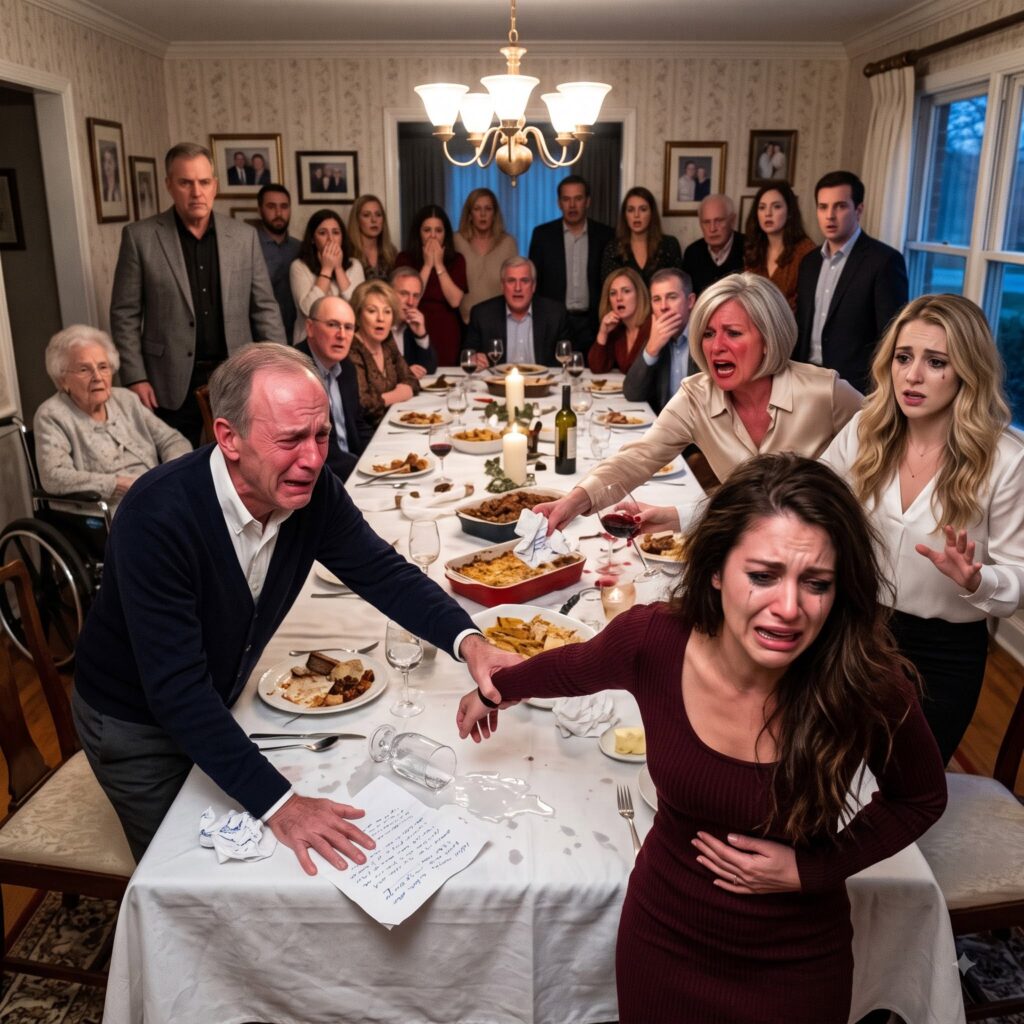
One year later, a nurse at the Clinic told me my father’s new kidney was working better than most she’d seen. We celebrated at the same dining table, the same chairs, the same white tablecloth. Twenty-two relatives came back, and this time, they brought cards.
Courtney came too. She sat at the far end, quieter, thinner, in a plain gray sweater. She’d made her twelfth monthly restitution payment that week and had started therapy for her anxiety. When dinner ended, she found me in the hallway.
“I’m not asking you to forgive me,” she said. “I just want to be someone you can count on someday.”
I looked at my little sister, the girl who once held my hand at the dentist when she was six. “Start with the dishes,” I said.
She almost smiled. And she did them.
People ask if I regret it. I don’t. I’d give my father that kidney again. But I’d also ask for what I needed, out loud, the first time. That’s the part I learned too late.
Back at the table, Dad tapped his glass. “I’d like to make a toast,” he said, and my mother, for once, was the first to look at me. “To my daughter Hannah, who didn’t have to be strong. And did it anyway.”
I raised my glass. For the first time in my life, nobody told me I’d be fine. They asked.
And I told them the truth: I was getting there.



