I called Croft. She listened while I read the first paragraph, then asked where we were. “Federal defenders’ conference room, downstairs.” She said, “Stay there. Send me the original files through the case portal. I’m coming down.” While we waited, Sarah pulled an Omni travel expense report from discovery. Clayton had charged a suite at the Four Seasons in Manhattan on the night of the approval. The hotel bill established where he’d booked a room. The login audit recorded an access request from the hotel’s network, and Omni’s inventory linked the device to Clayton. We still needed someone who could say who was sitting in front of it.
Croft arrived alone. She read the letter twice, then turned her laptop toward me. Her copy of the approval record stopped one line before the executive override. Omni had submitted that shortened export to investigators. The complete native file had come later, buried in a batch of records produced under subpoena. “My witness told me this afternoon that the export showed the entire approval history,” she said. “I asked him that in front of twelve people.” She shut the laptop. “I need to find out whether he knew.”
A courthouse deputy knocked. Judge Caldwell wanted counsel upstairs immediately. When we walked into chambers, the court reporter was setting up beside a bookcase. Caldwell had a draft order on his desk. He said Omni had complained that its privileged records had been accessed and he was considering restricting their use. I asked which record Omni had identified. “The payment authorization,” he said. Croft and I looked at each other. Neither of us had told him what we’d found. Croft asked that Omni’s communication be entered on the record. Caldwell told her it had been a phone call from his brother.
Then he offered Michael a way out. If Croft agreed, Michael could plead to a lesser offense, get probation, and be home for breakfast. She told him there was no such offer from the government. Caldwell turned to me. “A man in your client’s position ought to think about his daughter.” I thought about what Michael had said about her last name. I asked the court reporter to read Caldwell’s words back. She did, slowly enough that I could hear the air conditioner cut off between sentences. Croft joined my request to preserve the records. Caldwell signed an order sealing the disputed exhibit overnight and told us to be ready at nine.
Michael was still at his sister’s house when I called. I told him about the document and about what Caldwell had said. He went quiet. Then he asked, “If I take probation, can they still say I did it?” I told him what a guilty plea would mean. “Then I’m coming back tomorrow,” he said. “I want my daughter to hear what actually happened.” Ten minutes later, his sister sent him a picture from outside her house. Someone had left an envelope under the windshield wiper of his car. Inside was a photocopy of his daughter’s school pickup authorization. Her name and the time she got out were circled. Croft called the FBI while Michael got his daughter on the phone.
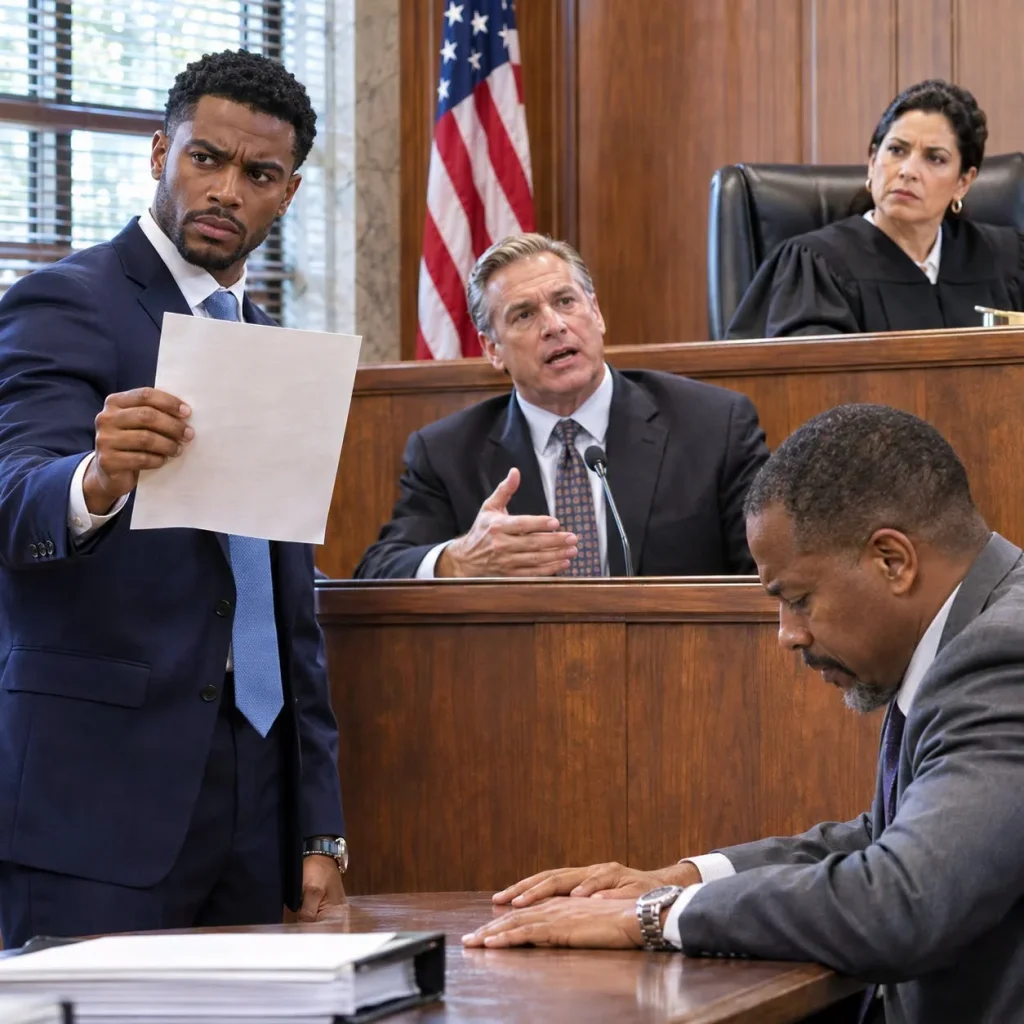
At 8:57 the next morning, two agents were with Michael’s family. Croft had submitted the overnight transcript and the payment letter to the chief judge under seal. She was standing beside me when Omni’s records custodian came through the courtroom door carrying a laptop bag. He glanced toward Clayton in the first row, walked straight to us, and set the bag on the defense table. “He told me to wipe it,” he said. Croft asked him when. “Last night. After he got off the phone with the judge.” Behind us, the door to chambers opened. Caldwell came out in his robe and looked directly at the bag. “Deputy,” he said, “bring that to me.”
If you’ve read this far, don’t hesitate to leave a like and comment before reading part 3. It makes us as happy as reading a complete story! Thank you. 👍❤️
Part 3
The deputy had taken one step toward us when Croft said, “That laptop is evidence in a federal investigation. Please leave it where it is.” Caldwell gripped the edge of the bench. Before he could answer, the courtroom clerk came through the side door with a signed order. The chief judge had reassigned the case. Judge Marisol Vega would hear the parties in twenty minutes. Caldwell read the order standing up. Then he walked back into chambers, leaving his glasses beside the microphone.



