Chapter 1 – The Ink on the Paper
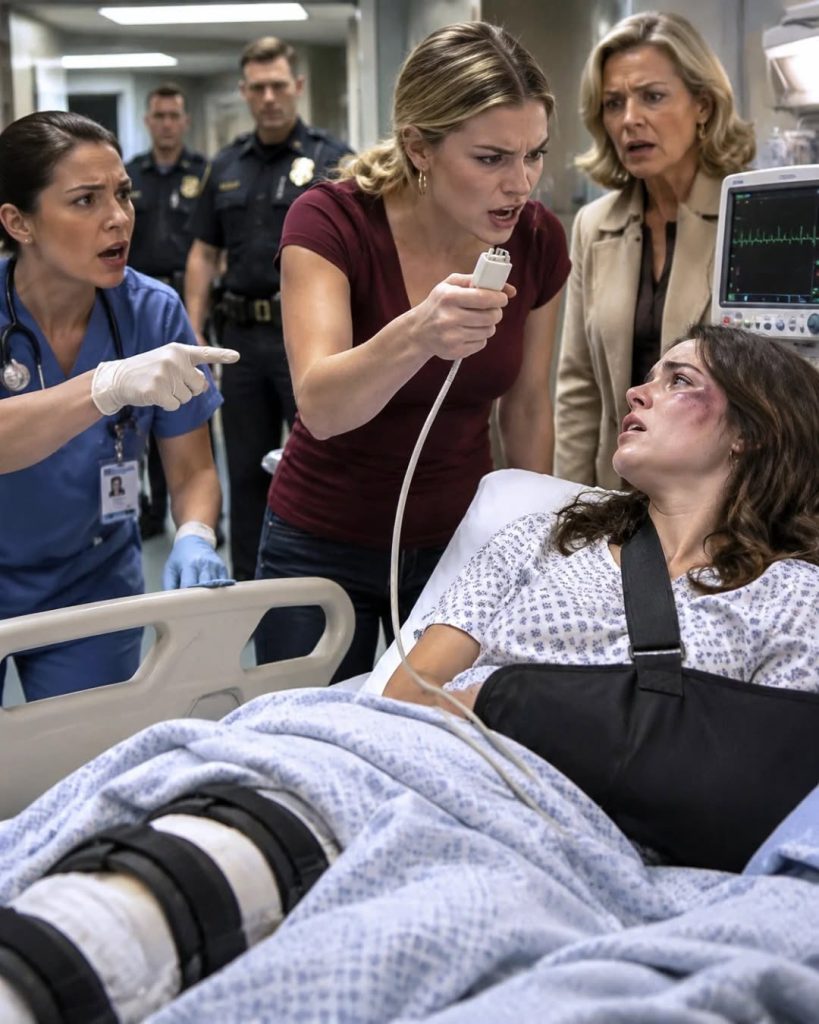
The paper felt colder than the hospital room. Dr. Conner held the folder steady, her thumb pressing into the manila edge so hard the cardboard bent. The overhead fluorescent lights flickered once, casting a pale, sterile sheen across the signature at the bottom of the intake document.
I stared at the looping, ornate cursive. It was neat. Calculated. Every arch and cross had been practiced over decades of private school thank-you notes, country club sign-in sheets, and estate paperwork.
It was my mother’s handwriting. Eleanor Vance.
“She signed this before you even cleared the trauma bay,” Dr. Conner said, her voice dropping into a tone that was entirely medical yet laced with quiet fury. “She told the triage physician that you suffered from severe somatic symptom disorder. She explicitly stated that you were narcotic-seeking, emotionally unstable, and prone to manufacturing crises for attention. Because of this signed declaration, when you regained consciousness crying out from the blunt-force trauma to your ribs and pelvis, the protocol held back the morphine pump for three hours. The nursing staff thought they were managing a psychological episode, not acute internal trauma.”
The air in my chest thinned out until I couldn’t expand my lungs. The cracked ribs throbbed in sharp, jagged synchrony with my heartbeat. “Three hours,” I whispered. My voice sounded like crushed gravel. “I thought… I thought I was dying, and nobody was coming.”
“I took over the shift at six,” Dr. Conner said, pulling the chair closer, the metal legs scraping across the linoleum floor. “I looked at your thoracic scans. Two fractured ribs, a hairline crack in your left pelvic wing, severe contusions along your cervical spine. You were in agony because your body had been crushed in a collision, not because you wanted a pill. When I confronted your mother about the discrepancy, she smiled and told me I was young, and that I didn’t know how manipulative her youngest daughter could be.”
I looked down at my hands. The skin across my knuckles was split and bruised purple, the hospital ID band loose around my thin wrist. All my life, silence had been the only currency that kept the peace in our house. When Eleanor decided a narrative, the world had to bend to accommodate it. If Tessa failed an exam, it was because the teacher was jealous. If Tessa ran a red light, the city’s traffic department was incompetent. But when I graduated top of my class, Eleanor told the dinner table I was simply terrified of failure. When I bought my first car, Tessa called it an eyesore meant to upstage her leased sedan.
And now, lying in a bed where metal had folded around my limbs only hours earlier, they were trying to write my final chapter before I could even sit upright.
The door swung open, and Officer Hayes stepped inside. He had removed his patrol cap, holding it against his belt. His partner remained outside, a tall silhouette against the frosted glass of the hallway.
“Ms. Vance,” Hayes said gently. “The attending nurse, Clara Campbell, filed a formal complaint. We have your sister, Tessa, and your mother detained in interview room B downstairs. We pulled the security footage from the hallway. We also have Nurse Campbell’s direct eyewitness testimony that your sister deliberately disconnected your telemetry monitor while mocking your condition, and that your mother made no effort to intervene or notify staff.”
“They said I was dramatic,” I managed to say, the sting of tears threatening the corners of my eyes, though I refused to let them spill. Crying had always been weaponized against me; in Eleanor’s house, tears were called ‘cheap theater.’
“Pulling a patient’s monitor in an acute post-trauma ward isn’t drama, Ms. Vance,” Hayes replied firmly. “It’s reckless endangerment. Depending on your physiological status at that moment, it could be elevated to aggravated assault. But there’s another matter.”
He glanced at Dr. Conner, who gave a curt nod of permission. Hayes pulled a small digital voice recorder from his vest pocket.
“The highway patrol finished their preliminary sweep of the intersection where you were struck,” Hayes said. “Route 9 and Blackwood Lane. The driver of the delivery van that clipped your rear quarter-panel remained on scene. He wasn’t intoxicated. His dashcam caught the entire accident.”
My heart jumped against the monitor leads taped to my sternum. The machine gave a sudden, rapid cadence of beeps. “He ran the red light?”
“No,” Hayes said, his face hardening. “You did. But not because you were distracted. The dashcam clearly shows your brake lights engaging three times before you entered the intersection. Your vehicle never slowed down. When the recovery team hauled your sedan up the embankment, they found something the fire department initially missed.”



