“Eleanor told the prosecutors that Tessa was the mastermind,” Marcus replied with a cold chuckle. “She claimed Tessa was drowning in credit card debt and that Tessa threatened to report Eleanor’s bank fraud to the SEC if Eleanor didn’t help her eliminate you. They’re housed in separate wings of the detention center now because Tessa tried to physically attack Eleanor during an attorney consultation.”
I looked out the window at the autumn rain tapping gently against the glass. There was no joy in hearing it, but there was a profound, settling sense of justice. They had spent their lives feeding on my silence, tearing away pieces of my identity to patch over their own insecurities and greed. Now that there was nothing left of me to consume, they were devouring each other.
“The district attorney offered them a final plea,” Marcus said. “Eleanor takes twenty-five years without parole. Tessa takes twelve. If they reject it, the trial begins next month, and the state will seek the maximum—forty to life.”
“Will they take it?”
“Sterling resigned from the defense yesterday,” Marcus said. “He cited non-payment of fees and irreconcilable conflicts of interest. The state appointed public defenders. The public defenders know the evidence is bulletproof. They’re advising both of them to take the deal.”
That evening, I received a phone call from the county jail.
An automated voice chimed: *”You have a collect call from an inmate at the Dutchess County Correctional Facility. Inmate name: Eleanor Vance. Do you accept the charges?”*
I held the phone to my ear, listening to the static on the line.
I could hear the background noise of the prison ward—clanging metal gates, distant shouts, the cold echoes of institutional life. I could hear Eleanor breathing heavily, waiting for me to say yes, waiting for me to play my assigned role as the dutiful, guilt-ridden daughter who would cave to her mother’s tears.
I didn’t press the button to accept.
I didn’t yell. I didn’t demand an apology.
I simply pressed the red disconnect button, selected the number from my call history, and hit *Block Contact*.
The silence that followed was no longer a cage. It was freedom.
***
Chapter 9 – The Courtroom Confrontation
The sentencing hearing took place on a gray Tuesday in November.
Both Eleanor and Tessa had capitulated, signing the plea agreements forty-eight hours before jury selection was scheduled to begin. Eleanor had taken the twenty-five-year sentence to avoid dying in prison; Tessa had accepted twelve years, with three years of mandatory supervised release.
The courtroom was packed to the doors with the press, former family friends, and members of the public who had followed the shocking case of society betrayal.
Judge Alvarez sat grim and unyielding as the prosecutor concluded his final remarks.
“The state requests the full terms of the negotiated plea be imposed without deviation,” the prosecutor stated. “And before sentencing, the victim, Lauren Vance, wishes to deliver her victim impact statement.”
I stood up. I wasn’t wearing a sling anymore. The fractured ribs had healed into smooth bone; my stride was steady and upright. I wore a simple black wool coat, my hair loose around my shoulders, carrying a single sheet of paper in my hand.
I walked to the lectern, adjusted the microphone, and looked across the room.
Eleanor was staring down at her chained hands, refusing to look up. Tessa was trembling, tears streaming silently down her pale cheeks.
“I didn’t write this to ask for a harsher sentence,” I began, my voice carrying into every corner of the vast room. “The law has already done what my family never could—it held you accountable for the violence of your choices.”
Eleanor’s jaw tightened, but she kept her head down.
“For twenty-five years,” I continued, “you taught me that love was conditional. You taught me that my voice only had value if it was agreeing with your lies, and that my pain was an inconvenience to your image. You spent years convincing everyone—including me—that I was weak, dramatic, and fragile.”
I paused, looking directly at Tessa. Her eyes flicked up, meeting mine for a split second before darting away in shame.
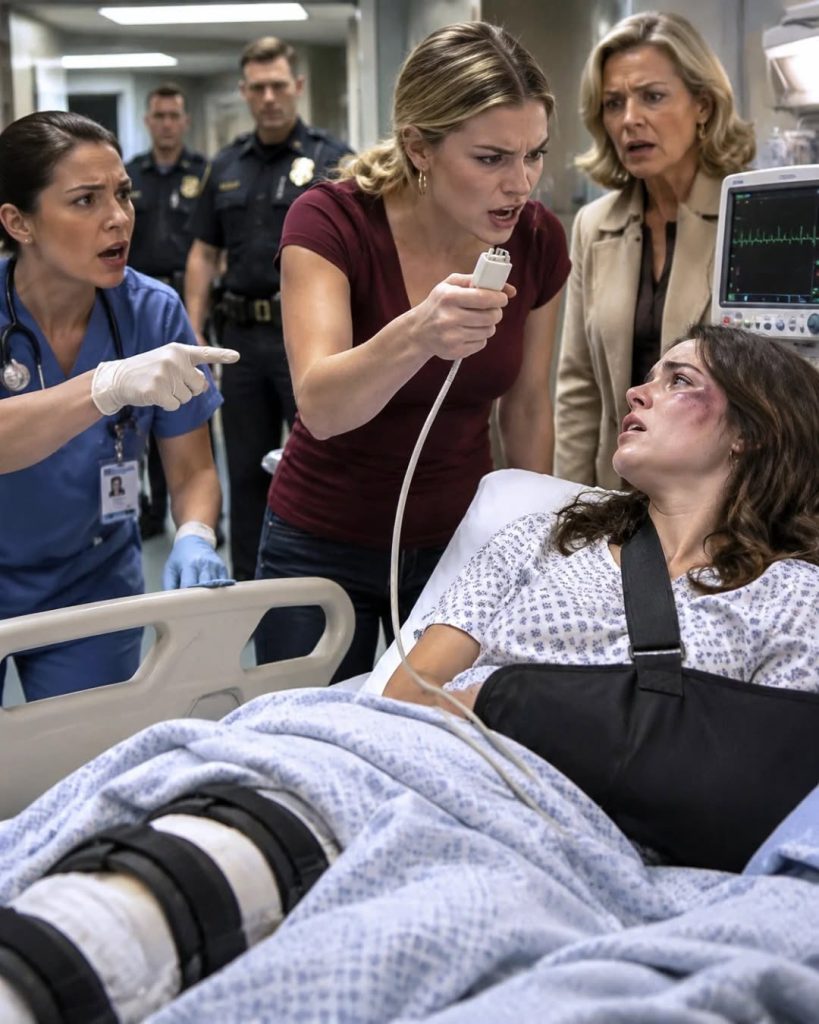
“When you stood over my hospital bed and pulled that cord, Tessa, you thought you were proving I was nothing. You thought that if nobody heard the machine, nobody would hear me die. But what you didn’t understand is that the monitor wasn’t keeping me alive. The machine was only recording what was already inside me: a heart that refused to stop beating.”
A quiet murmur rippled through the gallery.



