Mom claimed she still possessed authority under Grandma’s old estate paperwork. Rachel submitted a limited power of attorney to a regional lender stating that Mom could act on my behalf concerning the property.
My signature appeared at the bottom.
I had never signed it.
“How much?” I asked.
Rachel stared at the floor.
Mom answered.
“One hundred eighty-six thousand.”
Daniel swore under his breath.
The loan was supposed to finance a pavilion, commercial kitchen upgrades, landscaping, and Rachel’s existing business debt.
And the lake house was part of the collateral package.
Rachel suddenly became defensive.
“We weren’t stealing the house. The business would have made money.”
“You forged my signature.”
“You would have said no.”
“Yes.”
She seemed genuinely offended by that.
That was when Aunt Carol, my mother’s older sister, asked to see the folder Rachel had brought.
Rachel refused.
Carol took one step toward her.
“What did you use for notarization?”
Nobody moved.
I felt something cold settle in my stomach.
My attorney, Michael Levin, had called me two days earlier after a title-monitoring alert showed unusual activity connected to the property. That was why the certified deed was in my bag.
I had planned to speak privately with Mom after the reunion.
I hadn’t known how far they had gone.
Then my cousin Ben said something that changed everything again.
“My coworker’s daughter booked her wedding here.”
I turned toward him.
“What?”
“She paid a deposit months ago.”
Rachel’s face went white.
Within ten minutes, three relatives had found Rachel’s business page on their phones.
Eleven weddings.
Two anniversary parties.
A corporate retreat.
All advertised at my home.
Several dates were already booked.
Mom sank into a chair.
I asked Rachel how much money she had collected.
She wouldn’t answer.
My phone rang.
Michael.
I put him on speaker.
He told me the lender had finally sent his office a copy of the purported power of attorney.
He had reviewed it.
My signature was forged.
But that wasn’t the part that made Aunt Carol grip the table.
Michael continued.
“The document was notarized under Carol Whitman’s commission.”
Carol stared at Rachel.
Her voice was almost a whisper.
“That’s impossible.”
Rachel stepped backward.
Carol looked around the room.
“My notary stamp disappeared three years ago.”
Then she looked directly at my mother.
“And Linda was the last person who knew where I kept it.”
Nobody spoke for several seconds.
Then Mom did exactly what people do when the truth becomes too large to deny.
She attacked the person exposing it.
“This is ridiculous,” she snapped. “Emma has always been dramatic about money.”
I almost laughed.
Not because anything was funny.
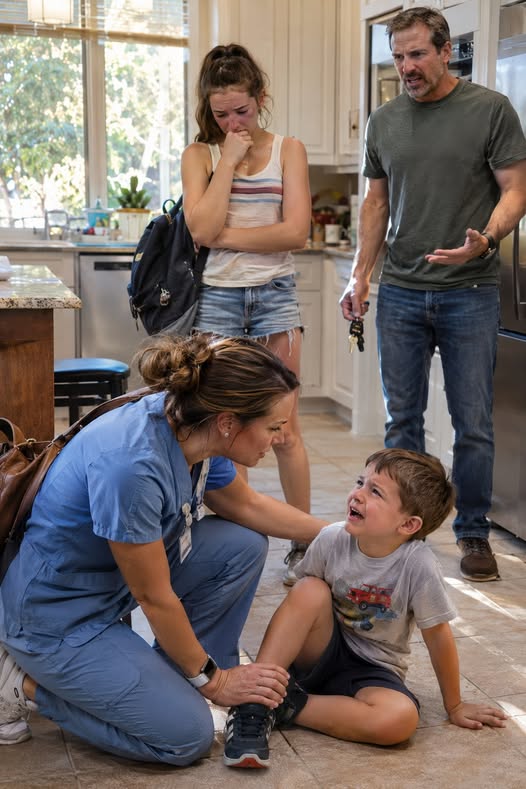
Because she was standing inside a house I owned, beside a daughter who had forged my signature, after excluding an eight-year-old child from a family reunion, and somehow I was still the problem.
Daniel walked over and took Lily’s plate from her hands.
“We’re leaving.”
I nodded.
But before we did, I needed to make one thing clear.
I looked at everyone in the room.
“The reunion is over.”
Mom stood.
“You cannot throw twenty-three members of your own family out.”
“I’m not throwing anyone out because they disagreed with me. I’m ending an event at my property after discovering it may be involved in financial fraud.”
That finally silenced her.
I called Michael back outside.
He told me not to sign anything, not to destroy anything, and not to confront the lender myself. His office would send written notice that afternoon confirming that neither Mom nor Rachel had authority to encumber, lease, renovate, or commercially operate the property.
The Monday closing would be stopped.
Then he asked me a question.
“Emma, did you authorize any weddings?”
“No.”
“Any event contracts?”
“No.”
“Any deposits?”
“No.”
He paused.
“Then we have a second problem.”
Those customers believed Rachel had legal authority to rent the property.
If someone were injured during an event, the insurance nightmare alone could be enormous.
Daniel drove Lily home while I stayed behind long enough to photograph the paperwork Rachel had left on the dining table.
I found copies of vendor estimates.
A construction proposal for $72,000.
A loan application.
And then I found a spreadsheet.
Rachel had collected just over $74,000 in deposits.
Most of it was gone.
When I confronted her, she finally admitted she had used some of the money for advertising, business debt, her SUV payment, and the deposit on the proposed pavilion.
“You were going to build on property you don’t own?”
She rubbed her forehead.
“Mom said eventually you’d come around.”
Mom immediately interrupted.
“Don’t put this all on me.”
That was the moment their alliance started collapsing.
Rachel accused Mom of promising that Grandma’s estate documents could be “fixed.”
Mom accused Rachel of rushing the loan.