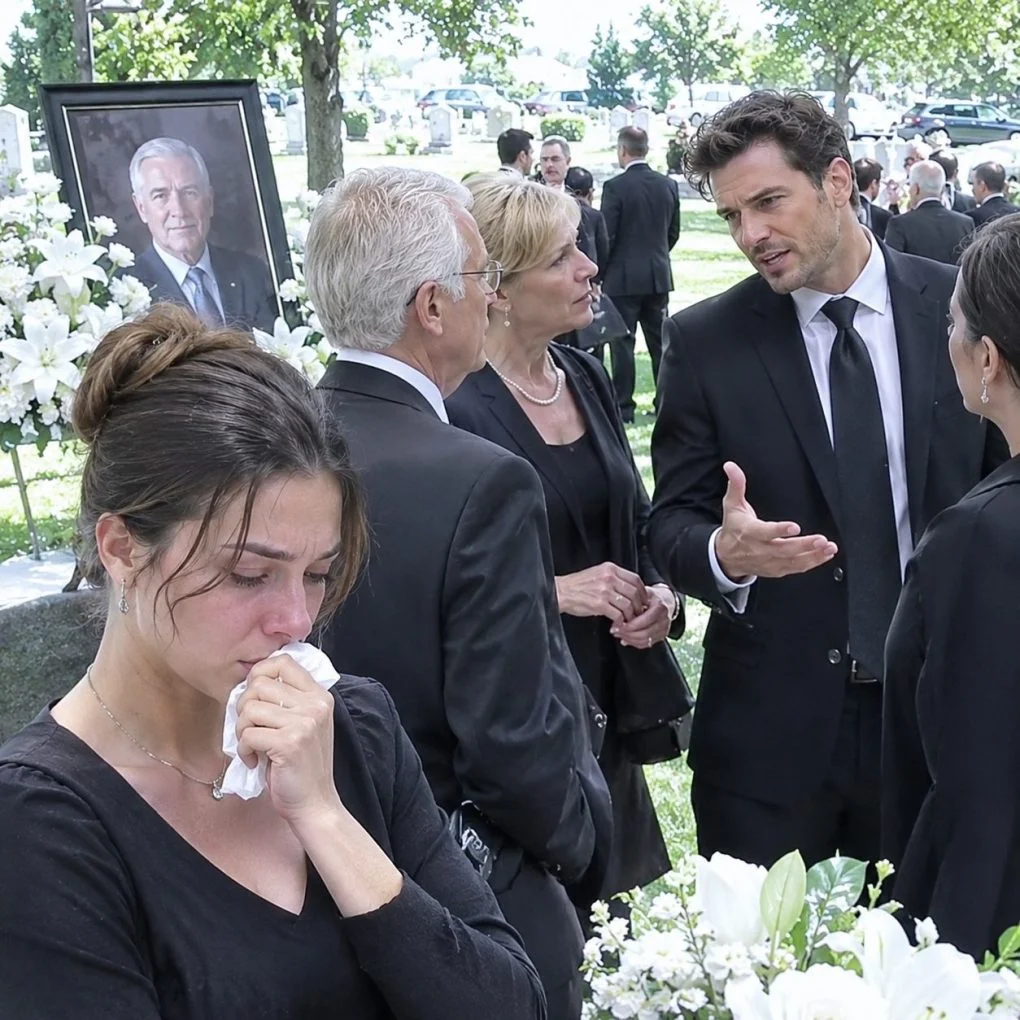
Two police officers interrupted my job interview just as the hiring manager reached for my résumé. My mother-in-law had reported that I’d kidnapped my own children. I showed them the custody paperwork, but the officer’s next question made the room go silent—and exposed why she’d really called…
“Ma’am, your mother-in-law says you’ve kidnapped two children, and we need to know where they are.”
The police officer said it at 9:17 on a Tuesday morning, standing in the glass-walled conference room where I was interviewing for my first full-time job since my husband died. Across the table, the hiring manager slowly lowered my résumé, while the second officer glanced at the framed family photograph beside my laptop.
I was thirty-four, a widow raising two children in Cincinnati, Ohio, and the children I was supposedly kidnapping were my own eight-year-old daughter, Sophie, and five-year-old son, Noah.
Their father, Michael, had been killed in a highway accident fourteen months earlier.
“Who reported this?” I asked, although my stomach already knew the answer.
“Evelyn Porter. She says she’s their legal guardian and that you removed them without permission.”
Evelyn was Michael’s mother, the woman who had held me upright at his funeral while I struggled to breathe through the smell of lilies. She’d spent the past year telling everyone that grief had made me incapable of raising my children, and three days earlier, she’d threatened to make me regret refusing her another weekend visit.
The hiring manager, Mr. Reynolds, quietly asked whether I needed a moment. I looked down at my navy blazer, the one Michael had bought me for our tenth anniversary, and felt the humiliation spreading across my face.
“My children are with my sister,” I explained, showing the officers a photograph Megan had sent fifteen minutes earlier. “She’s watching them while I interview, and I’m their surviving parent.”
One officer stepped aside to verify their location, while the other examined the paperwork Evelyn had given police. It was labeled Temporary Guardianship Authorization, and the signature beneath my name looked frighteningly familiar.
I had never signed it.
“Did your husband authorize his mother to care for the children?” the officer asked.
I swallowed. “My husband has been dead for fourteen months.”
He looked down at the document again.
“Mrs. Carter, I need you to look at this date.”
My hands went cold as he turned the page toward me. The signature at the bottom belonged, supposedly, to Michael, authorizing Evelyn to take custody whenever I was absent or unable to care for our children.
But the date beside his name was Monday.
Yesterday.
The officer’s expression changed.
Someone had forged my dead husband’s signature—and my mother-in-law had brought that document to the police
The officers didn’t arrest me, and after confirming Sophie and Noah were safe with Megan, they explained that Evelyn’s accusations didn’t establish that any kidnapping had occurred. One officer retained the disputed document for further investigation, while Mr. Reynolds kindly offered to reschedule my interview.
I thanked him, walked to my car, and cried so hard I couldn’t immediately start the engine. Michael had died without warning on a rainy Thursday, and I’d spent fourteen months trying to keep our children from noticing how frightened I was every time another bill arrived.
Now his mother had made me look like a criminal in front of a man who might have offered me the job that could finally stabilize our lives.
When I reached Megan’s house, Sophie was sitting on the carpet helping Noah build a train track. She looked up at my red eyes and asked, “Mommy, did you get the job?”
I knelt beside her, smiling as carefully as I could.
“Not yet, sweetheart.”
That evening, after the children fell asleep, I took the guardianship document to attorney Sarah Bennett. She immediately noticed that the signature supposedly belonging to Michael matched one from an old insurance form, including an unusual pen stroke he’d developed after injuring his wrist.
Sarah also asked why Evelyn was so determined to establish herself as the children’s legal guardian.
The answer began with a trust Michael had created when Sophie was born. He’d directed a $320,000 life insurance benefit into a trust for our children’s education and future needs, naming Evelyn as trustee because she had worked as a bookkeeper and he believed she’d always protect her grandchildren.
At first, I’d been grateful for that arrangement. Evelyn helped with groceries after the funeral, paid for Noah’s preschool deposit, and brought homemade chicken soup when I couldn’t bear the thought of cooking.
But gradually, every offer came with a condition.
She insisted on deciding where the children went after school, questioned whether I was emotionally stable enough to drive, and told Sophie that Grandma’s house might become her permanent home. When I started applying for jobs, Evelyn warned that working mothers often lost track of what their children really needed.



