Three weeks before my interview, I’d asked her for a statement showing how much remained in the trust.
She refused.
Sarah sent a formal request for an accounting, and when Evelyn ignored it, we petitioned the probate court for the records. Through that process, we eventually obtained bank statements revealing thirteen monthly withdrawals of $5,600 labeled Residential Care Reimbursement.
Another $23,400 had been paid to a supposed private tutoring service.
The total was $96,200.
The problem was that my children had lived with me every night except for occasional visits to their grandmother. Sophie attended public school, Noah went to a licensed preschool I paid for myself, and neither child had received the private tutoring listed in those records.
The tutoring company was registered to Evelyn’s mailing address.
When Sarah confronted her attorney with the documentation, Evelyn claimed the payments compensated her for emotional support and childcare. But the trust permitted reasonable expenditures benefiting the children, not undocumented payments into the trustee’s personal accounts.
Then a court filing revealed something even worse.
Four days before my job interview, Evelyn had petitioned for emergency guardianship, claiming I’d abandoned the children and was incapable of supporting them. The forged authorization appeared among her supporting documents, along with a statement that I was “unemployed, unstable, and frequently absent from home.”
She had used my interview as supposed evidence of abandonment.
Megan helped me organize school attendance records, medical appointments, childcare receipts, and messages documenting the children’s daily routines. We also preserved a voicemail Evelyn had left after I refused to let her take the children for an unscheduled weekend.
I hadn’t listened to the entire recording before.
This time, Sarah played it from the beginning.
“You think getting a fancy job will make you independent of me?” Evelyn said. “Those children are all I have left of Michael, and if you won’t cooperate, I’ll make sure nobody trusts you to raise them.”
There was a pause, followed by a sentence that made my hands go numb.
“Once the court gives me the children, nobody will question what I’ve spent from their trust.”
“Your father would have wanted us to enjoy his money, Olivia. Three hundred and twenty-one million dollars can change our lives.”
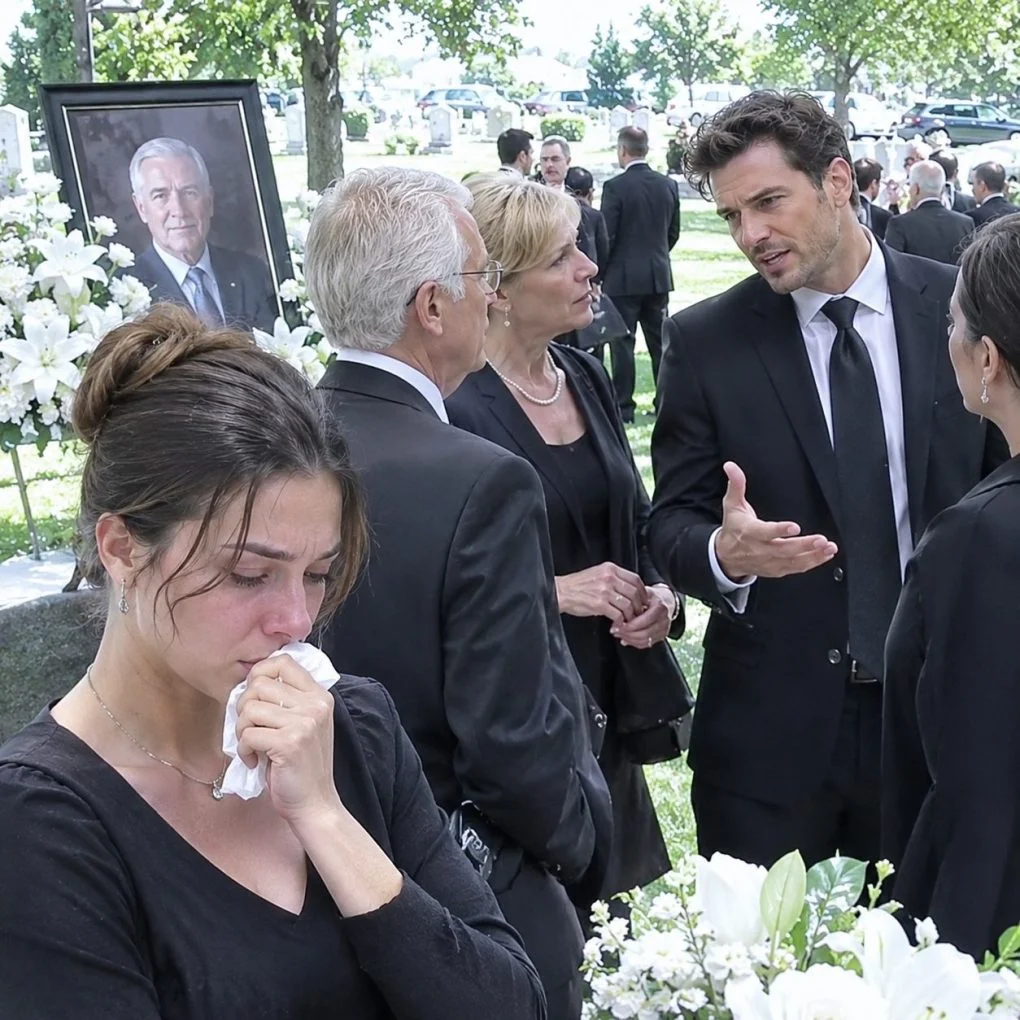
My husband, Nathan, said those words at my father’s funeral reception, raising his champagne glass while I stood beside a table covered in sympathy cards. Dad had been buried less than an hour earlier, and Nathan was already describing the houses, cars, and investment properties he planed to buy with an inheritance that had never belonged to him.
He wore a perfectly pressed black suit, a silver watch, and the expression of a man attending a celebration rather than a funeral. He hadn’t visited Dad once during his final illness, although I’d spent eleven weeks sleeping in a chair beside his hospital bed.
“Nathan, please,” I whispered. “Not today.”
He leaned closer, smiling for the relatives standing nearby.
“Sweetheart, your father built an empire. He’d want us to carry on his legacy.”
My name is Olivia Bennett. I’m thirty-eight, and my father, William Bennett, spent forty-two years building a commercial real estate and manufacturing business in Ohio.
People saw his wealth, but I remembered the man who packed my school lunches, repaired my bicycle in the garage, and still called every Sunday to ask whether I’d eaten dinner.
When pancreatic cancer took away his appetite, I learned to make the thin potato soup he could sometimes tolerate. Nathan complained that I was spending too much time at the hospital, then stopped accompanying me altogether.
Six months earlier, his struggling property development company had begun missing payments. Suddenly, every conversation we had ended with him asking whether Dad might consider investing.
Dad always refused.
“Your husband wants the business, sweetheart,” he told me one afternoon. “But I’m not sure he understands what it means to take care of people.”
I thought Dad was being overly cautious.
Standing at his funeral, I finally understood.
Nathan tapped his glass with a spoon.
“To William Bennett, who gave his family an incredible future.”
I felt something inside me sink.
Before anyone could applaud, the reception room door opened.
Margaret Ellis, Dad’s longtime estate attorney, entered carrying a black leather folder. She walked directly toward Nathan, ignoring the glass in his hand.
“Mr. Collins,” she said, “I need you to sit down.”
Nathan smiled.
“Margaret! Perfect timing. We were just discussing the estate.”
“Yes,” she replied. “That’s why I’m here.”
She turned toward me.
“Olivia, your father signed updated trust documents six weeks before he died. He also left instructions concerning your husband’s financial activities.”
Nathan’s smile disappeared.
Margaret opened the folder and placed a letter on the table.
“Mr. Collins, why did you submit a document promising your lender eighteen million dollars from this estate, bearing your wife’s signature, when she has never authorized that commitment?”



