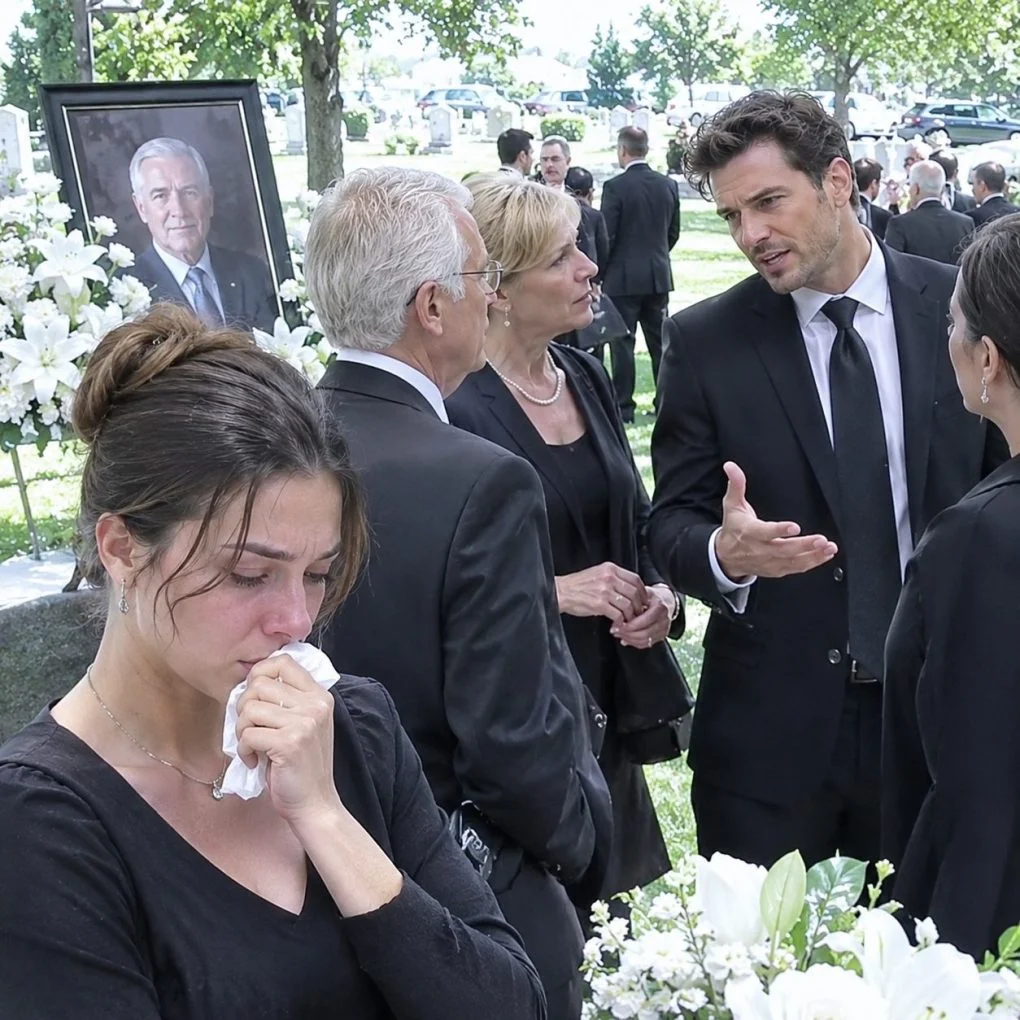
Nathan called seventeen times that weekend.
When I finally answered, his voice was frantic.
“Olivia, the lender is going to withdraw the financing. If that happens, my development company could collapse.”
I stood beside the kitchen window, looking at the rosebush Dad had planted the summer before his diagnosis.
“Then you need to tell your investors the truth.”
“You’re really going to ruin me over a signature?”
“No, Nathan. You made promises using money that wasn’t yours.”
He became quiet.
Then he said, “Your father never liked me.”
I thought about the nights Dad had asked whether Nathan was coming to visit, and the way he’d eventually stopped asking.
“He gave you chances,” I replied. “You kept asking him for money instead of showing up.”
The following Tuesday, Nathan attended a meeting with his lender and business partners, hoping to revive the project. I participated with my attorney solely to clarify that I had not authorized any financial commitment.
The lender’s representative placed the disputed letter on the conference table.
“Mrs. Collins, is this your signature?”
“No.”
“Did you authorize your husband to make this commitment on your behalf?”
“No.”
Nathan looked toward me.
“Olivia, please.”
For eleven years, I’d responded to that word by surrendering something: a vacation, a savings goal, another evening I could have spent with Dad.
This time, I didn’t move.
The lender confirmed it would not proceed with the proposed financing. Without the anticipated investment, Nathan’s partners withdrew from the hotel conversion, and his company eventually sold its development rights at a loss.
His existing debts remained his responsibility under their financing agreements. The disputed documents were investigated separately, and my attorney ensured the matter was addressed without allowing Nathan to pressure me into a settlement.
Our divorce took eleven months.
During financial disclosure, the transfers from our joint savings became a major issue. The final property settlement accounted for the money Nathan had diverted into his company, and I received an agreed larger share of the proceeds when we sold our marital home.
Nathan kept the remaining interests in his struggling business, along with the associated obligations allocated to him in the settlement.
He received nothing from Dad’s trust.
Not because I’d staged some elaborate punishment, but because Dad had never given Nathan any right to the inheritance in the first place.
I moved into a smaller house with a garden, brought home Dad’s old reading chair, and returned to the accounting practice I’d temporarily neglected while caring for him.
One afternoon, Margaret delivered a letter Dad had written during his final weeks.
His handwriting was uneven.
Olivia, I know you’ve spent too much of your life taking care of everyone else. I want you to have the freedom to decide what your own life should look like.
I sat with the letter in my lap until the afternoon light faded.
Dad had never been especially good at saying emotional things aloud. He showed love by fixing broken cabinet hinges, bringing soup when I was sick, and remembering which flowers I liked.
Even at the end, he’d found a way to protect me without asking for anything in return.
A year later, I visited his grave on the anniversary of his death.
I brought fresh white lilies and sat on the small bench beside the headstone, telling him about the garden, my work, and the friends I’d finally started seeing again.
For the first time since his diagnosis, I could talk about him without feeling that someone was waiting to turn his death into an opportunity.
Nathan arrived at my father’s funeral expecting $321 million to save his future. Instead, the documents Dad had already signed protected mine.
And the greatest thing my father left me wasn’t a fortune.
It was the freedom to stop confusing being needed with being loved.
THE END



