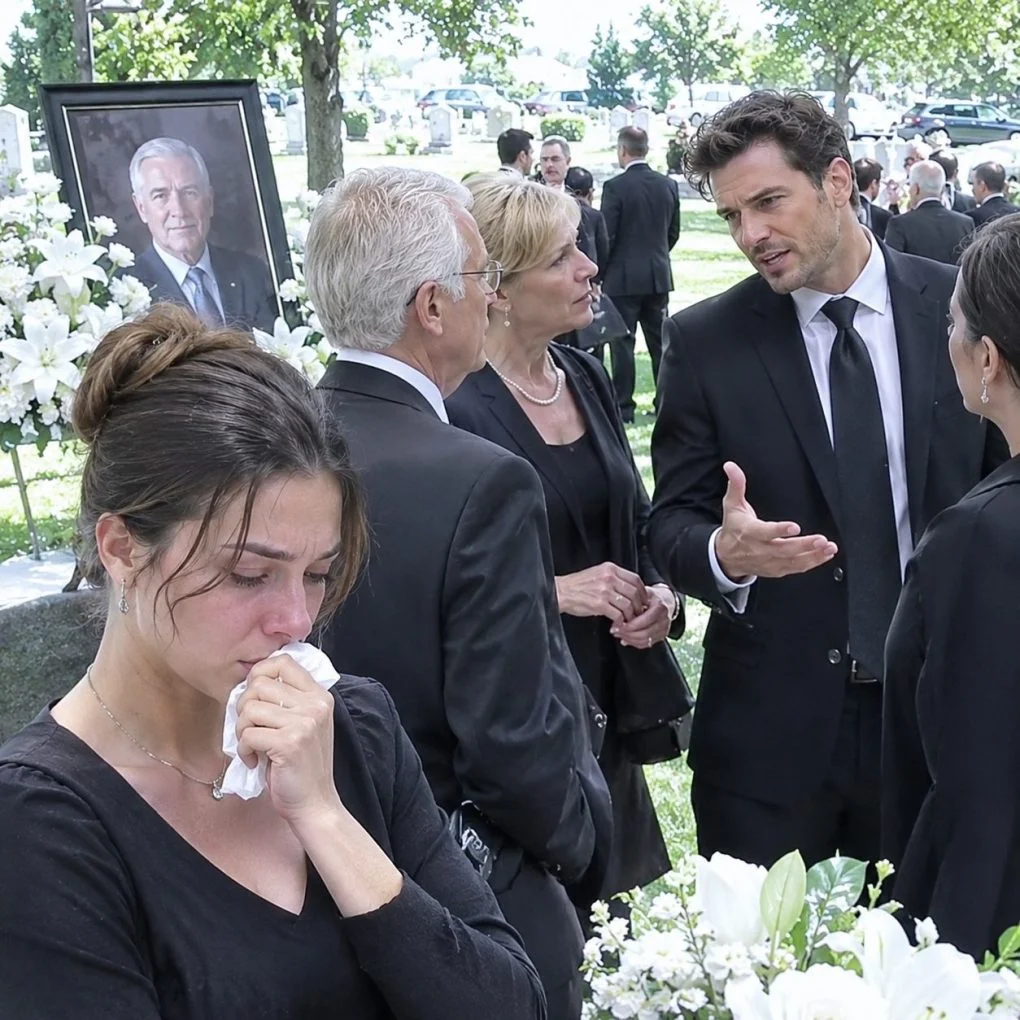
Nathan’s champagne glass stopped halfway to his mouth, and for the first time that afternoon, he looked at me without smiling. Margaret quietly suggested we continue in the adjoining conference room, away from the mourners and the photograph of Dad surrounded by white lilies.
“I’m sure there’s been a misunderstanding,” Nathan said, following us inside. “Olivia and I discussed investing in my new development.”
I stared at him.
“We discussed you asking Dad for money. I told you he wouldn’t do it.”
Margaret sat down and explained that Nathan had approached a commercial lender about financing a luxury hotel conversion. His proposal claimed that I had committed $18 million from my expected inheritance to his company, Collins Development Group, and included a letter supposedly bearing my signature.
“I didn’t sign anything,” I said.
“I was going to explain it,” Nathan replied.
“You were going to explain it after the lender accepted it?”
He turned toward Margaret.
“William wanted Olivia to have everything. She’s his only child, so this doesn’t need to be complicated.”
Margaret opened another document.
“Your father transferred his business holdings into a revocable trust years ago. Six weeks before his death, while his medical team still considered him capable of making these decisions, he signed an amendment establishing a separate lifetime trust for Olivia’s benefit.”
Dad’s estate was valued at approximately $321 million, primarily through manufacturing interests, commercial properties, and investments. It wasn’t a bank account waiting to be divided, and the trustees would have to administer the assets, obligations, and taxes before determining appropriate distributions.
Under Dad’s amended plan, an independent trustee would oversee my inheritance rather than handing me unrestricted control over the underlying assets. Nathan had no authority to direct the trustee, pledge trust property, or receive money simply because we were married.
“That’s ridiculous,” he snapped. “She’s my wife.”
Margaret looked at him.
“Being married to a beneficiary doesn’t make you the owner of her father’s trust.”
I sat with my hands folded beneath the table, remembering Dad asking me to bring him his reading glasses during his last hospital stay. He’d been too weak to finish the newspaper, but he’d still asked whether Nathan was treating me kindly.
I’d lied and told him we were fine.
For the past eight months, Nathan had been sleeping in our guest room or staying overnight near his development site. He called my hospital visits excessive and accused me of neglecting our marriage whenever I came home too exhausted to cook.
Margaret continued.
“The lender contacted our office to verify the alleged commitment. Your father personally confirmed that he hadn’t authorized any such arrangement, and the lender has suspended consideration of the proposal.”
Nathan leaned back, his face hardening.
“So Olivia gets everything, and I get nothing?”
I looked at him.
“You came to my father’s funeral expecting a payment?”
He didn’t answer.
When I returned home that evening, I opened our joint bank statements. Nathan had always managed the household accounts because he claimed his development experience made him better with money, while I handled my salary and paid most of our regular expenses.
Over eighteen months, he’d transferred $268,400 from our joint savings into Collins Development Group. He’d described those withdrawals as temporary cash-management arrangements, but the account balance showed that none had been repaid.
I remembered the kitchen renovation we’d postponed because Nathan said we needed to be cautious. I’d spent two winters washing dishes beneath a leaking window while he promised things would improve after his next project.
At 9:14 that night, Margaret forwarded the lender’s verification correspondence.
Attached was a financing proposal Nathan had submitted five days before Dad died. It described my inheritance as available capital and contained an additional representation that made my hands go numb.
Nathan had told the lender I would authorize the investment immediately after the funeral, while my father’s estate was still being settled.
Then I opened the final attachment.
It was an email he’d written to his business partner.
“Olivia will be too exhausted and upset to question the paperwork. Once she signs, we can move the money before she starts listening to her father’s lawyers.”
I read Nathan’s email three times, hoping I’d misunderstood something. His business partner had forwarded it to the lender’s compliance department after questioning whether I had agreed to the investment, which was why it appeared in the verification materials Margaret had obtained.
I remembered Nathan holding my hand when we first married, promising we would face everything together. Now I was looking at a plan to take advantage of me while I was grieving my father.
The next morning, I called a divorce attorney.
I also authorized Margaret to confirm directly to the lender that I had never signed the investment commitment, never guaranteed Nathan’s debts, and had no authority to pledge assets belonging to Dad’s trust. My attorney helped preserve the disputed documents and report the suspected forgery.



