I also consulted an attorney about the medical records and possible misrepresentations.
I wasn’t expecting some dramatic arrest.
I wanted the truth documented.
And I wanted Dad to explain why he’d let Mom die believing her daughter had abandoned her.
That evening, he called.
“WHAT HAVE YOU DONE?”
His voice shook with rage.
“Patricia’s employer contacted her! They’re investigating!”
“Then she can explain herself.”
“You’re destroying our lives!”
I almost laughed.
“OUR lives?”
“Emily, you have no idea what we went through caring for your mother!”
My anger finally exploded.
“SHE WAS MY MOTHER TOO!”
Silence.
“You kept me away! You let her cry for me! And you told me she didn’t want me!”
Dad began breathing heavily.
“Patricia said contact would upset her.”
“And you believed that?”
He said nothing.
“Did you ever read Mom’s letters?”
A long pause.
Then he whispered:
“Yes.”
Something inside me went completely still.
“You read them?”
“Yes.”
“And hid them?”
“I thought you’d eventually come home.”
I couldn’t believe what I was hearing.
“So you punished us both because I moved away?”
His voice cracked.
“You left after that argument. Your mother took your side. Everything changed.”
There it was.
Not protection.
Not concern.
Resentment.
I’d moved to Chicago for a job six years earlier. Dad wanted me to stay and help run his hardware store.
Mom encouraged me to leave.
He never forgave either of us.
I spoke slowly.
“You stole the last years I had with her.”
He began crying.
“Emily, please.”
“Don’t.”
I ended the call.
The investigation lasted several weeks.
The agency ultimately terminated Patricia’s employment after finding serious discrepancies in her visit records.
It referred its findings to the appropriate authorities.
I was told that further action would depend on what investigators could establish.
Dad’s explanation for the missing letters and false messages never changed.
He claimed he was trying to protect Mom from stress.
Nobody in our family believed him.
When relatives learned what had happened, several stopped speaking to him.
My aunt called me sobbing.
“We thought you stayed away because you didn’t care.”
“I thought Mom didn’t want me.”
Neither of us could finish the conversation.
Patricia moved out before summer.
Dad’s marriage was falling apart.
But I didn’t celebrate.
No investigation could return the years we’d lost.
One afternoon, Mrs. Bennett brought me another photograph.
Mom sat at her sewing machine, smiling.
Across her lap lay the unfinished blue quilt.
“She told me something that day,” Mrs. Bennett said.
“What?”
“She said, ‘If Emily ever comes back, I want her to know she was always welcome in my heart.’”
I pressed the picture against my chest.
That night, I stayed up repairing every torn seam.
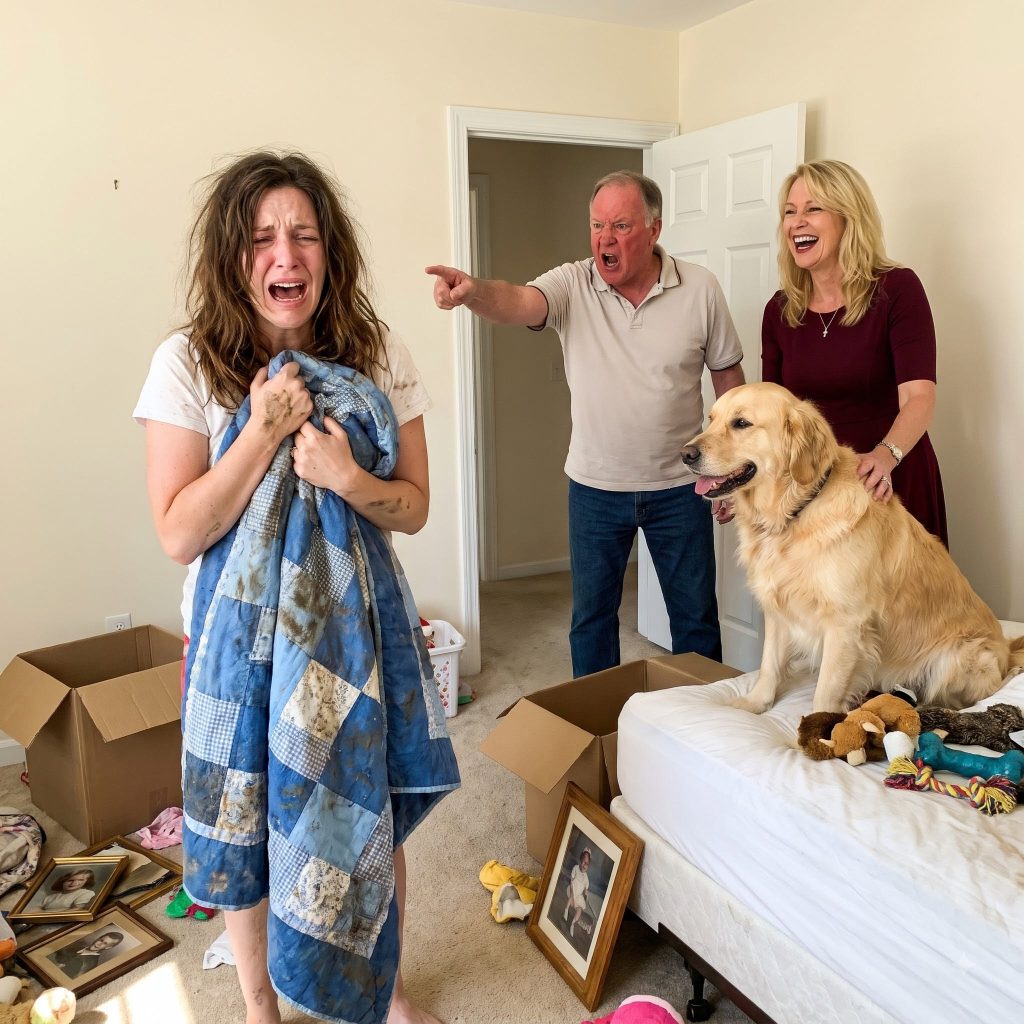
I washed away the muddy paw prints.
I replaced the damaged lining.
And in the corner, I embroidered four words:
MOM NEVER STOPPED LOVING ME.
Months later, Dad sent a letter.
He apologized.
Not for everything.
But for enough to show he finally understood what he’d done.
He asked whether we could start again.
I didn’t answer immediately.
Some wounds need more than an apology.
Eventually, I wrote back.
I hope you become a better man. But I cannot give you back the trust you destroyed.
I kept Mom’s quilt.
I kept her letters.
And every year on her birthday, I read one aloud.
The last letter ended with a sentence I will carry forever:
My darling Emily, wherever life takes you, you will always have a home in my heart.
For six years, I’d believed I was the daughter who abandoned her mother.
Now I knew the truth.
Dad gave my room to a dog. But Mom had saved something nobody could ever take away from me: proof that I had never stopped being her daughter.
THE END.



