Forty minutes later, Mom, Dad, and Brooke entered my room. Mom carried my overnight bag, but she’d forgotten the phone charger and glasses I’d specifically requested.
Brooke stood near the door.
“Are we finally going to admit Thanksgiving got out of control?”
Dr. Mitchell turned toward them.
“Your daughter experienced a potentially life-threatening heart rhythm disturbance. Her imaging also shows hypertrophic cardiomyopathy, and we are investigating her risk of further episodes.”
Dad’s face changed.
Mom gripped her purse.
“Could anxiety cause that?”
“No,” he replied. “Anxiety doesn’t cause the structural changes we’re seeing in her heart.”
He explained that my prescribed medication was part of an important treatment plan, although taking it couldn’t guarantee that an episode would never occur. Removing it without medical advice was dangerous, and my family needed to understand that another collapse required immediate emergency assistance.
Brooke stared at the floor.
Then Dr. Mitchell asked about Aunt Rebecca.
Dad’s hand tightened around the back of a chair.
“She died years ago.”
“Was she diagnosed with a heart condition?”
Dad didn’t answer.
At that moment, Ruby appeared in the doorway with my cousin Naomi, Rebecca’s daughter. Ruby had contacted her after the ambulance arrived, and Naomi had driven from Cincinnati that morning.
Naomi handed me a copy of an old cardiology letter she’d found among her mother’s medical records.
It identified hypertrophic cardiomyopathy as Rebecca’s diagnosis and recommended that close biological relatives receive cardiac screening.
I looked at Dad.
“You knew?”
His eyes remained fixed on the paper.
“Rebecca’s doctor sent us information after she died,” he whispered. “I thought it was something we could put behind us.”
My hands began trembling beneath the blanket.
“Dad, I fainted at school when I was fourteen. You said I wanted attention.”
He looked toward the window.
“Claire, I didn’t know you’d have the same problem.”
“But you knew there was a risk.”
Nobody answered.
Then Ruby stepped closer to my bed and held out her phone.
“Aunt Claire, I recorded part of what happened yesterday. Mom told me to delete it, but I didn’t.”
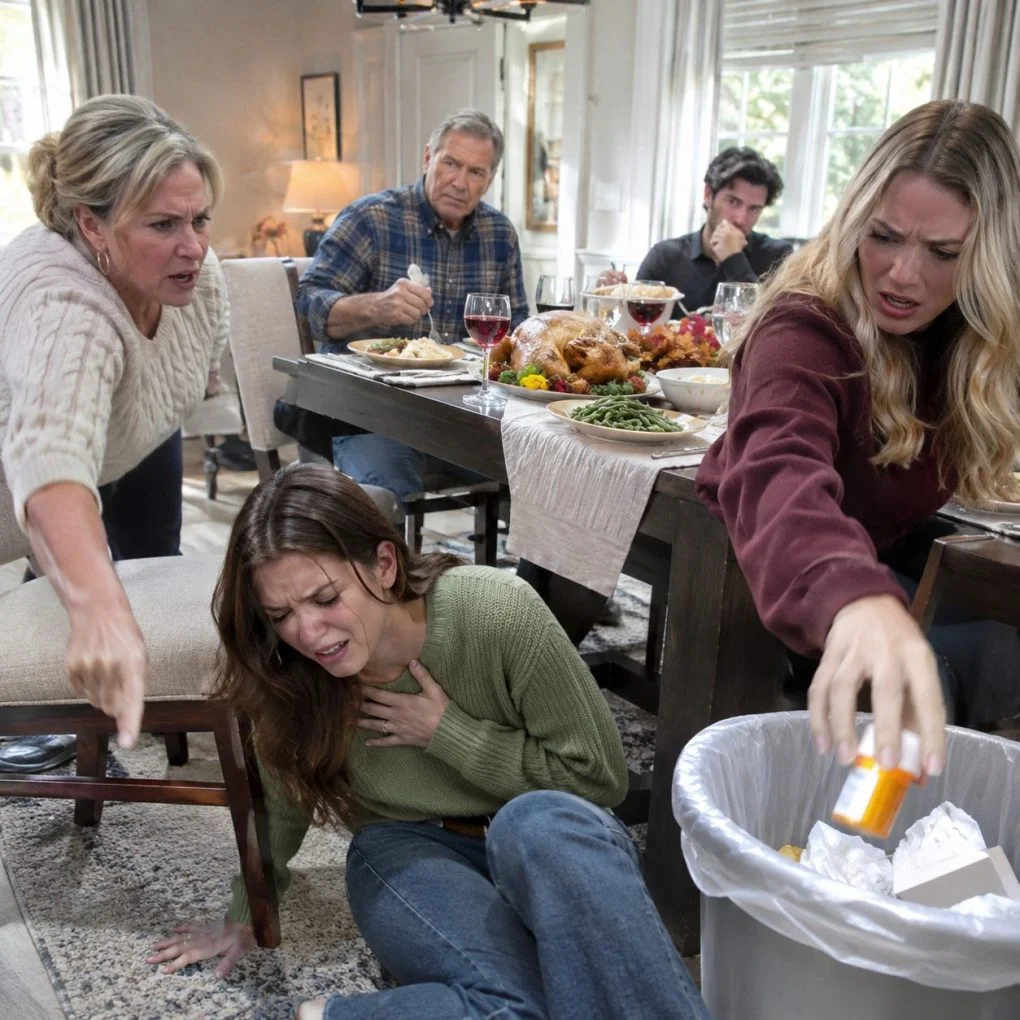
The video showed Brooke taking my prescription bottle while I struggled to stay upright. Mom stood beside her, telling me to stop pretending, and Dad remained seated even as I slid toward the floor.
I watched my own hand reaching for the chair.
I’d forgotten that part.
Ruby’s voice came through the recording.
She’s not pretending. Please help her.
I reached for my niece, and she took my hand.
Across the room, Mom began crying, but I couldn’t look at her.
Dr. Mitchell quietly asked my family to step outside so I could rest. Before they left, I heard Dad whisper something to Mom.
“We should’ve told her about Rebecca years ago.”
And Mom answered with the words that finally explained everything.
“I told you this would happen if she started asking questions.”
The room stayed silent after my parents left, except for the steady beeping of the cardiac monitor beside my bed. Ruby sat holding my hand, carefully rubbing her thumb across my knuckles the way I’d comforted her when she was little.
“I’m sorry I didn’t call sooner,” she whispered.
I looked at my sixteen-year-old niece, who’d been the only person at that dinner willing to believe I needed help.
“Ruby, you’re the reason I got to the hospital. You did exactly what you should have done.”
Over the following days, the cardiology team completed additional testing and adjusted my medication. Because of the serious rhythm disturbance, my collapse, and the family history, they recommended an implantable defibrillator to protect me if another dangerous arrhythmia occurred.
I agreed after discussing the risks and benefits with my doctors. When I returned home, I had a small incision beneath my collarbone, a complicated follow-up schedule, and an entirely different understanding of how easily my life could have ended.
My family continued calling.
Mom left messages saying she hadn’t understood the seriousness of my condition, while Brooke insisted she’d only thrown away my prescription because she thought I was becoming dependent on medication.
But there was something neither of them could explain.
They had been told about the possibility of an inherited heart condition years earlier, and instead of helping me investigate my symptoms, they’d taught me to be ashamed of them.
With assistance from a hospital social worker, I made a police report about the prescription being taken and discarded. I provided Ruby’s original video and my hospital records, leaving investigators to determine whether any laws had been broken.
I also changed my emergency contact from Mom to Naomi. For the first time in years, I wanted the person answering a hospital call to be someone who would listen.
Then I made another decision.



