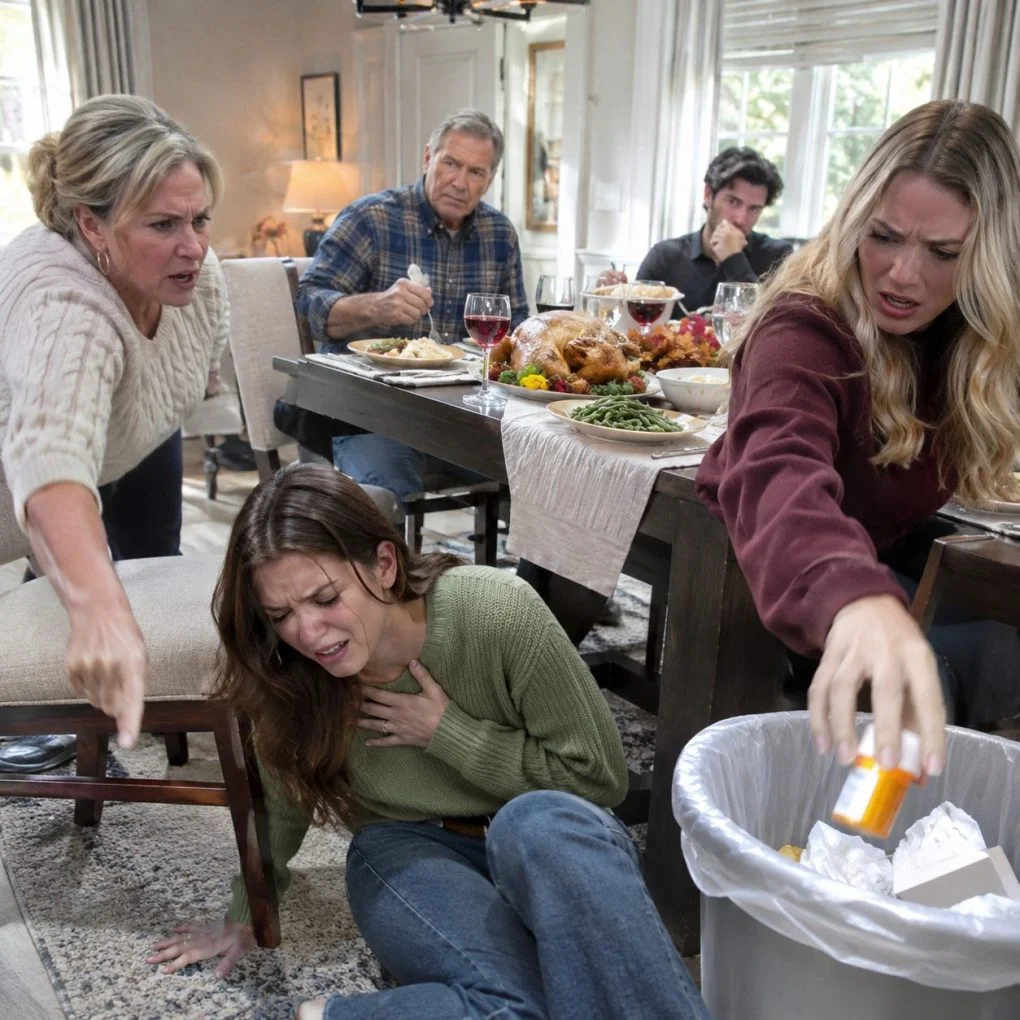
For twenty-two months, I’d been sending my parents $1,250 toward their mortgage because Dad’s reduced working hours had left them struggling. I’d taken extra assignments, postponed replacing my aging car, and quietly convinced myself that helping them was what a good daughter did.
I notified them that my financial support would end after sixty days.
Mom called immediately.
“Claire, you’re punishing us for a misunderstanding!”
I was sitting at my kitchen table, sorting my discharge instructions into a blue folder.
“Mom, I was lying on your floor asking for an ambulance. You called me a liar.”
She started crying.
“We didn’t know you could die.”
“You didn’t have to know that to help me.”
She had no answer.
Two weeks later, Brooke told several relatives I’d exaggerated my hospitalization to make everyone feel guilty. I sent those relatives a short explanation of my diagnosis and, with Ruby’s permission, the portion of her video showing exactly what happened.
Aunt Patricia called that evening.
“Claire,” she whispered, “your mother told us you fainted because you were upset about something Brooke said.”
I looked at the healing incision beneath my collarbone.
“I wish that were all it had been.”
Patricia began crying, but this time someone else’s tears didn’t make me apologize.
Within weeks, Dad underwent cardiac screening, as his sister’s old medical letter had recommended. His results showed changes requiring continued evaluation, and for the first time, he understood that the warning he’d dismissed could affect more than one generation.
Brooke arranged screening discussions for herself and her children. I gave her the family medical information she needed because Ruby and her younger brother deserved to grow up knowing what their relatives had hidden.
That didn’t mean I forgave what had happened.
Three months after Thanksgiving, Dad came to my apartment alone. He stood in the doorway holding a small container of homemade chicken soup, the lid trembling slightly beneath his fingers.
“I thought if I didn’t talk about Rebecca, nothing like that would happen again,” he said. “I was afraid, and I made you carry that fear without knowing why.”
I stepped aside and let him place the soup on the counter.
“Dad, I spent years wondering whether I was imagining my symptoms. Every time I told you something was wrong, you made me doubt myself.”
He wiped his eyes.
“I know. And I don’t expect you to forgive me today.”
We sat together for twenty minutes, speaking quietly about Rebecca and the afternoons I’d missed from work because I couldn’t stand without getting dizzy. When he left, he didn’t ask for money or promise that everything would go back to normal.
Mom and Brooke weren’t invited back into my home. I kept contact limited, continued my treatment, and gradually returned to work with adjustments recommended by my medical team.
The following Thanksgiving, I didn’t attend my parents’ dinner.
Instead, Naomi and Ruby came to my apartment, where we prepared a small meal together. Ruby brought pumpkin pie, and I laughed when she admitted she’d forgotten the cinnamon and had tried to fix it with extra whipped cream.
As we sat down, she reached for my hand.
“Aunt Claire, are you feeling okay?”
I looked at the dinner plates, the people beside me, and the quiet room where nobody was waiting for me to prove I deserved their concern.
“Yes, sweetheart,” I said. “I’m okay right now.”
I still had a heart condition, and there were appointments, medications, and uncertainties ahead. But I finally had doctors who listened, people who believed me, and the freedom to take my health seriously without apologizing for it.
The last Thanksgiving I’d spent with my parents, they told me to stop being dramatic while I struggled to stay conscious.
This Thanksgiving, nobody asked me to prove I was worth saving.
They simply made sure I had a place at the table—and that meant more than any apology my family could ever give me.



