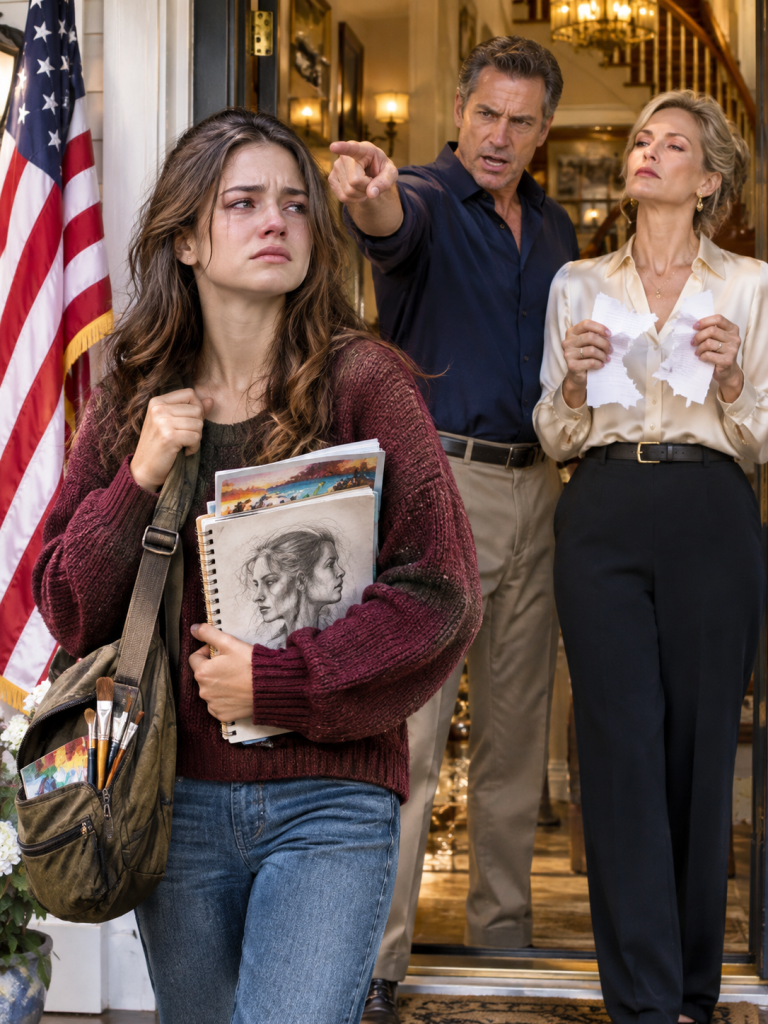
The whispers became public. Clients abandoned my father’s business after the article about the missing daughter and the silenced artist went viral.
A bad investment tipped them over the edge. The house I’d grown up in was sold to cover debts.
They moved into a cramped apartment far from the manicured neighborhood they once bragged about. I learned these details not because I went looking, but because the internet never forgets, and our hometown loved gossip.
The first time my mother called, after years of silence, I let it go to voicemail. Her voice was smaller, frayed.
Sarah, we’re not doing well. Your father’s health.
We could really use your help. Just call me back, please.
I didn’t. Not then.
Instead, I went to my studio and painted, channeling the complicated knot of pity and rage into color. It wasn’t simple hatred anymore.
It was heavier, more tangled, anger laced with the memory of being a 16-year-old girl on a cold sidewalk with nowhere to go. Now on this ordinary Tuesday, the screen screamed 99 missed calls.
My chest felt tight, breath short, not from fear, but from the weight of what picking up or not picking up would mean. I let it ring one more time.
Then finally, for the first time in years, I answered. Silence crackled on the line for two seconds.
Then my mother’s voice came through. raw and horse.
Sarah, I could hear noise in the background. Hospital monitors, distant announcements.
We’ve been trying to reach you, I noticed, I said, keeping my tone neutral. What do you want?
There was a pause, then my father’s voice, weaker than I’d ever heard it. We We need help.
The medical bills, the debts, we’re losing everything. A bitter laugh rose in my throat before I could stop it.
I lost everything at 16. We were wrong, he said.
The words dragged out like they hurt to say about your art, about the way we treated you. I know it’s too late to ask, but please, we’re begging you.
The word begged hung in the air between us, heavy with irony. They had once told me I’d come back begging.
Now they were the ones on their knees, even if I couldn’t see it. For a few seconds, I didn’t speak.
My mind replayed images. The door slamming in my face, the police station, the shredded canvases, my mother’s tears in the cafe, the way they had tried to buy my silence.
Then other images. My first solo show.
The message from a fan who said my work gave them courage to leave an abusive home. The kid who showed up at my signing with paint stained hands and said, “My parents hate my art, too.
But I’m not quitting.” I walked to the window, looking out over the city that had become my real home.
“Here’s the thing,” I said slowly. “I built this life without you.
every canvas, every paycheck, every sleepless night. You weren’t there.
You were the reason I had to fight this hard in the first place. My mother’s voice trembled.
We know and we’re sorry. Truly.
Can Can we at least see you talk? Try to fix things.
My eyes stung, but I refuse to let the tears fall. You want forgiveness now that you’ve lost everything.
I murmured. Would you have called if you were still in that big house with your perfect reputation and your perfect lie?
Silence answered me louder than words. I already knew the truth.
I could have hung up. Let them drown in the consequences they’d poured on me first.
Part of me wanted to. That part remembered every cruel sentence word for word.
Another part, smaller but insistent, whispered that carrying this hatred forever would chain me to them just as tightly as obedience had. I took a deep breath.
I’m not your safety net, I said. I won’t be your bank.
I won’t erase what you did. Their breath caught.
But I continued, surprising even myself. I also won’t be the person who watches you die on principal.
I’ll have my lawyer contact the hospital about a payment plan. It’ll go through a foundation, not my name.
You won’t get my forgiveness just because you’re scared. That has to be earned slowly over time.
And you may never fully get it, but you also won’t be homeless because of me. My father started to speak, but I cut him off.
This is not a reconciliation. This is me choosing not to become as cruel as you were.
That’s it. In there was a ragged sob on the other end of the line.
My mother, I think. Thank you, she whispered.
Thank you, Sarah. I ended the call before they could say anything else.



