I looked at the document.
“Every void leaves a footprint.”
I’d said those words at the same table ten years earlier.
This time, he didn’t roll his eyes.
Mom began insisting she’d told Travis to stop serving Dwayne.
She said she’d done everything she was supposed to do.
I reminded her that she’d told me she had spent the afternoon in the kitchen.
She didn’t deny what the investigator had found.
Then I asked her something I’d been carrying since the hospital.
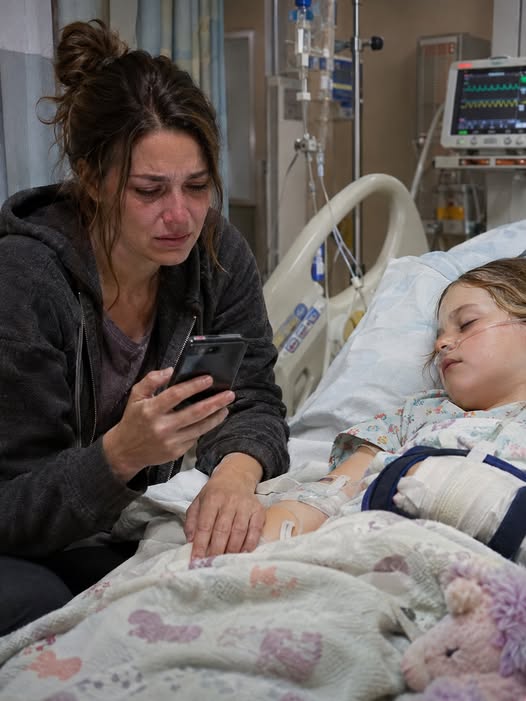
“You saw a man who could barely stand, and you wrote, ‘I mean it.’ You saw Hazel after emergency surgery, and you wrote, ‘She survived.’”
Mom looked down at the table.
Dad put both hands flat in front of him.
“I’m selling the bar.”
He said he would contact a broker, use the proceeds to pay down the loan, and live on whatever remained.
Then he turned toward Travis.
“You’re done managing it.”
Travis looked at Mom.
She didn’t defend him.
He walked out and slammed the front door.
I stayed long enough to explain what would happen next.
Dad could continue seeing Hazel at my house on Saturdays.
Mom and Travis would not contact or visit her until I decided it was appropriate.
I wasn’t asking them to agree.
I was telling them what I needed to do to protect my daughter.
Then I left.
Two blocks away, I pulled over and cried.
I’d spent my childhood trying to avoid upsetting my parents.
I’d spent adulthood doing much the same.
Now I’d told them no, and there was no easy way to make the family feel normal again.
But normal had never been especially kind to me.
The legal consequences continued.
On September 17, a grand jury indicted Dwayne Pruitt on charges including aggravated vehicular assault and operating a vehicle under the influence.
His trial had not yet been scheduled.
A for-sale sign appeared in the window of Doyle’s Tap House on September 21.
The insurance company began discussing Hazel’s claim with Nolan.
The Ohio Investigative Unit referred its findings for liquor-permit proceedings, with a hearing scheduled for November.
Travis’s case remained pending.
Shannon eventually told me she’d found another bartending job at a steakhouse in Centerville.
She said the tips were better and the manager actually stopped serving customers who were visibly intoxicated.
I was glad she had found work.
I also knew that none of these proceedings would undo the crash.
Hazel would still need ongoing medical care.
Her doctors had explained the precautions required after losing her spleen.
There were vaccinations, medication, and instructions about seeking urgent treatment for fever.
Those responsibilities would remain part of our lives long after the court cases ended.
Nolan explained that any insurance settlement could take months or longer.
It would need to account for medical expenses and possible reimbursement claims from my health insurance.
Whatever remained for Hazel would be protected for her future.
I opened an account at a credit union with the first fifty dollars I could spare.
For once, I was recording something that belonged entirely to her.
A few days after the bar went up for sale, Mom sent me an eleven-paragraph text.
Some of it sounded like an apology.
She said she was sorry Hazel had been injured and sorry she hadn’t come to the hospital the first night.
But much of it was about the grand opening, the loan, Dad’s health, and how hard she’d worked for the business.
The last sentence said she had never meant for things to get so “blown out of proportion.”
I read it twice.
Then I wrote back that I hoped she was taking care of herself and that I would let her know when Hazel was ready.
I didn’t argue.
I didn’t explain the surgery again.
Mom already knew what had happened.
I couldn’t make her understand it by finding better words.
On September 25, six weeks after the crash, Hazel’s cast came off.
She held up her left arm and laughed at how pale and wrinkled it looked.
The doctor said her bones had healed well.
On the drive home, she was quiet for a while.
Then she asked, “Mom, did I get anyone in trouble?”
I pulled into a grocery store parking lot.
I turned around so I could look directly at her.
“No, baby. You got hurt. That’s all you did.”
She watched me carefully.
“The grown-ups made their own decisions. You didn’t cause any of this.”
She thought about that.
“Okay.”
This time, she didn’t look away.
The next morning, Dad arrived with his coffee can of quarters.
Hazel sat on the rug and built little towers with both hands.
She knocked one over by accident and laughed.
Then she built it again.
She didn’t apologize for spilling the coins.



