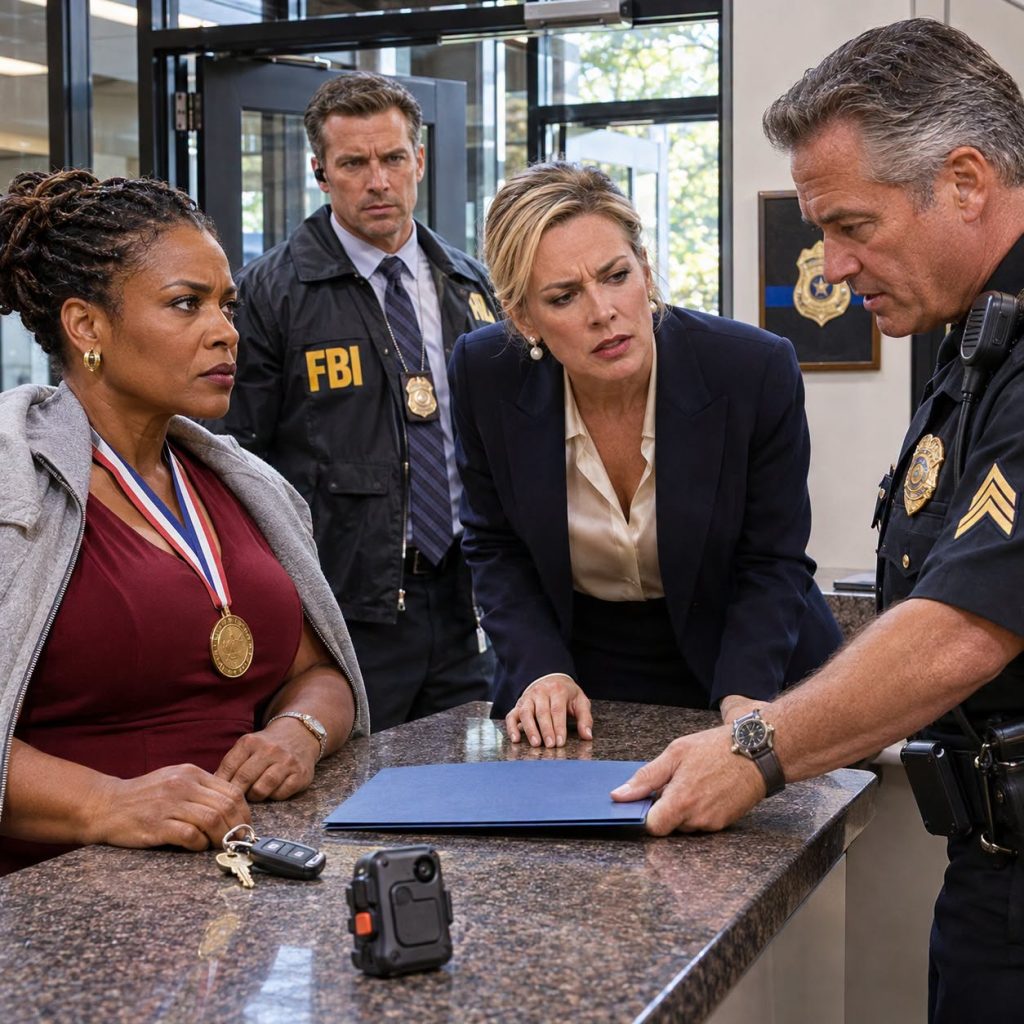
Spencer answered before Dunn could. “Cancel the tow. The owner is here with me.” He repeated my full name, the time and the fact that I’d asked to make a call. I watched Rourke’s hand come off the folder. He told Spencer to unlock the interview room. I asked whether I could use the phone in there. “You can,” Spencer said. He walked me down the hall himself, carrying the sweatshirt when it slipped from my shoulders. Once we were inside, I asked for privacy and dialed a number I knew by heart.
Bruce King ran the FBI’s Cincinnati field office. He picked up on the fourth ring. “Monica? What number is this?” I told him where I was and asked him to verify my identity through our duty office before we discussed anything further. He called back a few minutes later. I gave him Dunn’s name, the language on the release form and the name I’d seen on the blue folder. There was a pause. Then Bruce asked me to read him the date. I told him October seventeenth. “Did Spencer show you that on purpose?” he asked.
The woman’s name was Alicia Grant. Bruce could tell me that she’d filed a complaint after a traffic stop and that a federal prosecutor had already requested the original paperwork. He asked whether I’d seen anything inside the folder. I said I hadn’t. Through the narrow window in the door, I could see Rourke carrying the whole stack down the hall. When I told Bruce, he asked me to stay put and tell him what I could see. I heard him ask someone on his end to get Wendy White on the phone.
Spencer came in a few minutes later with my keys. He placed them on the table where I could reach them. “Alicia came in to file her complaint on a Monday,” he said. “She brought her teenage son. She asked me to explain why her signature was on a form she’d never seen.” He rubbed the pale mark where he’d taken off his wedding band. “I checked who approved the release. It was me.” I let him finish. “I was in Columbus that week. I showed the captain my hotel receipt. He told me to stop opening old files.”
Dunn appeared in the doorway. He’d taken off his duty belt. Without the radio and the camera, he looked younger than twenty-seven. “I called him from the cruiser,” he said. “I read him the name on your federal card. He told me to get you off the road before you called anybody.” I asked him when he’d made that call. “After you put the first cuff on me?” He looked at Spencer. “Before,” he said. Then he asked whether his camera had picked up the call. I told him I hoped it had.
Less than an hour after I called Bruce, headlights swept across the station windows. Federal SUVs pulled in one after another. Bruce came through the door with Senior Assistant U.S. Attorney Wendy White, who asked Rourke to preserve the intake records, dispatch recordings and Dunn’s camera. Rourke told her the camera had failed during the stop. Dunn looked down at his empty uniform clip. Wendy asked for the device anyway. Rourke opened a desk drawer and placed it on the counter. “There’s nothing on it,” he said. Spencer slid the blue folder with Alicia’s name out from under his arm. “Then we should start with the recording I sent you in October.”
If you’ve read this far, don’t hesitate to leave a like and comment before reading part 3. It makes us as happy as reading a complete story! Thank you. 👍❤️
Part 3
Wendy asked Spencer which recording he meant. He gave her the date and told her he’d attached it to Alicia Grant’s original complaint. She recognized the file. She’d heard him interviewed as the sergeant on duty, but the person who’d supplied the recording had been kept confidential. Spencer opened the folder and showed her a copy of the form Alicia had supposedly signed. Under it was his hotel receipt. “I should’ve put my name on it back then,” he said. Wendy told him she’d take his statement now. He pulled out a chair and sat down.
I heard the recording myself months later. Alicia asked for her keys so she could go home to her son. Rourke told her she could leave as soon as she signed a statement saying she’d come in voluntarily. When she asked to read it, he told her the tow yard was closing and asked how she planned to get to work in the morning. Investigators found the same release language in other files, along with approvals attributed to officers who’d been off duty. The forms had been used to make involuntary trips to the station look consensual.



