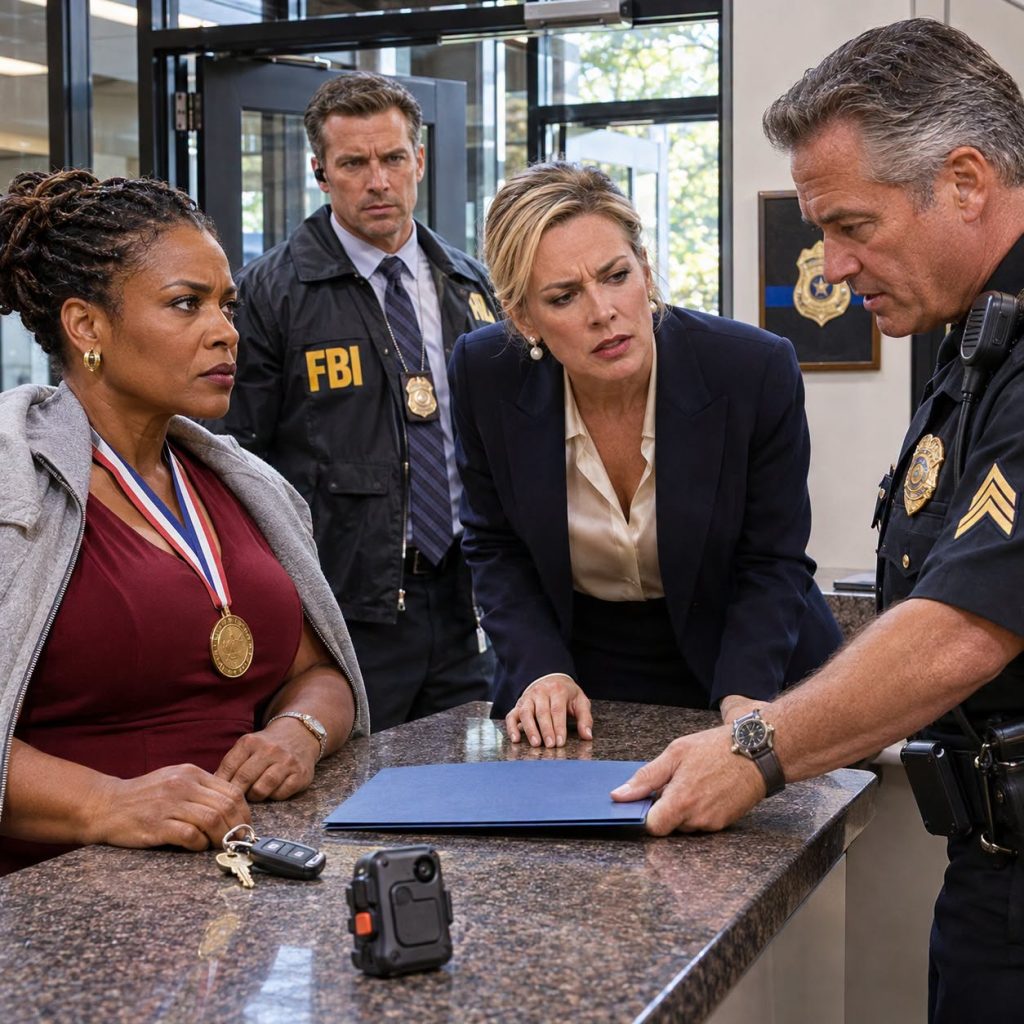
Dunn’s camera had recorded my stop. It caught him laughing at my medal, telling dispatch I’d refused to identify myself and taking my keys before he ordered me out of the car. His own account put the captain’s call before the cuffs went on. Phone records backed up the timing. The written report he submitted after his shift claimed he’d learned I had federal credentials at intake. When Wendy asked him to point to the moment on the recording when he first saw the card, he took off his glasses and asked to speak to his lawyer.
The department fired Dunn the next morning. The state later revoked his peace officer certification, and the pension board ruled him ineligible for the benefit he’d claimed. Months after the stop, he pleaded guilty in federal court to deprivation of rights under color of law and making false statements. The judge sentenced him to thirty-three months. Rourke was removed from command and later pleaded guilty to falsifying records tied to earlier stops. I attended Dunn’s sentencing. When he turned to face me, I thought he might mention the medal. He said, “I had your license the whole time.” It was the first thing he’d said about that night that I could accept without a question.
Alicia found me outside the courtroom. She was wearing navy scrubs and had used her lunch break to come. Her son had been fifteen when she filed her complaint. “He asked me why I bothered going back,” she said. “I told him somebody would read it eventually.” She looked toward the elevators. “I didn’t think I’d have to say that for seven months.” I asked if I could buy her coffee before she went back to work. She checked the time and said she could give me twelve minutes. We took all twelve.
Under the department’s federal consent decree, an independent monitor reviewed stops and complaints, and civilians gained a formal role in oversight. At the first public meeting, I watched Alicia walk past the seat someone had saved for her in the back and take one near the microphone. I’d spent weeks with local residents working through what a complainant should receive when they walked out of a station. When her turn came, Alicia held up the acknowledgment she’d been given in October. It had a date stamp and no case number. “Who was I supposed to call,” she asked, “and what was I supposed to ask them to look up?” The board wrote both questions into its instructions for the next meeting.
A year after the stop, I wore the burgundy gown to another retirement dinner. My colleague’s granddaughter was there, a little taller and holding her own phone this time. She asked if I’d brought the medal. I took the case from my bag and let her open it. She offered to pin it for me. Her first try caught the lining, so I held the fabric steady while she tried again. Then she stepped back, checked that it was straight, and asked me to stand beside her grandfather for the picture.
What do you think of this story? Please leave a like and share your thoughts in the comments. Your support means a lot to us and inspires us to keep writing more meaningful and powerful stories. Thank you! 👍❤️



