The worst part wasn’t that my father hung up on me. It was that I could hear the Ohio State pregame show blaring in the background while he did it, and I knew he was already reaching for the remote before my name had even left his mouth.
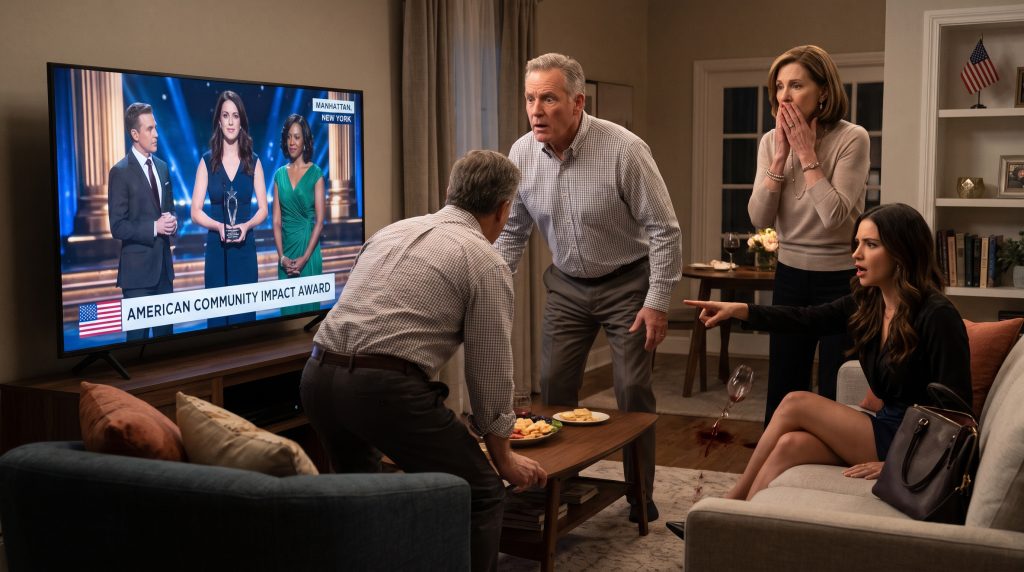
I sat in my twelve-year-old Honda Civic in the Kroger parking lot off Henderson Road with a bag of bruised Honeycrisp apples on the passenger seat and the heater clicking on its second-lowest setting because the highest one smelled like burning dust. Outside, a gray October drizzle was turning the fallen maple leaves into wet brown paste along the curb. I was thirty-four years old. Six years earlier, I had emptied the $1,800 in my savings account to start a transitional housing nonprofit called Second Door in a damp Methodist church basement on the west side of Columbus. Now, after moving more than six hundred families out of minivans and emergency shelters into permanent homes, I had just been selected for the American Community Impact Award in Manhattan.
They were giving us a $500,000 grant. And four seats at the front table.
Ten minutes earlier, when I had pulled into the parking spot, my hands had still been shaking from the formal confirmation call with the foundation’s selection committee in New York. I didn’t buy champagne. I bought apples, a rotisserie chicken that had been marked down two dollars, and a carton of oat milk. Then I sat behind the steering wheel, looked at my reflection in the rearview mirror, and decided—against twelve years of hard evidence—that a half-million-dollar national grant and a black-tie gala in Midtown Manhattan might finally be large enough to translate into a language Richard Carter respected.
He picked up on the fourth ring. The television in his den was so loud I could hear the Fox Sports brass theme cutting through the receiver.
“Emily,” he said, not unfriendly, just brisk, the way he answered calls from municipal code inspectors or drywall subcontractors. “Make it quick. Kickoff’s in twenty, and your mother’s got me trimming the hedges before the rain comes down harder.”
“Dad, I have big news,” I said, trying to keep my voice steady so I wouldn’t sound like I was begging for a gold star. “I was just selected for a national award. The American Community Impact Award. The ceremony is next Saturday in New York City, and they’re giving Second Door a major grant. I have four tickets for my family. I’d really love for you and Mom to come.”
He barely let me finish. “What kind of award?”
“It recognizes community nonprofits across the country,” I explained, watching a woman in a yellow poncho load cases of seltzer into a Subaru across the lane. “A foundation vetted our housing retention numbers over the last three months. They—”
There was a short pause. Then he laughed. It wasn’t a cruel laugh; it was worse than that. It was the amused, dismissive chuckle he used when my seven-year-old nephew tried to explain how he was going to build a rocket ship out of lawnmower parts.
“An award for giving people free stuff?” he said.
“Dad, that’s not what we do. You know our families pay their own rent once they stabilize—”
“Emily, I’m not going to waste a Saturday night in New York on such an absurd award,” he said, and I heard the leather cushion of his recliner creak as he shifted his weight. “I’ve got real work to do. We’ve got three commercial flat-roof bids due for the Dublin medical park before Thanksgiving.“
I felt my face grow hot. “It’s on Saturday night. You wouldn’t have to miss work.”
“Find someone who enjoys that kind of nonsense,” he said, and the line went dead.
When I called my mother right after my father hung up, she didn’t laugh. That had never been Diane Carter’s style. My mother chaired suburban hospital auxiliaries and knew the exact caterer every family in Upper Arlington had used for their daughters’ rehearsals. She used the soft, apologetic church-committee voice she reserved for turning down bake sale volunteers who had brought store-bought brownies.
“Oh, honey, that sounds nice,” she said, and I could hear ice clinking in a glass—her four-o’clock tonic with lime while she put her earrings on. “A little certificate from your group?”
“It’s a national foundation, Mom,” I said, staring at a shopping cart someone had shoved into a landscaped mulch bed. “It’s in New York. The foundation is covering flights and the hotel. I haven’t asked you guys to come to anything since college.”
“Sweetheart, I wish you’d given us more notice,” she said smoothly. “Your father and I already promised the Hendersons we’d do dinner at Hyde Park on Saturday. You know how impossible it is to move an eight o’clock table there in October, and Greg Henderson just joined the membership committee at Scioto.”



