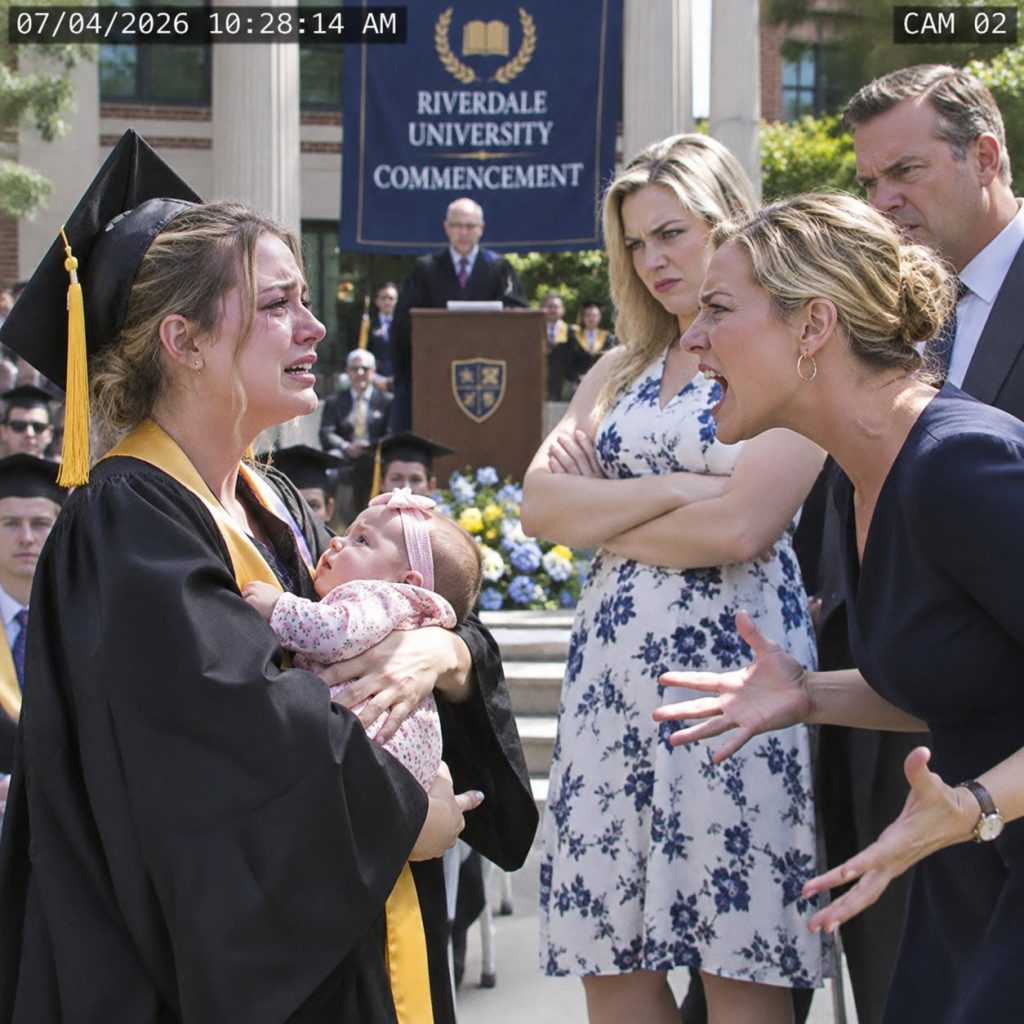
Chapter 1 – The Weight of an Envelope
The gymnasium floor smelled of floor wax, cedar polish, and ninety years of cheap varnish baking beneath high-intensity sodium vapor lamps. It was an unmistakable scent, one that had anchored every assembly, basketball tournament, and awkward pep rally since my freshman year at Oakhaven High. But today, the smell seemed thinner, stripped of its adolescent nostalgia, overtaken by the sharp, medicinal tang of baby powder and the lavender wash my mother had used on Nora’s swaddle blanket before dawn.
Nora shifted against my chest. Her downy head, warm as a fresh-baked roll, pressed into the hollow of my throat. She made a tiny, fluttering suckling sound in her sleep, her rosebud lips working against the polyester weave of my sapphire-blue graduation gown.
Dr. Harris held out the envelope. It was not a diploma sleeve. It was an executive packet: nine-by-twelve, heavyweight manila, bearing the raised green-and-gold wax impression of Lakeview State University’s board of regents.
“Before Friday, Lila,” Dr. Harris whispered again, leaning away from the live microphone so his baritone didn’t rattle through the public address horns hanging from the steel roof trusses. “The dean called my desk at seven-thirty this morning. They aren’t just granting the tuition waiver. They want you on campus for the summer bridge fellowship. But it requires on-campus residency in the family scholar hall, fifty miles north of here. You have forty-eight hours to decide if you can leave this valley.”
My throat locked. The applause from the wooden bleachers had begun to taper off into that scattered, uneven patter that always preceded the shuffling of folding chairs and the rush toward the parking lot. In the third row, sitting behind the velvet rope reserved for faculty families, Mrs. Gable—whose son, Marcus, had taken second chair in the brass section and third place in the regional science fair—lowered her program. Her eyes, pale and watery behind designer tortoiseshell frames, traveled from my face down to the four-month-old bundle tucked beneath my doctoral-cut sleeve. Her mouth twitched, not with anger, but with that bitter, measured disappointment of a woman who had calculated the town’s moral budget and found the margins unacceptably wide.
“Take your seat, Lila,” Dr. Harris said gently, placing a hand between my shoulder blades—firm, professional, yet carrying the paternal warmth he had shown ever since my sophomore earth science project. “You’ve done enough walking for one afternoon.”
I stepped down from the wooden riser. The three steps gave under my weight, the pine stringers groaning. Each step felt like a minor physical negotiation; my pelvis still held that faint, dull ache that cold weather and prolonged standing dragged out of my joints, a lingering souvenir from thirty-six hours of unmedicated labor in Room 214 of the county hospital.
My mother, Clara, had not sat down. She stood alone in the aisle, wearing the periwinkle linen dress she had bought from the consignment rail at the Methodist thrift shop three years ago for her own twentieth high school reunion. Her hands, rough-knuckled and scarred along the thumbs from twenty years of filleting perch and scouring grease-traps at the marina diner, clutched an embroidered handkerchief that had belonged to my grandmother. She was not crying the way the mothers on the stage were crying—quiet, delicate dabs at the corners of mascara-laden lids. She wept openly, her shoulders hitching beneath the cheap linen, her chin tilted high as if daring anyone in the bleachers to look away from her daughter.
I slid into the folding chair beside her. Nora let out a soft, milky sigh, her fingers curling tight into the gold honor cord draped over my collar.
“Did you hear him, Mom?” I whispered, my voice cracked, dry as corn husks. “Full tuition. Room, books, laboratory fees. Everything.”
Clara reached down, her calloused thumb smoothing back a stray wisp of hair from Nora’s forehead before resting against my cheek. Her skin smelled of lemon soap and the raw, iron chill of the lake wind.
“I heard him, baby,” she said, her voice dropping into that low, gravelly register that had sung me to sleep through three eviction notices and two seasonal layoffs. “I heard every syllable. The whole county heard him. Marcus Gable’s daddy looked like he’d swallowed an entire handful of dry fishhooks.”
“The dean wants me in Lakeview on Monday,” I said, looking down at the heavy manila envelope resting on my lap like an unexploded shell. “The residency program. It’s a full dorm-apartment in the graduate quadrant. Daycare subsidy included.”
Clara’s thumb stopped against my cheekbone. The joy in her eyes didn’t vanish—it merely deepened, retreating behind that familiar, guarded wall that single mothers build when they realize the victory they’ve been praying for is about to cost them the only company they have in the world.



