He slammed the insulated metal door of the cold room behind him, the latch catching with a heavy, pneumatic thunk that shook the glassware on the drying rack.
I walked to the foam mat, knelt down beside Nora, and let her small, sticky fingers wrap around my thumb.
She had my mother’s chin—that square, stubborn bone that didn’t move when the wind blew out of the northeast—and she had David Vance’s gray eyes, but behind those eyes was something neither of them had ever known: the quiet, steady certainty of a child who had never heard her existence described as a mistake, an accident, or an administrative problem to be settled with a ten-thousand-dollar check on a kitchen table.
“Massachusetts, Nora,” I whispered, lifting her until her forehead touched mine, her skin smelling of baby shampoo and the clean prairie air that was coming through the open door of the basement stairwell. “It’s on the ocean. But the water is different there. It doesn’t freeze until January, and nobody in Woods Hole knows the name of the man who sold the west slip.”
Chapter 10 – The Stage on the Shore
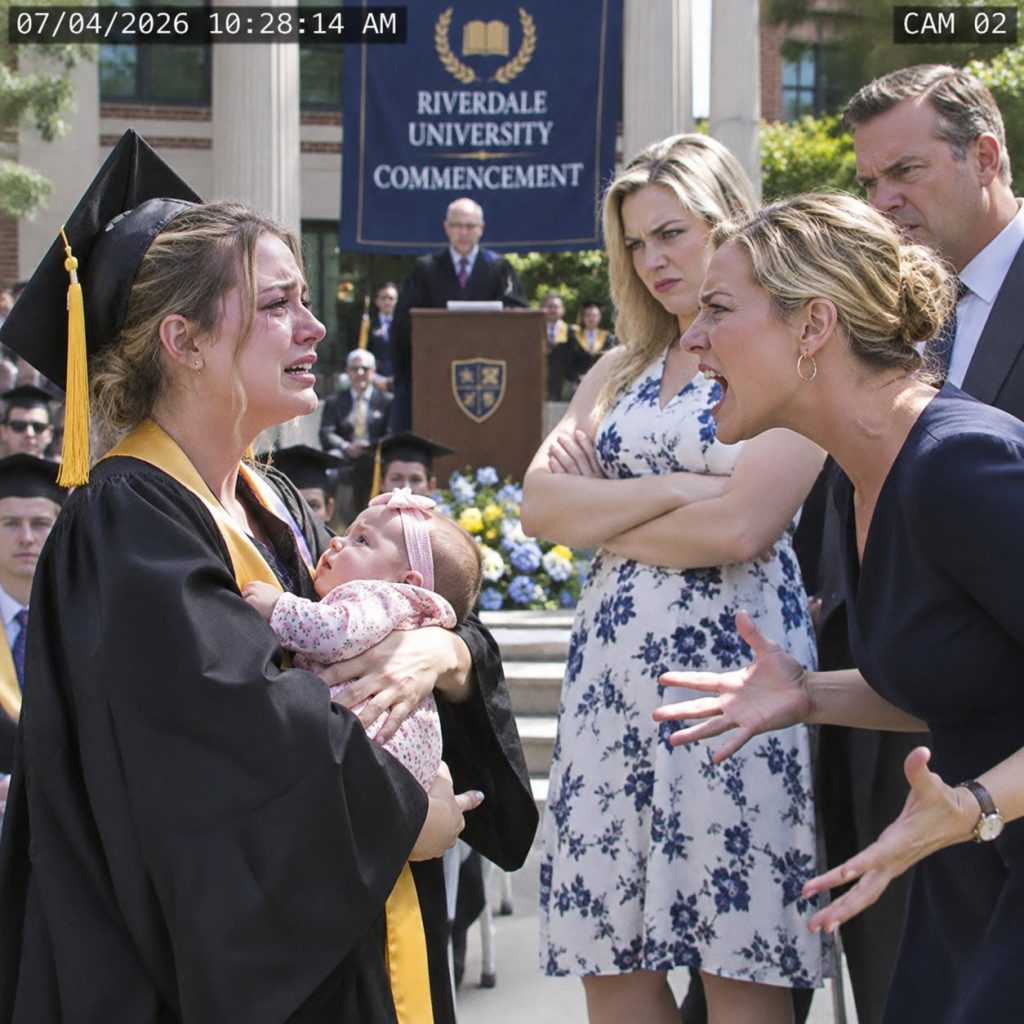
The graduation ceremony for the Lakeview State University Class of 2029 took place on the south lawn of the university campus, where three thousand white folding chairs had been set out in semicircular tiers facing a temporary cedar stage that overlooked the vast, open expanse of the lake.
The morning was brilliant, cloudless, the sky a high, cold indigo that made the gray water look like hammered silver under the eleven-o’clock sun.
I stood in the front row of the biological sciences division, wearing the black bachelor’s gown with the green silk velvet edging that marked the department’s highest honors. Across my shoulders hung the gold cord of the Carter Fellowship and the white sash of the National Science Foundation Undergraduate Scholars.
Nora was four years old.
She sat in the second row of the family section, wearing a dark green velvet dress with a white lace collar that Clara had spent three weeks sewing on her old Singer machine in the kitchen on Bayside Lane. Nora’s hair was long, dark chestnut curls that fell past her shoulder blades, tied with a gold ribbon that had been cut from my original high school diploma sleeve.
Beside her sat Clara.
My mother did not wear the periwinkle linen dress from the consignment shop. She wore a tailored gray wool suit that we had bought together at the department store in the regional mall three weeks ago, paid for with the final balance of my undergraduate laboratory stipend. Her hands were folded in her lap, her fingernails clean, her head held so high that the brim of her new straw hat didn’t shade her eyes from the sun.
Beside Clara sat Professor Klaus Vance, wearing his ceremonial doctoral robes from Johns Hopkins—scarlet and black silk that billowed around his legs like a battle flag—his hands resting on his wooden cane, his eyes sweeping the crowd with that same ferocious, unrepentant scowl he used on freshman registration days.
“Lila Bennett,” the university marshal announced into the four-speaker public address system.
The sound of my name traveled across the south lawn, carried by the lake breeze over the three thousand white chairs, across the bypass, and out toward the experimental cornfields where the new green shoots were just breaking through the black prairie soil.
I walked up the four cedar steps to the stage.
My boots were not rubber work-shoes; they were black leather pumps that clicked with that clean, steady, unhurried cadence against the fir risers. My knee did not hurt; the bone had set four years ago, strong and straight, carrying the weight of my body with the easy, natural balance of a woman who had walked across every deck in the harbor without losing her feet.
Dean Thorne held the diploma cylinder in both hands—heavy black leatherette with the university seal stamped in gold foil across the curve.
Beside him stood the president of the university, who reached out his right hand, took my fingers in his, and leaned close to the microphone.
“The Board of Regents,” the president said, his voice echoing off the stone walls of the Science Complex behind us, “confers upon Lila Bennett the degree of Bachelor of Science in Biochemistry, Summa Cum Laude, with the University Research Medal for Excellence in Molecular Biology.”
The applause did not start in the faculty rows.
It started in the second row of the family section.
A small, high-pitched voice, clear as a silver whistle in the salt air, cut through the dignified silence of the academic procession:
“That’s my mommy!” Nora shouted, standing on her folding chair in her green velvet dress, her small hands clapping with a frantic, joyful violence that made the gold ribbon in her hair dance in the wind. “That’s Lila Bennett!”



