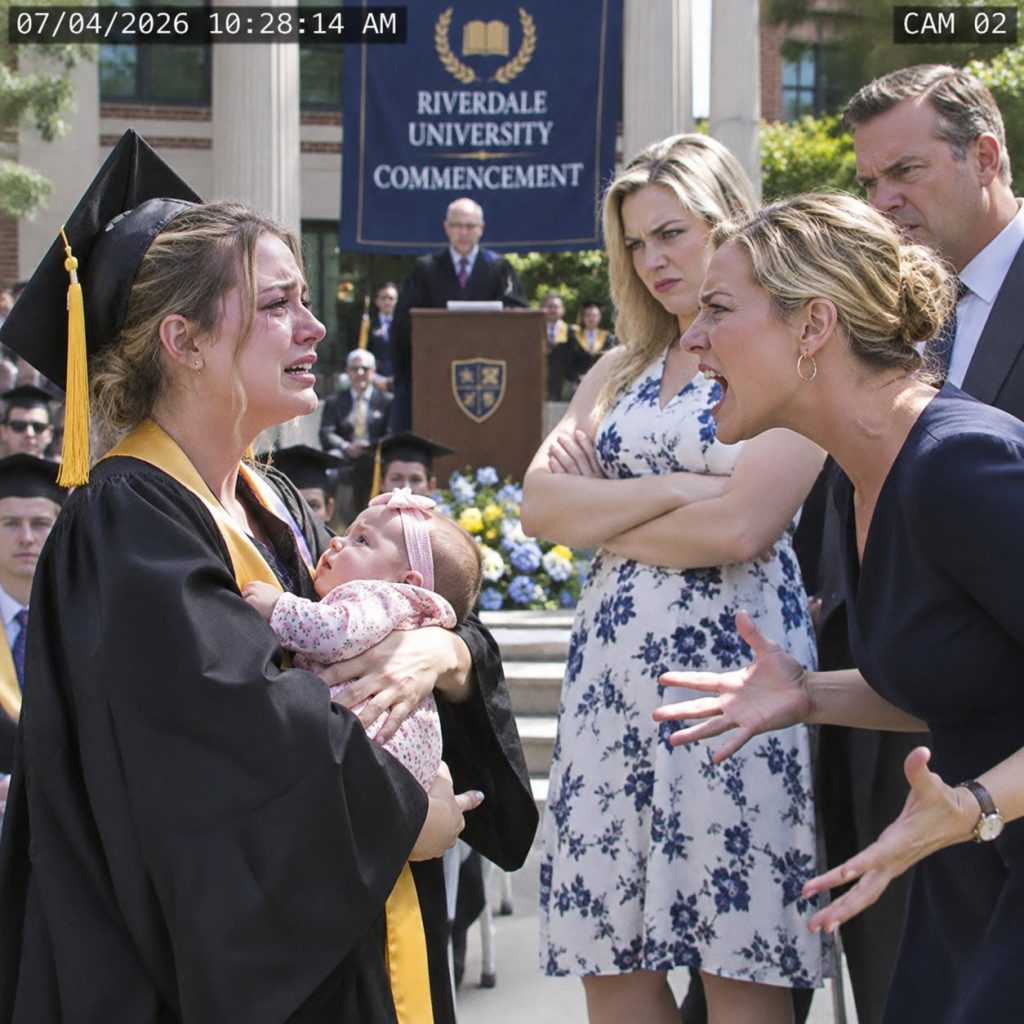
The three thousand people on the lawn didn’t laugh with pity.
They rose.
First the biology faculty, their scarlet and green hoods flashing in the sun; then the graduate assistants from Room 014; then the family residents from Building C, holding their strollers and their toddlers; and finally the parents from the Detroit suburbs, their applause rising into a deep, rhythmic roar that drowned out the sound of the air horns on the lake bypass.
I took the diploma cylinder with my left hand.
I didn’t look down at the paper. I looked past the stage, past the three thousand white chairs, past the cedar windbreak where the road turned north toward the Canadian border.
In the back row, standing by the gravel path behind the final rank of folding chairs, stood two men in dark coats.
David Vance and his father, George.
They were seventy miles from their harbor. They stood with their hands in their pockets, their shoulders hunched against the prairie wind, looking at the stage through the glare of the morning sun like two men standing on a sandbar watching a vessel clear the harbor lights with all its canvas set and the tide running full beneath the keel.
They didn’t wave.
They didn’t step forward.
They stood there in their heavy shore clothes, small, gray, and silent, holding their empty hands in their pockets while the names of the graduates were read into the high, clean air.
I lifted my right hand.
I didn’t make an obscene gesture. I didn’t shake my fist.
I simply touched the brim of my academic cap, gave them that slow, measured, respectful nod that a captain gives to a derelict hull drifting in the shoals, and turned my face toward the microphone where my daughter was still clapping from the second row with the gold ribbon dancing in her hair.
The diploma was cold and heavy in my palm, smelling of fresh leather and gold leaf.
It had my name on it.
Only my name.
And as the president stepped back to let me take the center of the cedar stage, I looked down at Clara, whose hands were finally still against her gray wool skirt, and I knew that the thirty-six hours in Room 214, the eighteen credit hours in the heat of July, and the four-pound books carried on the night buses were no longer a debt that had to be paid to the county.
They were the deed to the harbor.
And the harbor was wide open, deep, and clear all the way to the Atlantic sea.



