Steel truss.
Wood-look composite decking.
Safe pedestrian rails.
Separate golf-cart lane.
No fake gas lamps.
I approved of that.
Daniel handed me a copy of the recorded access and maintenance documents.
“You brought paperwork to a ceremony?”
“I was told you like paperwork.”
“Only when people read it.”
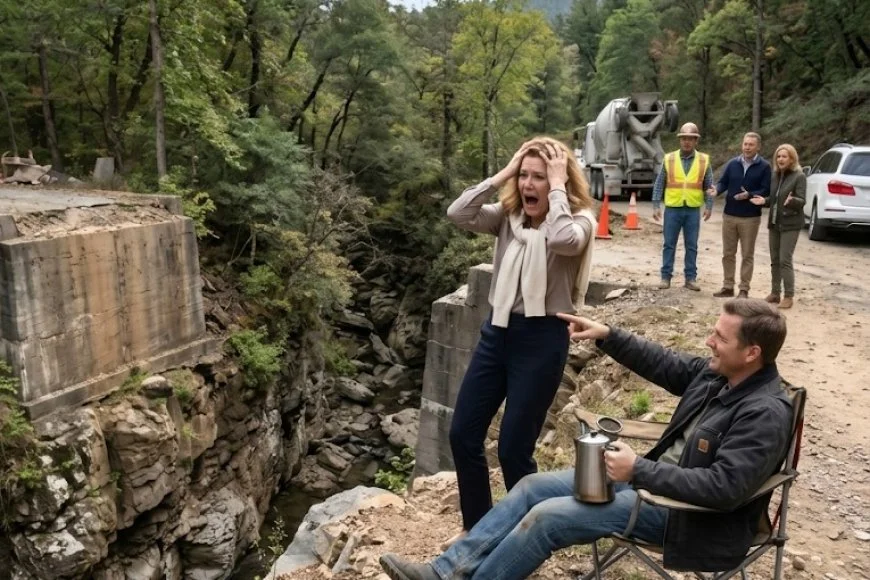
We stood beside the new bridge while residents crossed.
Nobody trespassed on my land.
Nobody needed my grandfather’s bridge.
Nobody argued about paint colors.
Daniel pointed toward the creek.
“Britt used to say you hated the community.”
“I didn’t.”
“What did you hate?”
“Being told your convenience created rights over my property.”
He nodded.
“That’s fair.”
We shook hands.
That should have been the end.
But a few weeks later, a young couple from the Pinnacle showed up at my cabin.
They had a little girl with them.
Maybe six.
The father looked embarrassed.
“Mr. Ford?”
“Yes?”
“We bought one of the houses last year.”
“Congratulations.”
“Our daughter’s doing a school project on local history.”
The girl held a notebook.
“She heard there used to be another bridge.”
I looked toward the ravine.
“There was.”
“Did you really tear it down because the HOA made you angry?”
Kids ask questions adults spend years avoiding.
I thought about it.
“No.”
Her father looked relieved.
“Then why?”
“Because people wanted to change it into something it had never been built to do.”
“What was it built to do?”
“Get my grandfather home.”
She wrote that down.
Then asked:
“Was it a good bridge?”
“For seventy years.”
“That’s good.”
“Yes.”
After they left, I walked down to the old abutment.
Spring water moved beneath me.
New leaves covered the canyon.
Across the creek, the Pinnacle trail no longer came near my property.
Their route curved south toward the new crossing.
Everything was finally where it belonged.
I put one hand on the old concrete.
For months, people had called what happened revenge.
Structural karma.
Petty justice.
I never saw it that way.
Britt tried to make me responsible for a bridge she wanted.
I chose to stop owning a bridge I no longer needed.
The consequences came from everything her community had built around the assumption that I would cooperate.
That was the lesson.
Never build your plans on someone else’s property and call the assumption an easement.
Never mistake repeated trespassing for a permanent right.
Never assume a court order says more than the words actually written on the page.
And never send a man a $45,000 invoice for changing his own bridge unless you are prepared for him to decide that bridge has reached the end of its useful life.
That evening, I carried my coffee back up toward the cabin.
The piece of old steel rail beside the porch caught the sunlight.
Miller’s Creek rushed below.
No bridge crossed it.
No HOA signs stood on my property.
No golf carts rattled past my vegetable garden.
Just water.
Trees.
My grandfather’s land.
And the quiet that had been there before anybody decided my bridge belonged to them.
The end
Disclaimer: This content is entirely AI-generated for fictional and entertainment purposes only. Any resemblance to actual persons, living or dead, events, or locations is purely coincidental, and the creator assumes no liability for any interpretation of this content.



