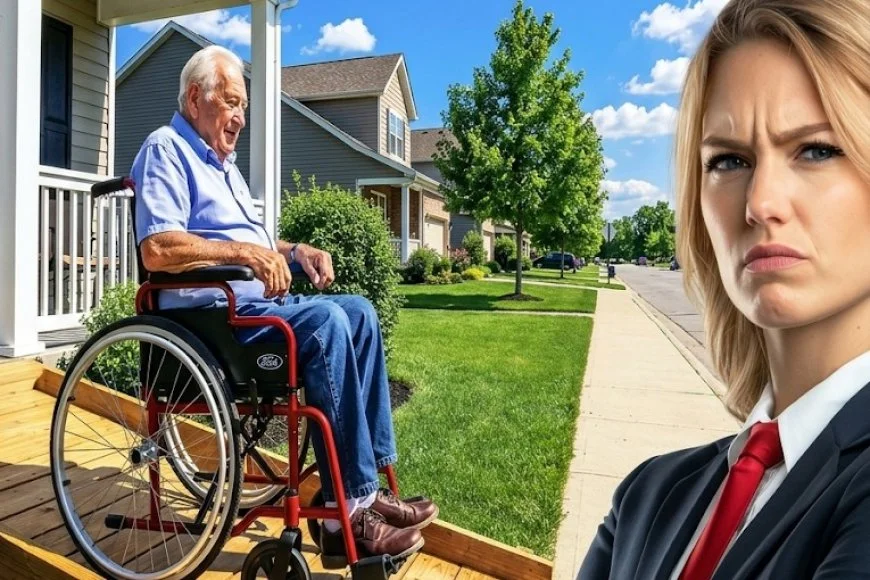
The president was a woman named Diane Keller.
Perfect bob haircut.
Blue blouse.
Binder thick enough to stop a bullet.
When public comments began, I stood.
I explained Dad’s disability.
The city guidance.
The ramp.
The threatened fines.
Diane listened with a tight smile.
Then she said:
“Many families here deal with aging parents and mobility limitations without permanently changing the front appearance of their homes.”
“What are you suggesting?”
She hesitated.
“A portable ramp could be stored when not in use.”
“That wouldn’t let him come and go independently.”
“You could assist him.”
“Every single time?”
“Or perhaps use the garage or another side entrance.”
Then she added the sentence that changed everything.
“So the accommodation isn’t so visible from the street.”
The room went quiet.
I stared at her.
“So you’re saying my father should come through the garage because you don’t want people seeing his wheelchair ramp?”
Diane immediately shook her head.
“That’s not what I said.”
“It’s exactly what you said.”
“You’re taking it out of context.”
I looked around the room.
Nobody looked comfortable.
Then I pulled out my phone.
It had been recording the entire meeting.
And for the first time that night, Diane stopped smiling….
The next morning, I took the HOA violation notice, photographs of the ramp, and the city’s original guidance to the building department. An inspector agreed to visit the house personally.
He measured the slope, width, landings, handrail, and attachment points. Twenty minutes later, he looked at me and said, “This is well built.”
A week later, I received his written letter. The ramp complied with the city’s residential accessibility and safety guidance, and no additional permit was required.
He copied the HOA.
Two days later, they sent another violation notice.
The city letter changed nothing, they said. The ramp still violated community architectural standards because of its appearance.
My choices were now explicit: remove it, relocate it, or screen it from street view.
And the $200-per-day fines had a start date.
That was when I stopped trying to handle the dispute alone.
I contacted a local disability-rights organization and sent them everything—the notices, ramp photos, city letter, meeting recording, and Diane’s comment about using the garage so Dad would be “less visible.”
An advocate called me two days later.
He had one question.
“Does your father live there full time?”
“Yes.”
Then he said:
“This is no longer just an architectural dispute.”
Their attorney sent the HOA a formal reasonable-accommodation request and warned that penalizing a necessary accessibility modification could create serious fair-housing problems.
The HOA’s tone changed immediately.
Fines were suspended.
Their attorney got involved.
Then their insurance carrier did too.
Dad looked at the email and smiled.
“So they finally noticed the ramp?”
“No.”
I closed the laptop.
“They finally noticed the liability.”
PART 3
Nothing happened quickly after that.
That’s the part stories usually skip.
Once lawyers become involved, dramatic arguments disappear and get replaced by long stretches of silence.
Emails.
Document requests.
Telephone conferences you aren’t invited to.
Questions about dates you forgot mattered.
The disability-rights advocate would call every few weeks.
“When did your father officially move in?”
“Do you still have the first violation notice?”
“Did the board issue any new fines?”
“Can you send the city inspector’s letter again?”
I answered everything.
Saved everything.
Dad hated the waiting.
“I don’t want you spending your life fighting these people.”
“I’m not.”
“Sure looks like it.”
“I’m letting lawyers fight them now.”
He nodded.
“That’s probably more expensive.”
“Not for us.”
That made him smile.
I attended one more HOA meeting while the matter was under review.
Nobody discussed the ramp publicly.
But when the treasurer presented the next year’s preliminary budget, a homeowner asked why projected legal expenses had suddenly increased.
The treasurer shifted in his chair.
“We’ve had unexpected costs connected to an ongoing homeowner matter.”
Several people looked toward me.
I didn’t say anything.
Diane wouldn’t look at me at all.
Months passed.
Dad kept using the ramp every day.
That became important psychologically.
The thing the HOA had once demanded I remove was still standing.
Delivery drivers used it.
Neighbors sometimes walked up it rather than taking the steps.
Dad sat on the porch whenever weather allowed.
The ramp wasn’t ruining Pinewood Meadows.
It wasn’t destroying property values.
After a few weeks, most people stopped noticing it.
Which was exactly the point.
Then the advocate called.
“We’re prepared to file formally if your father wants to proceed.”
“What would that involve?”
“A fair-housing complaint and potentially litigation. The HOA will have an opportunity to respond. Most cases like this resolve before trial.”
I looked toward the porch.
Dad was sitting outside watching a man walk a golden retriever.
“I’ll talk to him.”
That evening, I explained it.
Dad listened quietly.



