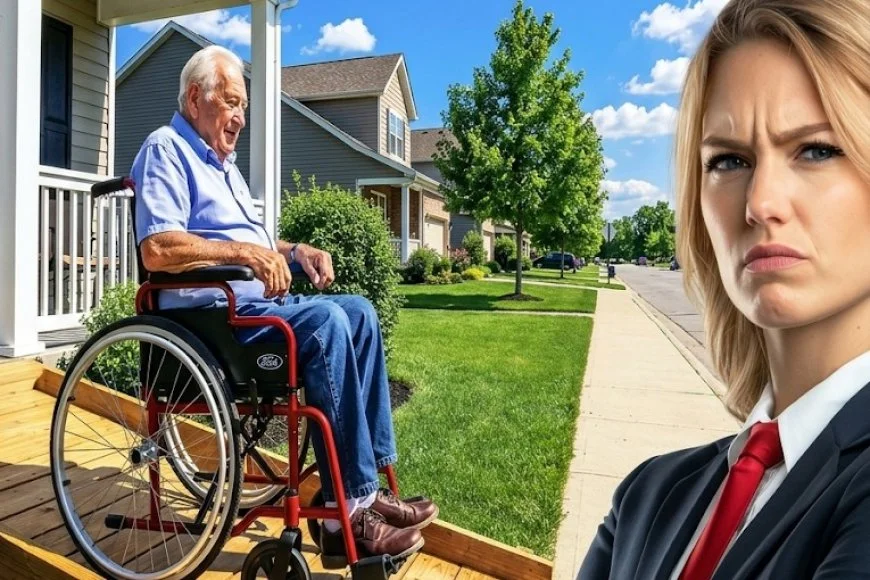
When I finished, he rubbed one hand across the wheelchair armrest.
“I don’t want money.”
“I know.”
“I don’t even care about that woman anymore.”
“I know.”
He looked toward the front door.
“But if we stop now, what happens when the next old fool needs a ramp?”
I smiled.
“Old fool?”
“Talking about myself.”
“I figured.”
He sighed.
“Do it.”
So we did.
The formal complaint changed the atmosphere again.
The HOA’s insurer became much more involved.
Negotiations moved away from whether the ramp was ugly and toward something more practical.
How to resolve the claim.
What policy changes were needed.
How future accommodation requests would be handled.
Whether board members needed training.
The first settlement proposal focused mostly on money.
Dad rejected it.
Not because the amount was too small.
Because it didn’t fix the problem.
“We take a check, they keep the same rules, and six months from now somebody else gets told to hide Grandma in the garage?”
The advocate laughed when I repeated that.
“Your father is very clear.”
“Painfully.”
Our counterproposal included policy changes.
A written disability-accommodation procedure.
A clear method for requesting accessibility modifications.
A pause on enforcement while such requests were reviewed.
Training for board members.
Written approval of Dad’s existing ramp.
No fines.
No requirement to move or hide it.
The negotiations continued.
Eventually, everyone agreed.
There was monetary compensation for Dad.
Real money.
Not retirement money.
Not lottery money.
Enough to acknowledge that what happened had consequences.
The exact amount mattered less to him than the rest.
The ramp stayed.
Permanently approved.
The fines disappeared.
The HOA adopted a disability-accommodation policy.
Board members had to complete fair-housing and accessibility training.
Future requests involving ramps and similar modifications would be reviewed through a defined process instead of being treated like ordinary decorative changes.
Dad read the settlement summary.
“So nobody gets told to use the garage?”
“Not if they learned anything.”
He looked satisfied.
Then he rolled outside and sat on the porch.
That should have been the ending.
But settlements cost money.
Some came through insurance.
Some through the HOA.
Legal expenses still hit the association’s budget.
At the next annual meeting, homeowners noticed.
Dues were increasing.
Not catastrophically.
Enough.
And this time, people asked why.
“What legal dispute cost this much?”
“Why did insurance get involved?”
“Was the board sued?”
“Are we paying for someone’s mistake?”
The board tried to keep details private.
That was understandable.
Settlement agreements and legal communications weren’t neighborhood entertainment.
But Pinewood Meadows wasn’t a large community.
People talked.
Soon residents knew the broad truth.
The city had said my ramp was safe.
The HOA had continued threatening fines.
A disability-rights organization became involved.
The case settled.
Policies changed.
And the neighborhood paid for the board’s refusal to back down earlier.
Neighbors began approaching me.
A man named Steven stopped me while I was bringing groceries inside.
“My mother uses a walker.”
I held the door.
“Okay.”
“If she ever moves in, would I have to go through what you did?”
“Not under the new policy.”
He looked toward the ramp.
“I voted for Diane.”
I shrugged.
“Doesn’t mean you agreed with everything she would ever do.”
“I sure didn’t vote for higher dues because she didn’t like seeing a ramp.”
That sentence started appearing in different forms.
People weren’t only angry about Dad.
They were tired of enforcement generally.
Petty notices.
Slow approval processes.
Threatening letters over minor issues.
The ramp became a symbol because everyone understood it immediately.
You didn’t need to understand covenant language.
You just had to look at a man in a wheelchair and ask why his way into the house had become a neighborhood crisis.
A group of homeowners began reading the bylaws.
Really reading them.
The way I had that first night.
They discovered a procedure for calling a special membership meeting.
Enough signatures could force a recall vote.
Within weeks, a petition circulated.
I stayed out of organizing it.
That surprised some people.
“You don’t want Diane gone?” Steven asked.
“That’s your decision.”
“After what she did?”
“I’m not turning Dad’s case into my campaign.”
Residents had other complaints anyway.
The ramp wasn’t the entire reason for the recall.
It was the turning point.
By the night of the special meeting, the clubhouse was packed.
Sixty people.
Maybe more.
Standing room along the walls.
Dad came with me.
That was his choice.
I offered to leave him home.
He gave me a look.
“So everybody can discuss the dangerous ramp without seeing the dangerous man?”
I laughed.
“Fine.”
He wore his best button-down shirt.
We rolled up the ramp.
Down the driveway.
Into my truck.
At the clubhouse, two homeowners held the door.
Dad whispered:
“Look at that. Accessibility.”
Inside, the atmosphere was nothing like the first meeting.



