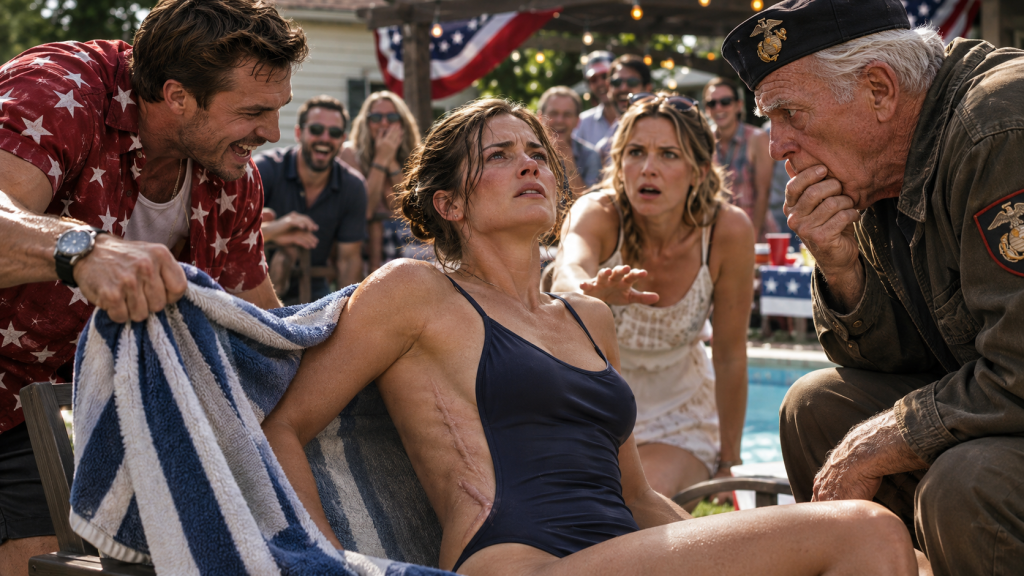
A woman with a scar.
A rescuer.
An object of pity.
I wanted to be Rachel.
The next morning, Frank called.
I almost didn’t answer.
“Captain Dawson?”
“Frank, you can call me Rachel.”
“All right. Rachel.”
He sounded nervous.
“Did you get home okay yesterday?”
“I did.”
“Good.”
There was a pause.
Then he said, “I spoke to Danny.”
I closed my eyes.
“You told him?”
“Only that I might have found someone who was there that day. I didn’t give him your number.”
I sat down at the kitchen table.
“What did he say?”
Frank exhaled.
“He asked if you were okay.”
I stared at the sunlight coming through my kitchen window.
“That’s what he asked?”
“First thing.”
I pressed my hand against my forehead.
Frank waited.
Then he said, “He knows what happened at the party. I told him.”
I wasn’t sure how I felt about that.
“Why?”
“Because I wanted him to understand why I was calling.”
“Was he upset?”
“With Brad? Very.”
I almost laughed.
“Join the club.”
Frank didn’t laugh.
“He said something else.”
“What?”
“He said he hoped you hadn’t spent four years thinking you failed anybody.”
My throat tightened.
For a moment, I couldn’t answer.
“Frank, I need some time.”
“Take all you need.”
After we hung up, I sat at the table for almost an hour.
I made coffee.
Forgot about it.
Made another cup.
Then I opened a drawer where I’d kept a few things from my deployments.
A photograph of my medical evacuation crew.
An old challenge coin.
A folded letter from my commanding officer.
And a small notebook containing names I didn’t want to forget.
There were five names on the page marked with the date of the convoy attack.
Two belonged to Marines who had died.
The others belonged to people who’d survived.
I’d written them down during rehabilitation, when everything was still fresh and I was afraid the details would disappear.
Danny Pruitt’s name wasn’t there.
I’d never known it.
I stared at the page.
Then I closed the notebook.
For the next two weeks, I tried to return to ordinary life.
I met with my physical therapist.
I bought groceries.
I visited Mom’s grave and brought flowers because I’d missed Mother’s Day again.
I attended a military appointment to discuss my next assignment.
That last part was more complicated than I expected.
My doctors considered me physically capable of returning to regular duties, but I’d been struggling with sleep and concentration since my latest deployment.
Nothing dramatic.
I wasn’t falling apart.
I could function.
I just kept waking up at three in the morning with the feeling that I’d forgotten something important.
When my medical provider suggested counseling, I agreed.
It had taken me longer than it should have to admit I needed help.
I was comfortable discussing other people’s injuries.
Mine were harder.
At my first appointment, the counselor asked what I was most worried about.
“Going back to work,” I said.
“Why?”
“Because I’m good at it.”
She waited.
I frowned.
“That sounds arrogant.”
“It sounds like you’re proud of your work.”
“I am.”
“Then why is going back worrying you?”
I thought for a moment.
“Because I don’t know if I’m as good as I used to be.”
She nodded.
“And what would happen if you weren’t?”
I didn’t have an answer.
That bothered me all afternoon.
Three weeks after the Fourth of July, a black pickup pulled into my driveway.
I was watering a planter on the porch.
Frank climbed out first.
Behind him, a younger man stepped carefully down from the passenger side, favoring his right leg.
He wore jeans, work boots, and a faded Marine Corps cap.
His wife emerged from the back seat, followed by two small children who immediately began arguing about who got to carry a paper bag.
Frank approached slowly.
“I hope this is okay.”
I looked past him.
The younger man was standing beside the truck.
He had the same eyes I’d seen in Frank’s photograph.
And beneath those eyes, I recognized something else.
The familiar hesitation of a person who’d rehearsed a conversation a hundred times and suddenly couldn’t remember a word.
“Ma’am,” he said.
His voice cracked.
“I’m Danny.”
I set down the watering can.
“I know.”
He took a step toward me.
Then stopped.
“I’ve been looking for you for a long time.”
I tried to smile.
“Well, I’m not particularly hard to find.”
He laughed once.
It came out sounding almost like a sob.
“May I?”
He held out his arms.
I stepped forward.
When he hugged me, he was careful of my left side.
That small consideration almost undid me.
For a few seconds, we just stood there.
I could feel him trembling.



