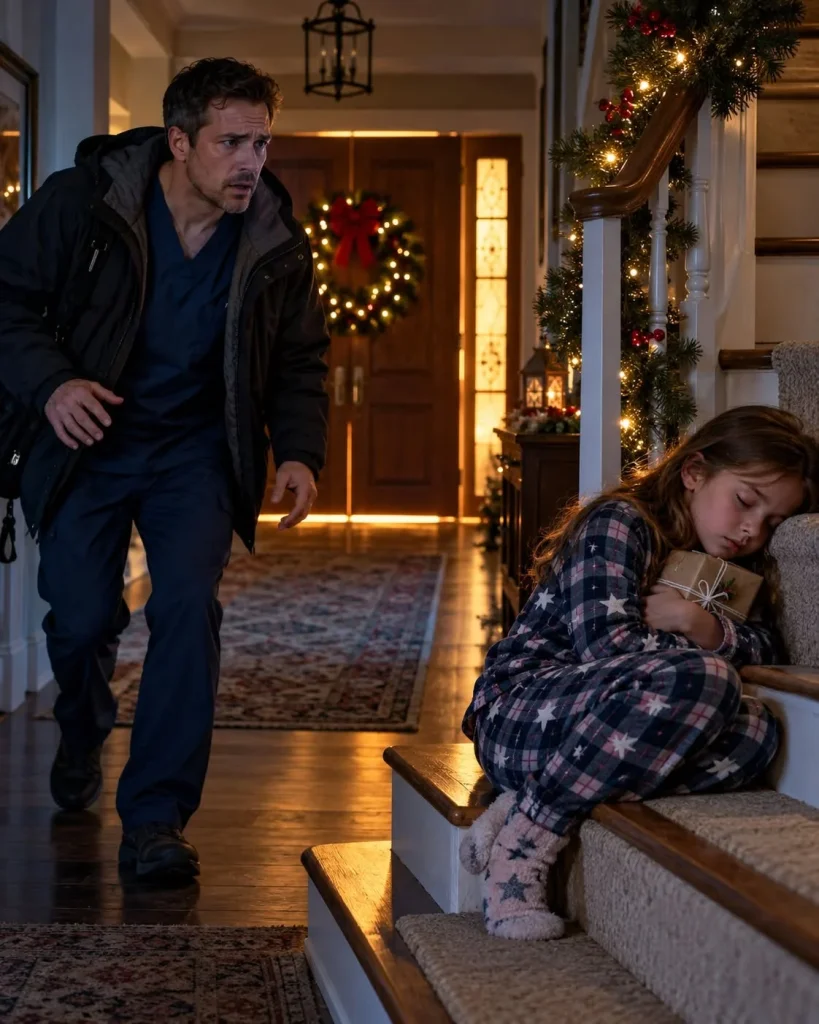
Chapter 1 – The Threshold Confrontation
The brass knob gleamed under the hallway chandelier, catching the cold winter light filtering through the transom. When the tumbler clicked, the sound was unnervingly loud, like the cocking of a firearm in a quiet room.
Marlene stepped through the threshold. She was wearing the deep emerald velvet robe I had bought her for her thirty-fifth birthday. Her hair was pulled back into an effortless, photogenic bun, and her face was flushed with the artificial glow of holiday cheer. In her manicured hands, she held a large, rectangular box wrapped in silver foil paper and crowned with an elaborate royal blue ribbon. Stenciled in glittering gold marker across the tag was Ivy’s name.
“Merry Christmas, sleepyhead!” Marlene sang out, her voice pitched in that breezy, theatrical register she reserved for church socials and neighborhood block parties. “Look what Santa left behind the tree! I told the kids we couldn’t bring it out until the big surprise was ready.”
She froze mid-stride.
Her gaze dropped from my face to the two heavy duffel bags resting against the baseboard by the front door, then to Ivy, who was bundled in her heavy navy parka, fleece-lined boots, and knitted woolen hat. Ivy was standing half a step behind my left hip, her fingers clutching the pocket of my coat so tightly her knuckles were white. In her other hand, pressed flush against her ribs, was the small brown paper package tied with rough white kitchen twine.
The air in the foyer curdled. The smells of the house—cinnamon rolls baking in the oven, expensive pine-scented candles, and the buttery heat of hazelnut coffee—suddenly felt suffocating.
“Peter?” Marlene’s voice lost an octave of its music. Her eyes darted back to my face, scanning the dark hollows under my eyes, the set of my jaw, the stiffness of my spine. “You’re home early. I thought your shift ended at eight.”
“My shift ended at seven,” I said. My voice did not sound like my own. It had the flat, lethal neutrality I used in Trauma Bay 4 when a patient was bleeding out and panic would kill them faster than the wound. “I pulled into the driveway at seven-forty.”
Marlene’s eyes twitched toward the living room doors. Behind her, through the open frame, I could see the wreckage of an opulent morning: ribbons shredded into heaps on the hardwood, mountains of torn glossy paper, empty plastic blister packs, a brand-new high-end tablet glowing on the coffee table beside an unopened stack of designer clothing. Coral and Forrest were seated on the carpet, their backs half-turned toward the hall. Forrest was frantically tapping at a handheld gaming console; Coral, twelve years old and too smart for her own good, had already stopped moving. She sat with her knees drawn up, looking over her shoulder with an expression of sharp, instinctive dread.
“Oh,” Marlene said, letting out a breath that sounded like a dry laugh. She adjusted her grip on the silver package. “Well, you should have texted. We were trying to give you a moment to walk in on the grand finale. The kids were so excited, Peter. Forrest couldn’t sleep past five-thirty, and you know how he gets. We had to do the Santa things first, or he would have torn the house down.”
“Ivy came down at six,” I said.
Marlene didn’t blink, but the muscles around her mouth hardened. “Yes. And I told her to go back upstairs and rest.”
“No,” Ivy whispered. The sound was tiny, muffled by the wool of my jacket, but in the echoing hall, it sounded like thunder.
Marlene’s smile vanished completely, replaced by that thin, razor-sharp line of maternal condescension she always deployed when challenged. “Ivy, sweetheart, don’t interrupt your father when he’s talking. Peter, she’s confused. She was half-asleep. I told her we were doing family time in shifts because you weren’t home yet and we wanted her big moment to be special.”
“You locked the doors, Marlene.”
“I closed them so the dogs wouldn’t track wrapping paper into the kitchen!”
“The dogs are at your mother’s in Fort Collins,” I replied. I took a step forward. I didn’t raise my voice. I didn’t shout. Shouting gives the other person something to push back against; it gives them an excuse to call you unstable. I kept my tone at that freezing, absolute zero. “And you didn’t close them. You turned the brass key. You locked a ten-year-old child in an unheated hall for an hour and forty-three minutes while you fed your biological children cinnamon rolls and let them tear through hundreds of dollars of plastic.”



