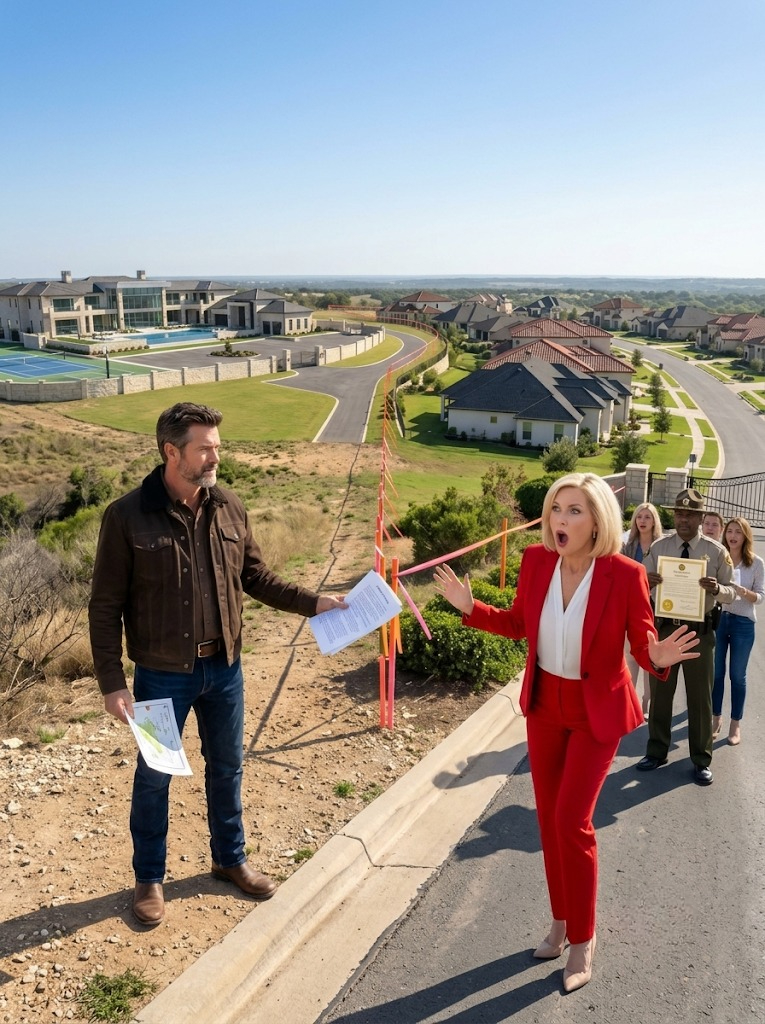
Victor offered to buy all forty acres for a price based on undeveloped pasture.
Maya slid the paper back.
“He already developed it.”
The title insurer proposed exchanging other land.
I said no.
One lawyer suggested relocating several property lines while preserving the subdivision.
Possible.
But the lake and ranch roads remained tangled in the plan.
Then David asked a simple question.
“Can Aaron own the land while we own the houses?”
Maya looked at me.
“Yes.”
That became the solution.
Ground leases.
Not because Victor had planned them.
Because the homeowners and I chose them after ownership was established honestly.
Each family received a fifty-year renewable ground lease covering the land beneath and immediately surrounding its home.
They retained ownership of their structures.
They could sell.
Refinance.
Leave the houses to their children.
The lease would transfer with the property.
Rent was calculated from the value of the land only.
Not the million-dollar houses sitting on it.
The title insurer funded part of the initial adjustment and legal expenses.
Victor’s company paid a substantial settlement into the resolution fund rather than forcing twelve homeowners to absorb the full consequences of his decisions.
The families paid me ground rent.
Not punishment.
Rent.
For land legally proven to be mine.
The average was $1,250 a month per property.
Some slightly more.
Some less.
Twelve houses produced around $180,000 a year.
The first payment felt strange.
David handed me a check after signing his lease.
“Well,” he said, “I guess you’re officially my landlord.”
“Please don’t call me at midnight about your dishwasher.”
He laughed for the first time since the case began.
“No promises.”
The lake was separate.
No homeowner received automatic rights.
But I created an optional annual recreation agreement.
Fishing.
Kayaks.
Swimming from a designated shoreline.
No motorized access without permission.
No control of the dam.
Most families joined.
They paid a modest annual fee used almost entirely for insurance, shoreline maintenance, and water testing.
The difference was simple.
This time, somebody asked.
And I said yes.
Lydia resigned before the mediation finished.
The homeowners had discovered how much she knew about the title concerns.
At a special meeting, they demanded her removal.
She stepped down before the vote.
Aspen Ridge reorganized.
The new HOA president was David.
His first letter to me began:
Mr. Cole, Aspen Ridge recognizes that the association has no jurisdiction over Cole Creek Ranch.
I framed that sentence.
Not because I needed revenge.
Because fourteen months earlier I had come home and been told I needed HOA approval to enter my own land.
Victor’s problems were larger.
The county referred the questionable filings for investigation.
The title insurer sued his development company.
Homeowners brought their own claims for nondisclosure and defective title.
His lender canceled financing for the next development phase.
The remaining project collapsed.
Eventually Victor entered a settlement resolving major civil claims and later faced consequences connected to false filings.
I followed only what concerned my property.
I had spent enough of my life letting him occupy space in my head.
The keypad gate at the dam came down.
The bronze Aspen Ridge sign remained at the neighborhood entrance, but the road beyond it was reconfigured so residents could reach their leased lots without pretending they controlled the rest of my ranch.
My old eastern cattle lane was restored.
The lake disappeared from Aspen Ridge advertising.
The phrase PRIVATE RESIDENT LAKE vanished from the website.
A new sentence appeared:
Lake access available by separate agreement with Cole Creek Ranch.
Accurate.
Boring.
Perfect.
The ranch itself needed work.
Fourteen months away had already been hard on it.
Construction had made things worse.
Drainage patterns had changed.
A section of pasture had been compacted by heavy equipment.
Old fencing had been removed.
The settlement included restoration costs.
I spent the first year fixing the land.
Reseeding grass.
Repairing the creek crossing.
Replacing fences.
Rebuilding the stock-water system.
My daughter, Hannah, came home from college one weekend and stood beside the lake.
“Twelve mansions.”
“Yep.”
“On Grandpa’s pasture.”
“Yep.”
“And they pay you rent.”
“Every month.”
She laughed.
“This may be the strangest ranching operation in Colorado.”
She was probably right.
But the rental income gave me a choice I had never expected.
I could have spent it.
New truck.
New equipment.
Bigger house.
Instead, I created the Cole Creek Land Stewardship Program.
Part of the lease income funded creek restoration, wildfire mitigation, and agricultural training for local teenagers.
The rest went into maintaining the ranch without having to sell pieces of it.
That mattered most.
For years, my father worried that property taxes and maintenance would eventually force the family to break up Cole Creek Ranch.
Victor’s attempt to take forty acres had accidentally created the income stream that helped preserve everything else.



