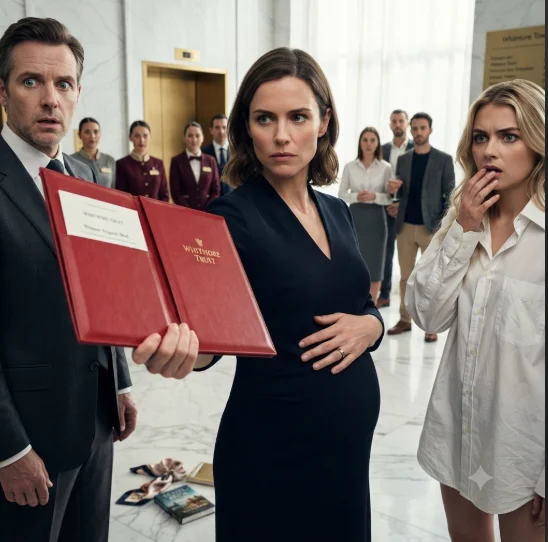
“Are you worried about Andrew losing his job?” she asked.
“I don’t know. I hate what he did, but I don’t want his whole life destroyed.”
“You’re allowed to want him accountable without wanting him ruined.”
I sat beside her. I had been treating my feelings as if they had to agree with one another before I could move forward. Perhaps they didn’t. Perhaps love, anger, grief, and hope could all exist without any one of them deciding my future for me.
Just before midnight, Rebecca sent a short message through Leah: The board has scheduled an extraordinary meeting. Andrew has agreed to testify about his relationship with Vanessa and all related access permissions. The session begins at eight.
I put the phone down and stared toward the dark windows. Andrew had confessed in a lobby because I caught him. Tomorrow he would be asked to tell the truth to people who could strip him of his position.
I opened the drawer of my bedside table and found the wedding vows I had kept in a small linen envelope. Andrew had promised to protect our peace, but what I remembered most clearly was the vow I had made to myself before walking down the aisle: I would not disappear inside somebody else’s ambitions. I had forgotten that promise while trying to win Eleanor’s approval. I couldn’t make Andrew worthy of my trust by wanting it badly enough. I could only watch what he chose when the choice was his alone.
For the first time, I was going to discover whether his honesty could survive without me standing there to demand it.
9 | The Boardroom Where My Husband Finally Chose the Truth
At eight the next morning, I sat in the nursery with a cup of chamomile tea and watched the minute hand move. Andrew was across the city facing the board of Whitmore Holdings. I was not invited, and I had no wish to be. For four years, the company’s most important rooms had always seemed to exist just beyond my reach. Now I realized I did not need a seat in one of them to have an opinion about the man inside.
My mother was making breakfast. She moved quietly because she knew I would hear the telephone even if it rang only once. I kept imagining Andrew entering the meeting and finding Eleanor at the head of the table, ready with a polished statement about misunderstandings and family privacy. Would he accept the script? Would he say Vanessa had misled him? Would he turn four months of deception into a regrettable lapse of judgment with no further explanation?
I had stopped expecting certainty. I was waiting for behavior.
At nine-thirty, Leah called to say the board’s outside counsel had requested confirmation of the lobby footage’s chain of custody. She handled it without involving me. She also warned that reporters might contact my mother or the foundation volunteers. I sent a brief message to Simone reminding everyone to direct questions to our designated spokesperson and continue serving the children who depended on us.
At ten, Andrew called. I almost let it go to voicemail, but I answered.
“I told them everything,” he said.
He sounded hoarse. I could hear elevator doors and distant footsteps. He said he had disclosed the affair, the private elevator key, the eleven visits, the consulting relationship with Vanessa, and his failure to identify the potential conflict before it became a public crisis. He had provided the written statement he signed after ending the affair and offered his personal devices for preservation under appropriate legal review.
“Did your mother try to stop you?” I asked.
“She asked me not to discuss our marriage in detail. I told her the board needed the facts that affected business judgment.”
“And then?”
“I stepped aside from negotiations. The board named an interim committee to handle Sterling until the independent review is complete.”
“Are you still chief executive?”
“For now. The board will decide my future after the auditors report.”
I expected him to sound angry or humiliated. Instead he sounded tired in a way I had never heard before, as though he had finally set down something enormous that he had insisted he was strong enough to carry.
“I didn’t tell them you forgave me,” he added. “I didn’t tell them we’re working things out. I said I don’t know what our marriage will be.”
My eyes filled unexpectedly. I had been afraid he would claim my uncertainty as a private endorsement. Hearing him protect the truth even when it made him look worse was the first act of accountability that reached me without being accompanied by another demand.
“Thank you for not speaking for me,” I said.
He paused. “It’s the least I owe you.”



