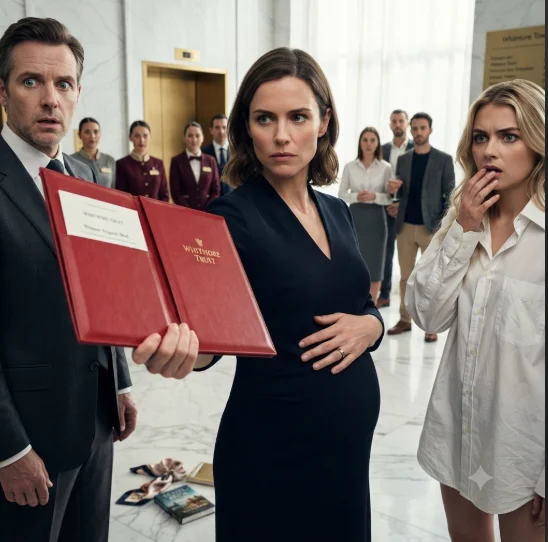
“It is.”
After we hung up, I stared at the phone. My mother came into the nursery and asked whether I wanted her to make lunch. I nodded, and she kissed the top of my head without asking for details. That simple kindness was an anchor. I had built so much of my adult life around anticipating Andrew’s needs that the act of being cared for felt unfamiliar.
By afternoon, business reporters were discussing his recusal. The coverage varied, but the basic facts matched what he had told me. The board had appointed an independent committee. The Sterling closing would be delayed pending the conflict review. Andrew had acknowledged that his personal relationship with a company consultant created unacceptable governance concerns.
The delay had consequences. Employees worried about their jobs. Investors worried about the price of the acquisition. Project managers who had spent months preparing contracts were suddenly uncertain whether their work would proceed. It would have been comforting to believe that the entire company consisted of people as powerful as Andrew and Eleanor. Instead it included hundreds of ordinary families whose rent and groceries depended on a steady paycheck.
I told Leah I wanted the foundation’s funds kept separate from the corporate negotiations. She agreed and recommended an independent review of our grants and governance. I did not want the children’s program used as a shield for the company or as collateral damage from the scandal.
Late that afternoon, Julian Reed returned to the foundation office. He apologized for suggesting I step away and admitted that several trustees were beginning to question Eleanor’s influence over the organization. I accepted the apology, but I did not let him transform it into another favor I supposedly owed him.
“The foundation needs independent decisions,” I said. “Not decisions based on how a family scandal might look at a cocktail party.”
Julian nodded. “You’re right.”
I couldn’t help smiling after he left. The words had come from a man who rarely conceded anything, and I had not needed to raise my voice to earn them.
The next day, I met Leah and Rebecca to discuss the charitable diamond clip. The inventory review showed that Vanessa had signed it out using an authorization form bearing a trustee’s name. The trustee denied approving the loan. The audit team was examining whether the signature was genuine and whether Vanessa had returned the piece. Again, the facts were moving more slowly than the rumors, but they were moving.
Rebecca also informed us that the company had identified previously undisclosed communications between Vanessa and an adviser working with opposing Sterling shareholders. The contents were under review. The board was considering contractual remedies and possible referrals to regulators if evidence warranted them. She emphasized that no determination of wrongdoing had yet been made.
I admired the precision. During the weeks when Vanessa had controlled the narrative, every insinuation about me had been treated as proven. I was determined not to repeat that cruelty in reverse. A person can deserve consequences without being denied the protection of facts.
That evening, Andrew sent me a photograph of his hotel room. There was nothing dramatic in it: a desk, a small plant, and the children’s storybook he had taken from our nursery. He wrote that he was reading one chapter each night because he wanted to be able to read it to our daughter someday. He did not ask me to come over.
I stared at the image longer than I expected. It would have been easier if he had been entirely cold. His small efforts made me hope, and hope frightened me because it asked me to risk being hurt again.
My mother found me standing by the window. “You don’t have to decide today,” she reminded me.
“What if I never know?”
“Then you’ll make the best decision you can with the life in front of you. That’s all any of us do.”
I went to bed before midnight, something I had barely managed since the lobby. For once, I slept without dreaming of Vanessa’s finger pointed at me. At dawn, I woke to the baby’s slow movements and the sound of a delivery truck below. It almost felt like an ordinary day.
Then Leah called with news about Tessa. She had received a threatening message after agreeing to speak with the auditors. Someone claimed to have photographs and financial records that would destroy her career if she continued cooperating. Her attorney had preserved the message and reported it to the appropriate authorities.
“Is she safe?” I asked.
“Her attorney is arranging support. She wants to keep cooperating. But there’s more.”
Tessa had found a draft email she believed Vanessa never meant her to see. The subject line read, Family pressure sequence. It listed steps for creating a reputational crisis before the Sterling vote and suggested that the pregnant wife would be the most effective point of leverage.



