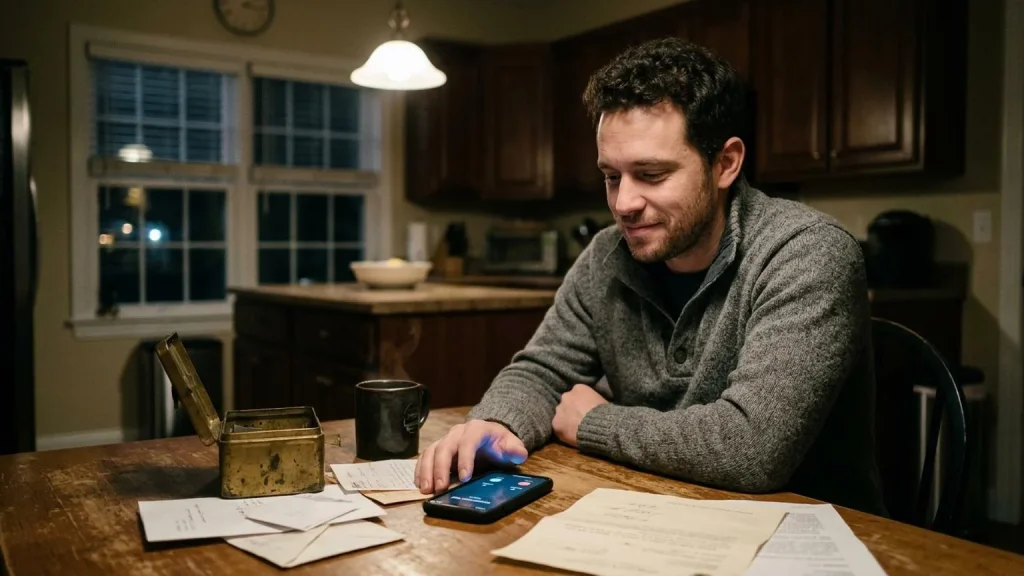
“I have arranged the company’s ownership so that neither your father nor anyone he brings into our family can take away what I intended for you. I know you’ll probably be angry when you discover how much I’ve kept from you. I hope you’ll understand that I was trying to give you time to become your own man before this responsibility became yours.”
I looked at the papers beneath the letter.
The first document was titled Eleanor Grant Legacy Trust.
My mother had retained 60 percent of Crestwood’s voting shares in her own name. Before her death, she’d transferred those shares into an irrevocable trust.
Dad was named temporary managing trustee.
But his authority had an expiration date.
My thirtieth birthday.
I was thirty-two.
According to the terms in front of me, the trust’s controlling interest should have passed into my hands two years earlier.
For several minutes, I did nothing.
I read the provision again. Then the paragraph before it. Then the definitions section, because supply chain management had taught me that the expensive mistakes usually happened when someone misunderstood a definition.
There it was.
Sixty percent.
Not a small inheritance. Not a college fund or a retirement account.
Controlling voting power over the business my parents had spent their lives building.
And nobody had told me.
I thought about the year I turned thirty. Dad had taken me to lunch at a steakhouse near his office.
He’d given me a watch, reminded me that I was getting too old to drift through life, and suggested I look for a career with more upward mobility.
I wore that watch every day.
I took it off that night and placed it beside the letter.
My first impulse was to call him.
I actually picked up the phone.
Then I remembered how he’d searched for the brass box after Mom’s funeral. I remembered the unusual urgency with which he’d wanted her belongings cleared away.
And I remembered that he’d spent the past two years signing corporate documents as though nothing had changed.
So instead of calling, I opened my laptop.
I didn’t sleep much that night.
By morning, my dining table was covered with printed company filings, old trust paperwork, and notes written on the backs of grocery receipts.
The public annual reports listed Richard Grant as Crestwood’s controlling voting shareholder.
A more detailed filing from two years earlier referenced a waiver signed by me.
I paid for the certified copy.
When the document arrived, I sat looking at my own signature.
It was mine.
Or rather, it looked like mine.
The long tail on the N. The unusual way I joined the last two letters. Even the little downward hook I’d developed in college.
But I’d never signed a waiver.
I searched through the drawer where I kept old paperwork and found a university enrollment form from ten years earlier.
I laid it beside the certified copy.
The signatures matched perfectly.
Too perfectly.
Even the tiny ink break near the bottom of the final letter was identical.
Someone had copied my signature from that old form.
Then I noticed the witness.
Wyatt Grant.
My brother.
For a while, I sat at the kitchen table listening to the refrigerator make its usual irritating clicking noise.
I kept thinking about Thanksgiving.
Wyatt had noticed the worn cuffs on my winter coat and quietly offered to buy me a new one.
“Don’t be stubborn,” he’d said. “You’re my brother.”
I had thanked him.
Now his name was sitting on a document that claimed he’d watched me surrender my mother’s legacy.
I wanted to throw the laptop across the room.
Instead, I called Marshall.
Thomas Marshall had been my mother’s attorney and one of her oldest friends. When I was little, he used to bring terrible magic tricks to our Christmas dinners. He once made a quarter disappear and then spent fifteen minutes searching for it because he’d genuinely lost it inside his sleeve.
Dad stopped inviting him over after Mom died.
Marshall answered on the fourth ring.
“Nolan? Everything all right?”
“I found something in Mom’s office.”
There was a pause.
“What kind of something?”
“I think I need a lawyer.”
His voice changed.
“Bring it here. Today.”
Marshall’s office occupied the second floor of an old brick building between a dry cleaner and an insurance agency.
He was seventy-one, with thinning white hair, thick glasses, and the posture of a man who’d spent four decades arguing with people who had more money than sense.
He read Mom’s letter first.
His expression softened.
Then he examined the trust documents.
When he reached the waiver, he removed his glasses.
“Where did you get this?”
“State records.”
“And this signature?”
“I never signed it.”
He looked at me for several seconds.
“Are you certain?”



