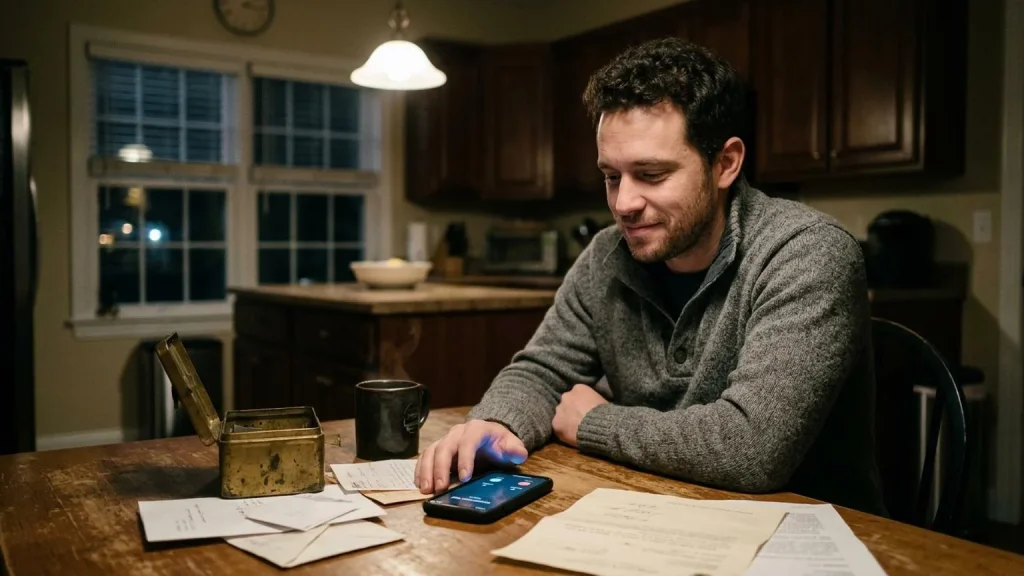
Instead, I pushed the check back.
“Keep it.”
“Nolan.”
“No.”
“You’re making a mistake.”
“Maybe.”
She gathered the papers, her lips pressed into a thin line.
“Don’t come to the Grand Oak Haven Hotel on New Year’s Eve. Your father won’t tolerate an embarrassment.”
I stood.
“Happy New Year, Brenda.”
She didn’t answer.
When I reached my car, my hands were shaking so badly that I sat there for several minutes before starting the engine.
I sent Marshall the recording.
He called an hour later.
“She was careful,” he said. “But her statements may help establish who handled the waiver and what they believed about it.”
“Is it enough?”
“Enough for another piece of the puzzle. Not enough to replace the actual documents.”
I hated how often he said things like that.
I wanted one piece of evidence so overwhelming that everything would be finished.
Instead, the case was becoming a collection of documents, signatures, bank records, uncomfortable interviews, and people afraid of losing their jobs.
That was how my mother’s company had been taken from me.
Not in one dramatic act.
One document at a time.
On December 30, Marshall called me into his office.
The trust specialist had confirmed that Mom’s original trust was valid and that the transfer provision operated automatically at thirty, subject to the disputed waiver.
The forensic examiner had completed a formal report.
And the financial review had identified approximately $850,000 in payments to Oak and Iron that required serious explanation.
“We’re filing for emergency relief,” Marshall told me. “The goal is to preserve the voting shares and prevent a merger based on disputed ownership. The court may not settle the entire matter before tomorrow night, but we have enough to request an immediate hearing.”
“Can we stop the gala?”
“It’s a party, Nolan. The court isn’t going to cancel a party.”
“Then what can we stop?”
“A corporate action that depends on authority your father may not possess.”
Martha had also been working behind the scenes.
She’d persuaded two independent directors that the merger announcement required additional governance review. A notice had gone to the company and its proposed merger partner, informing them of the ownership dispute and requesting that no binding shareholder action proceed until the questions were resolved.
My father knew there was a challenge.
He didn’t yet know I was behind it.
Or at least, he hadn’t acknowledged it.
I asked Marshall why Martha hadn’t simply told everyone.
“Because accusations are easy to dismiss,” he said. “Records are harder. And because your father still has allies on the board.”
He studied me.
“You understand what happens if we pursue this publicly?”
“He loses the company.”
“Possibly. But you may lose the last chance of having a relationship with him.”
I looked at the framed photograph of Marshall’s wife on his desk.
“Do you think I have one now?”
He didn’t answer.
That evening, I went home and read Mom’s letter again.
I’d stopped halfway through the first time because the legal documents had overwhelmed everything else.
Near the end, she’d written something I hadn’t been ready to absorb.
“I hope you and Wyatt will look after each other. Your brother has always needed approval more than he needs anything else. That is not his fault, but someday it will become his responsibility.”
I folded the letter.
Then I unfolded it and read that paragraph again.
The next morning, December 31, Dad’s group message arrived.
Don’t bother coming to the gala.
You’re written out of the will.
Brenda’s thumbs-up.
Wyatt’s agreement.
I stood at the kitchen counter with my coffee and let them believe they’d settled the matter.
I didn’t respond.
At noon, Marshall called with an update.
The court had accepted our emergency application for consideration, and a hearing had been arranged with counsel for the relevant parties. He expected a temporary ruling that afternoon.
“We should know what we can legally do before the event,” he said.
“And if the judge says no?”
“Then we continue through the ordinary process. We’re not improvising a takeover in a hotel ballroom.”
I appreciated that about Marshall, even when it irritated me.
He was the only person in my life who seemed entirely unimpressed by the idea of revenge.
At four that afternoon, he called again.
The court had issued a temporary order preserving the disputed voting interest and restricting reliance on the contested waiver while the case proceeded. The order also prevented completion of a merger approval dependent on those disputed votes pending further review.
It wasn’t a final victory.
But it meant Dad couldn’t simply announce a merger and pretend nobody had challenged his authority.
Marshall explained that we had a lawful basis to assert my position, demand answers, and notify the investors.
“And Martha?” I asked.



