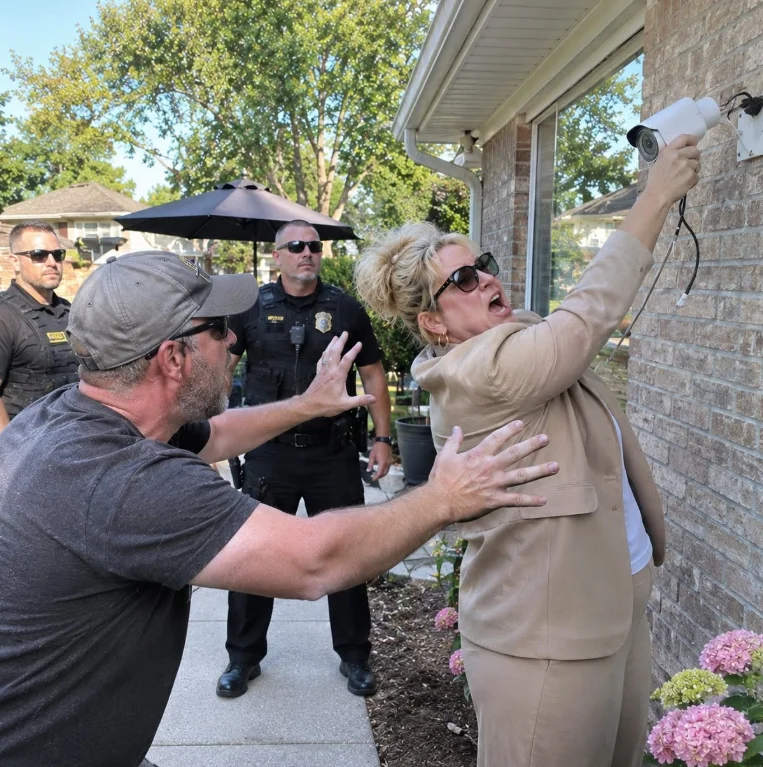
“And Renata?”
Torres’s expression hardened. “She’s still sitting in the county jail. Her public defender tried to petition for a mental health evaluation on Saturday, claiming she was suffering from acute situational psychosis caused by ‘neighborhood harassment.’ Judge Harrison threw it out within ten minutes. He set her bail at two million dollars, cash-only, and ordered a twenty-four-hour suicide watch. She’s not going anywhere.”
“What about the forfeiture auction for 1445?” I asked, looking up at the brass eagle above the door.
“That’s why I’m here,” Torres said, handing me the iPad. “Under the equity order, the house will be put on the commercial auction block by the federal marshal’s service on the first of next month. Appraised value is seven hundred and twenty thousand dollars. Every single dollar from that sale will be placed directly into the Whispering Pines Restitution Fund.”
I scrolled through the appraisal document. “Between the house, the boat slip, the cash from the safe, and Marcus Vance-Hall’s seized malpractice insurance reserves, we’re looking at over two million dollars in total recovery.”
“Which means,” Torres said, leaning in, “every single resident who paid a fraudulent fine will be refunded one hundred percent of their money, plus interest. And the Whispering Pines master reserve fund, which had been depleted to nearly zero, will be fully restored to an eight-hundred-thousand-dollar surplus.”
“The system works,” I murmured, “when you force it to look in the right direction.”
“Speaking of systems,” Torres said, pointing to the municipal truck parked down the street. “Your crew is waiting for your orders, Mr. Special Master.”
I smiled. “Let’s go.”
I walked back down the street toward the yellow municipal flatbed.
Standing beside the truck were three workers in high-visibility vests, equipped with oxyacetylene cutting torches, heavy sledgehammers, and steel pry bars. Resting in the bed of the truck was an industrial metal shear and a heavy-duty portable crane.
“Are you Victor Vance?” the crew foreman asked, checking his county work order.
“I am,” I said.
“We’ve got the court order to remove the non-compliant municipal fixtures and the private surveillance infrastructure from the common easements,” the foreman said. “Where do we start?”
“Start right here,” I said, pointing up to the massive, ten-foot-tall steel sign at the entrance of the cul-de-sac.
The sign had been erected by Renata five years ago. It was a monstrous, ornate black wrought-iron monument with gold-leaf lettering that read:
WHISPERING PINES ESTATES: STRICT ENFORCEMENT ZONE.
UNAUTHORIZED LOITERING, NON-PERMITTED VEHICLES, AND ARCHITECTURAL DEVIATIONS WILL BE SUBJECT TO IMMEDIATE CITATION AND ADMINISTRATIVE TOWING.
RENATA CROSS, EXECUTIVE CHAIR.
The foreman grinned, pulling down his welding goggles. “My pleasure.”
For the next twenty minutes, the sharp, hissing roar of the cutting torch filled the cul-de-sac. Bright showers of orange and white sparks rained down onto the asphalt as the blue flame bit through the thick steel anchors at the base of the monument.
The neighbors came out from their yards to watch. Harold stood with Mrs. Gable, smiling as the sparks danced in the autumn wind. Dr. Patel had his phone out, recording the demolition with open glee.
With a final, groaning screech of tortured iron, the torch severed the last support beam.
Two workers hooked the crane cables to the top of the sign, lifted the heavy iron structure into the air, and dropped it into the bed of the flatbed truck with a deafening, thunderous CLANG.
The crowd of neighbors broke into spontaneous cheers and applause.
“Good riddance!” shouted an elderly woman from across the street.
“Take it to the scrapyard!” yelled Harold, waving his cap in the air.
“We’re not done yet,” I announced, walking to the bed of my truck and pulling out four cardboard boxes.
Inside the boxes were dozens of brand-new, modern, tamper-proof hardware components: sleek, low-profile environmental sensors, automated LED streetlamp timers, and small, unobtrusive emergency call stations designed to connect directly to the county fire and rescue dispatch.
“Over the past week,” I told the gathered neighbors, “I’ve been drafting the revised community charter that will be submitted to Judge Harrison on Friday. Under the new bylaws, the Architectural Review Committee’s power to issue arbitrary fines for landscaping, vehicle parking, and paint colors is permanently abolished.”
Another round of cheers erupted from the crowd.
“From now on,” I continued, “the association’s sole responsibility will be the maintenance of common infrastructure: the roads, the streetlights, the pool, and the stormwater drainage. No resident will ever be fined without a formal, written notice, an open evidentiary hearing before a five-member civilian panel, and a ninety-day cure period. And every single invoice, bank statement, and vendor contract will be published in real-time to a secure, public web portal accessible by every homeowner in Whispering Pines.”
Dr. Patel stepped forward, adjusting his glasses. “Total digital transparency.”



